10 Critical Red Flags & QC Checklists for Vetting Men's Sportswear Factories Remotely
- Share
- publisher
- Montforge Production Team
- Issue Time
- May 7,2026
Summary
This guide covers everything B2B buyers and brand founders need to know before partnering with a sportswear factory. Follow all 8 steps to avoid costly mistakes and find a long-term manufacturing partner.
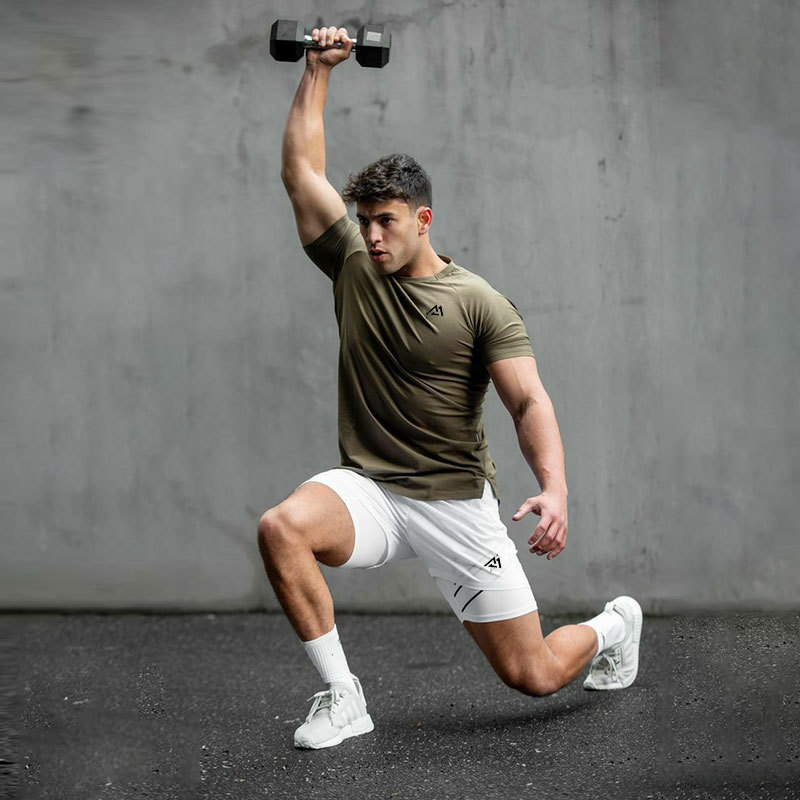
Montforge Manufacturing | Technical Sourcing Insights (2026)
For international apparel brand owners, procurement managers, and startup founders in the US, UK, and Europe, sourcing a custom men's sportswear manufacturer from a distance is a high-stakes balancing act. You are not just buying blanks; you are investing in technical pattern engineering, 4-way stretch fabrics, and specialized multi-needle construction.
While our Complete B2B Guide to Custom Men's Sportswear Manufacturing covers the complete full-scale ordering process and fabric GSM parameters, this practical operational checklist focuses strictly on execution: How to vet a factory's technical capability from your desk, how to stress-test their physical samples, and the exact red flags that mean you should walk away immediately.
Part 1: The 5 Remote Tech Vetting Checkpoints
Before you pay for a physical prototype, you must audit the factory’s technical alignment with the specific structural needs of men's activewear. Men’s athletic apparel demands different pattern grading, larger seam strain thresholds, and distinct ergonomic cuts compared to general apparel or women's yoga wear.
Checkpoint 1: Men's Sportswear-Specific Fit Blocks
Ask the account manager: "Can you share the spec sheets or 3D digital patterns of your standard men's regular and relaxed fit blocks for US/EU sizing?"
The Technical Red Flag: If the factory primarily produces women's leggings and says they "can easily scale up the patterns for men," exercise extreme caution. Men's high-performance gear requires distinct pattern grading for shoulder mobility (dropped armholes, raglan sleeves) and crotch reinforcement in training shorts and compression gear.
Checkpoint 2: Verifiable Certifications (No Just Logos)
Any factory can paste an OEKO-TEX or BSCI logo on their website homepage or Alibaba profile.
The Action Item: Request the actual certificate numbers.
How to Verify: Go directly to the official oeko-tex.com label check or the BSCI platform database. Ensure the certificate is currently valid, issued by an accredited third party (like SGS, Intertek, or Hohenstein), and specifically covers the product category (knit or woven apparel) you intend to order.
Checkpoint 3: Performance Fabric Data Sheets
When inquiring about materials, do not settle for vague descriptions like "high-quality nylon" or "breathable polyester."
The Tech Answer: A reliable B2B factory will provide technical descriptions: e.g., 87% Nylon / 13% Spandex, 220gsm, with moisture-wicking treatment and high stretch-recovery rate. Ask for their supplier's lab test reports regarding colorfastness to water/sweat and fabric pilling resistance.
Checkpoint 4: Machinery and Seam Capabilities
Men's activewear experiences immense stress during high-intensity training.
The Action Item: Explicitly ask if they have dedicated machinery for Flatlock seams (ISO 607), bonded seams, or taped seams. If a factory proposes using standard overlock stitching for high-stretch compression tights,
they lack the technical capability for premium sportswear.
Checkpoint 5: Export Compliance and DDP Experience
Shipping technical apparel into western markets requires adherence to stringent chemical and safety standards.
The Verification: Ensure the manufacturer has direct experience handling REACH compliance (for the EU market), CA Prop 65 lead and phthalate restrictions (for the US), and can accurately provide the required HS codes for your custom components.
Part 2: The Physical Sample Stress-Test Checklist
The sampling workflow—moving from a Tech Pack review to a Proto Sample, and finally a Sealed Pre-Production Sample (PPS)—is your only legal and quality safety net. Once you receive a physical prototype, do not just view it on a mannequin. Run it through this rigorous 4-step quality control protocol:
[Proto Sample Received] ➔ [Step 1: Measurement Spec Audit] ➔ [Step 2: Micro Stitch Inspection] ➔ [Step 3: The 3x Wash Stress Test] ➔ [Approved as Sealed Sample]
Step 1: The Measurement Spec Audit
Lay the garment flat on a tension-free surface. Using a professional garment tape measure, audit every single measurement against your original Tech Pack or reference spec sheet. Check the chest width, sleeve opening, inseam, and waistband recovery. Note the variance; standard industry tolerance for technical sportswear is typically +/- 1cm to 1.5cm.
Step 2: Micro Stitch and Seam Inspection
Turn the garment completely inside out. Inspect the interior construction under bright lighting:
The Pull Test: Grab the seams on both sides of a high-stress area (such as the crotch of gym shorts or the underarm of a track jacket) and pull firmly. Do the stitches separate? Do you see the fabric grinning?
Stitch Density: Count the Stitches Per Inch (SPI). High-quality performance wear typically requires 10–12 SPI. Low SPI indicates rushed labor and weak seams.
Hardware Check: Zip and unzip all pockets and main enclosures 20 times continuously. Ensure any custom zippers (such as YKK or customized molded pullers) glide smoothly without catching on the interior mesh lining.
Step 3: The 3x Machine Wash Stress Test
Performance wear must retain its structural integrity and technical properties after repeated laundering.
The Protocol: Put the sample through a minimum of 3 continuous machine wash and dry cycles based on your care label instructions (typically cold wash, low tumble dry).
What to look for post-wash:
Measure the garment again to check for shrinkage or stretching.
Inspect custom branding elements—such as 3D silicone heat transfers or reflective thermal prints—for any lifting, cracking, or peeling at the edges.
Check for color bleeding, especially on multi-panel color-blocked tracksuits.
Step 4: Ergonomic Fit and Wear Testing
Have a model or athlete wear the garment through a simulated training session. Check for chafing points caused by poor interior label placement, restricted range of motion during overhead movements, and whether the waistband slips down during squats or running.
Part 3: Sourcing Red Flags — When to Walk Away
If any of the following warning signs appear during your initial negotiation or sampling phase, abort the partnership immediately to protect your capital:
| Sourcing Red Flag |
Why It Indicates a Critical Failure |
The Professional Action |
|---|---|---|
| Quotes 30%–40% below the market cluster |
Raw performance textiles (Nylon/Spandex, GRS-certified rPET) have baseline global market costs. A massively suppressed quote means the factory is cutting weight (GSM), replacing technical yarn with cheap blends, or engaging in unsafe labor practices. |
Get a 3rd independent quote. If two reputable factories cluster around a price and one is significantly lower, trust the cluster and drop the low bid. |
| Pressure to skip the Proto stage ("Trust us, go to bulk") |
This phrase shifts 100% of the manufacturing risk onto your brand. Without a physically sealed and signed sample, you have zero legal leverage if the bulk production arrives with wrong measurements or flawed materials. |
Never commit deposit capital to mass production without a physical sample approved by your hands. |
| Response times exceeding 72 business hours |
During the sales cycle, a factory is on its best behavior. If an account manager takes 3+ days to answer basic technical questions now, communication will deteriorate significantly once your deposit is locked in and a production delay occurs. |
Partner with agile manufacturers that respond with comprehensive, named, non-templated answers within 24–48 hours. |
| Demanding 100% advance payment |
Standard international B2B manufacturing operates on a 30%–50% deposit structure, with the remaining balance paid post-QC inspection before shipment. Demanding full payment upfront indicates severe cash flow issues or scam risks. |
Insist on standard milestone payments. For initial massive orders, offer a Letter of Credit (L/C) to balance the risk for both parties. |
Technical OEM & ODM Execution with Montforge
At Montforge Manufacturing, we remove the geographical anxiety of remote sportswear sourcing through a completely transparent, step-by-step technical workflow. Based in the industrial hub of Dongguan, China, we operate as a direct factory specializing exclusively in premium, technical men's activewear, training sets, and lifestyle streetwear collections.
Our Sampling Commitment: Prototyping and proto samples delivered within 7–14 days, backed by full specification alignment sheets.
Compliance Framework: Fully OEKO-TEX Standard 100 certified, BSCI audited, and thoroughly experienced with EU/US custom logistics and DDP shipping.
Production Transparency: Multi-stage milestone tracking—from raw yarn sourcing to final independent pre-shipment QC pass.
Low-Risk Scaling: Custom OEM and ODM production runs starting from 50 sets per style, allowing your brand to test market variants without excessive capital exposure.
Ready to evaluate our physical construction and fabric touch-points? Eliminate the guesswork and secure your supply chain today.
[Request a Monforge Proto Sample →] [Get an Exact Technical Quote →]
B2B Inquiries: admin@montforge.com
Direct WhatsApp: +86 13528775886