2026 Activewear Market Outlook: Fabric Transparency & Sourcing Guide
- Share
- publisher
- Montforge-Bruin
- Issue Time
- Apr 13,2026
Summary
Plan your 2026 activewear collection with a practical guide to fabric transparency, performance checks, MOQ, sampling and supplier evaluation.

Planning an activewear collection for 2026? A market forecast is only useful when it helps you decide what to develop, which fabrics to evaluate and what to ask a manufacturer before placing an order. This guide focuses on those decisions, with particular attention to fabric transparency, performance checks and private label activewear development.
Start with three priorities: define your customer and use case, request evidence for fabric claims, and compare quotations against the same product specification.
1. Turn Your 2026 Market Outlook into a Product Brief
Before investing in a new collection, separate broad market commentary from evidence about your own customers. Review your sales, returns, customer feedback and competitor assortment. A market growth estimate alone cannot tell you which fit, fabric or price point will work for your brand.
- Customer: Who will wear the product, and in which target market?
- Use case: Is it for running, gym training, golf, outdoor activity or everyday wear?
- Product requirement: Which matters most: low weight, coverage, stretch recovery, durability or a particular hand feel?
- Commercial brief: What are your target retail price, order quantity, size range and launch date?
When reading market reports, check whether the figures cover activewear apparel, footwear, accessories or a broader sportswear category. Compare forecasts only after checking their definitions, base years and geographic coverage.
From a market idea to a sourcing brief
Explore the relevant manufacturing service, or share your product type, quantity and target launch date.
Explore Custom Sportswear ManufacturingDiscuss Your Project2. Fabric Transparency: What Should a Buyer Ask For?
“Fabric transparency” can mean supply chain disclosure or how see-through a fabric becomes when worn. These are different purchasing questions. Make your meaning explicit in the brief so the supplier provides the right evidence.
Supply Chain Transparency and Material Traceability
Ask for the fabric composition, fabric reference, mill information where available, and the evidence behind any recycled-content or other material claim. For documents supplied as proof, check the named company, covered product or process, validity and connection to your order. A general company document should not be treated as proof for every fabric or shipment.
Also ask which production stages the supplier performs directly and which involve partners. Record who is responsible for fabric approval, testing, dyeing, garment assembly and final inspection.
3. Fabric Opacity: Check Coverage in the Finished Garment
If your concern is see-through fabric, evaluate the actual color and garment construction under the intended wearing conditions. Agree how samples will be checked, including stretch, lighting and whether wet-condition evaluation is relevant. A fabric swatch viewed flat does not show how the finished garment will behave during movement.
4. Compare Fabrics by Application, Not by Marketing Labels
Use the following checklist to build your development brief. It is a starting point for discussion, rather than a promise that a particular fabric will meet every requirement.
| Product | Development priorities | What to request |
|---|---|---|
| Training T-shirts | Comfort, moisture management, wash stability | Composition, fabric weight, sample, agreed wash and performance checks |
| Running shorts | Mobility, weight, pocket and liner comfort | Shell and liner specifications, fit sample, seam and pocket evaluation |
| Leggings and compression styles | Coverage, stretch recovery, seam comfort | Color-specific opacity checks, movement evaluation and recovery requirements |
| Golf polos | Hand feel, appearance, fit and dimensional stability | Swatches, collar construction, wash evaluation and any required performance evidence |
| Light jackets | Layering fit, construction and intended weather protection | Fabric and finish details, garment sample and test requirements appropriate to the claim |
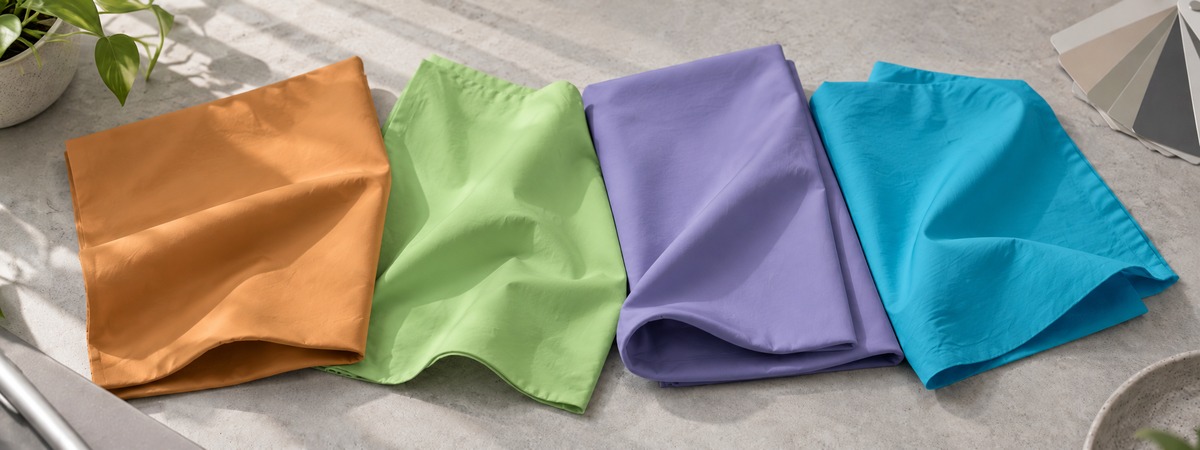
Words such as “quick-dry,” “antibacterial” and “sustainable” need a clear definition. Ask which test or supporting document applies, which sample was evaluated and what acceptance criteria will be used for your order. Do not assume a treatment or result applies to every color and production batch.
5. Verify Performance and Recycled-Content Claims
Match each claim to appropriate evidence. AATCC lists TM195 for liquid moisture management properties of textile fabrics; ask the laboratory which method fits the particular claim in your brief. Do not treat a moisture-management result as proof of every comfort or performance claim. Review AATCC's test-method listing.
For certified-material sourcing, distinguish the company's certification scope from evidence about the goods being supplied. Textile Exchange provides tools for checking scope and transaction certificates. Ask which documents apply to your selected material and shipment, then verify them through the appropriate channel. Check Textile Exchange's certificate authentication guidance.
Record the sample reference, color, test date, method, conditions and agreed acceptance criteria. Resolve gaps before approving bulk production.

6. Private Label Sourcing: Confirm MOQ, Costs and Timing
A useful quotation should make its assumptions visible. Send the same specification to each supplier and ask for the following information in writing:
- MOQ: minimum quantity per style and color, size allocation, and any separate fabric or trim minimums.
- Sampling: sample charges, revision terms, material availability and the estimated schedule for each approval stage.
- Bulk production: estimated production time and the approvals or deposits required before it starts.
- Price scope: fabric, trims, branding, packaging, testing and shipping terms, with exclusions clearly stated.
- Quality: approved sample, measurement tolerances, inspection arrangements and the process for handling nonconforming goods.
Keep sampling time separate from bulk production and transport time. Ask for an order-specific schedule instead of planning a launch around a general website estimate.
7. Build a Sampling and Bulk-Production Approval Plan
Use an approval sequence rather than one headline lead-time promise. Agree who signs off each stage, what information is required and when the next stage can begin.
- Material approval: select the fabric reference, color, trims and supporting documentation.
- Development sample: check construction, fit and branding against the brief.
- Revision approval: document changes and identify the approved specification version.
- Pre-production approval: confirm materials, size requirements, packaging and inspection arrangements before bulk manufacture.
- Shipment release: review agreed inspection results and shipping documents.
Compare fabric and sample requirements
Share reference images or a tech pack and ask for order-specific material options, minimum quantities and sampling terms.
Discuss Fabric Options & Sampling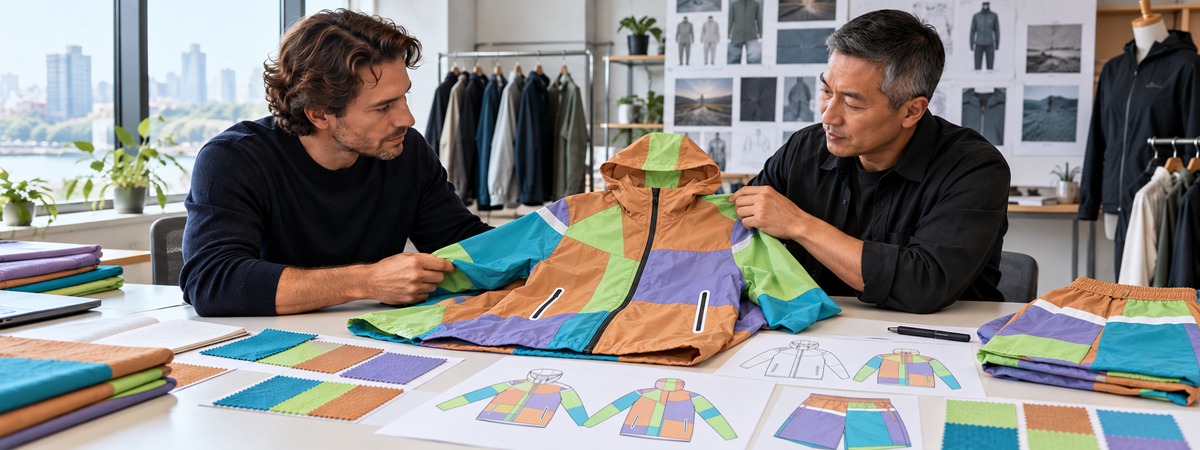
8. Review Development Work and Supporting Evidence
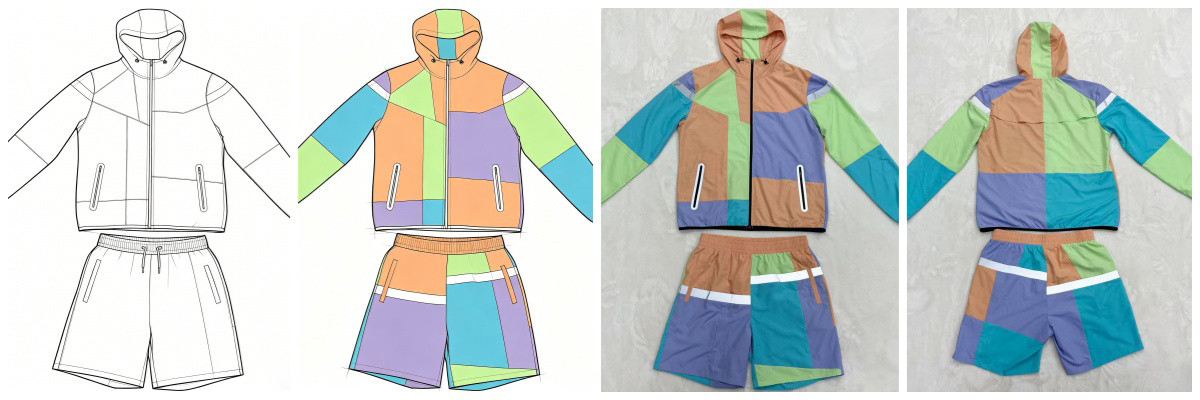
For your own collection, compare the sample with the technical drawing and specification. Check measurements, seam placement, trims, branding and construction. Record approved changes so both parties work from the same version before bulk production.
Review Montforge's garment production process, factory information and sustainability information. Request documents relevant to the specific product and material you are considering.
9. Discuss Your Activewear Project with Montforge
To discuss fabric options and sampling for your collection, send a short project brief. Include:
- Product type and reference images or a tech pack, if available.
- Target market, intended activity and required performance.
- Preferred composition, fabric weight or hand feel, if known.
- Estimated quantity per style and color, with the size range.
- Branding, packaging requirements and target delivery date.
If you are still selecting materials, describe the wearing conditions and priorities rather than choosing a fabric name alone. Ask Montforge to confirm available options, MOQ, sample charges, supporting documents and estimated timing for your brief.
10. Frequently Asked Questions
What is the minimum order quantity for custom activewear?
Request a quotation for your specific style, color and material. Confirm garment MOQ and any separate fabric or trim minimums before comparing offers.
How do I check a supplier's fabric transparency?
Request the material specification, relevant sourcing information and documents supporting the claims you intend to make. Check their scope and relevance to your order. For garment coverage, request a separate opacity evaluation on the selected color and construction.
How long will sampling and bulk production take?
Ask for separate estimates for material sourcing, sample development, revisions, bulk production and shipping. Confirm what starts each stage and what could change the schedule.
Can I start a discussion without a finished tech pack?
You can begin by sharing reference images, intended use, quantity and target timing. Ask which design details and specifications need to be resolved before sampling and quotation.
Ready to discuss your 2026 activewear collection?
Send your product type, estimated quantity, fabric priorities and target delivery date. Ask Montforge to confirm feasibility, quotation assumptions and sampling requirements for your project.
Send Your Sourcing BriefView Contact DetailsSources
- AATCC — Standard Test Methods and Procedures: reference for identifying relevant textile performance methods.
- Textile Exchange — Certificate Authentication: verification resources for scope and transaction certificates.
- Textile Exchange — Policy for Scope and Transaction Certificates: supporting policy resource for certified-material documentation.