Activewear Manufacturers for Small First Orders: A Buyer's Shortlist
- Share
- publisher
- Chence Chen
- Issue Time
- Nov 6,2026
Summary
Compare first-order manufacturing routes, training tops and coordinated sets, with practical guidance on quantities, samples and your quotation brief.
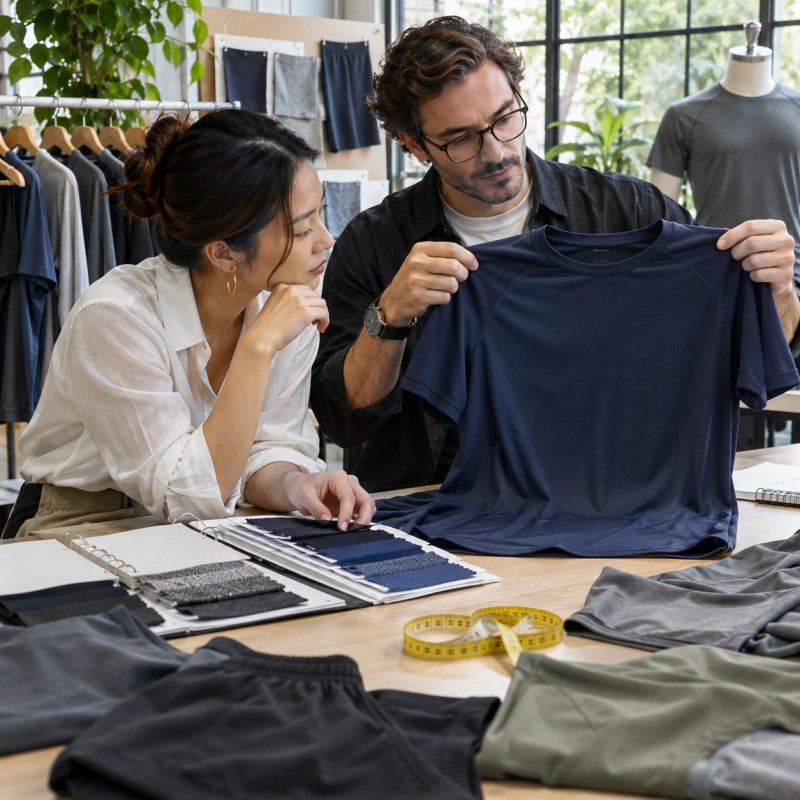
For a small first activewear order, choose between a single training top and a coordinated outfit, then match the manufacturing route to your design. Choose catalog garments with branding for a straightforward market test, ODM when an existing design can be adapted, or OEM when your fit and construction require development. Compare written quotations against the same specification, then approve a sample made with the intended materials before committing to bulk production. Confirm minimums, development scope and delivery dates against your particular style-color allocation.
Training top
Define one fit, fabric and branding package.
Training set
Add color coordination, size pairing and packing decisions.
OEM or ODM
Match the service pathway to what your design changes.
Should your first collection start with a top or a complete outfit?
MontForge's catalog gives this shortlist two concrete starting points: an individual training top and a coordinated outfit. Its training-set page lists T-shirt-and-shorts, hoodie-and-jogger, and tank-and-compression-tights configurations. Choose the combination that represents your launch rather than treating every listed product as a necessary first-order purchase.
Which manufacturing route fits your customization needs?
The published OEM and ODM pathways provide two service starting points. Catalog branding requires an availability check; a displayed product does not establish ready stock or a blank-garment service.
| Route and positioning | Strengths and customization | MOQ and cost questions | Sampling and timing | Best buyer fit and evidence |
|---|---|---|---|---|
| Catalog garments with branding | Established silhouettes; logo and label options where permitted | Confirm available stock, decoration minimums, and setup charges | Check stock allocation and approve decorated samples | Brands testing graphics or demand; inspect the exact garment and decoration |
| ODM adaptation | Existing design adapted through agreed materials, colors, or details | Confirm minimums for each material and modification, plus development fees | Allow for revisions and material sourcing | Buyers whose requirements fit a supplier's design base; compare original and revised specifications |
| OEM development | Buyer-led patterns, fit, panels, and construction | Confirm style/color minimums, pattern costs, and unused-material liability | Agree prototype, fit, and pre-production approval milestones | Brands needing distinctive fit or construction; verify development deliverables and samples |
How should you define quantities before asking about MOQ?
Specify quantities by style, color, and size rather than sending only a collection total. For example, a proposed 200-piece order divided into two styles and two colors creates four 50-piece style-color combinations. This is an illustrative allocation, not a claim that any factory will accept it.
Ask whether the minimum applies to garments, each color, a fabric purchase, or a decoration process. Also confirm whether sizes can be mixed within that minimum. A low garment minimum may still leave you responsible for excess custom-dyed fabric or special trims.
What changes when you order a coordinated training set?
MontForge's training-set collection describes coordinated top-and-bottom designs and independent sizing configurations. Translate those options into your own order sheet: identify both garment codes, each fabric reference, the intended color relationship and whether the garments are sold together or separately. Confirm which pairing and packing arrangements are available for your order.
A knit T-shirt paired with woven shorts needs a complete-outfit color review. A hoodie-and-jogger proposal needs clear length and waistband relationships as well as separate measurements. Reviewing the listed combinations as complete outfits makes sample approval more useful than checking two isolated product photographs.
What should every comparable quotation include?
Send every candidate the same specification and quantity breakdown. Request a quotation with clear inclusions and exclusions so that an apparently lower unit price does not conceal development, labeling, or freight charges. Record the quotation date and validity period alongside the commercial terms.
- Fabric specification, garment construction, and approved alternatives.
- Quantities by style, color, and size, including any minimum shortfall charges.
- Pattern, sample, revision, decoration, label, and packaging fees.
- Unit pricing, payment stages, currency, and delivery terms.
- Separate sampling, material procurement, production, and shipping milestones.
- Inspection arrangements, defect remedies, and responsibility for material substitutions.
How can you verify quality before committing?
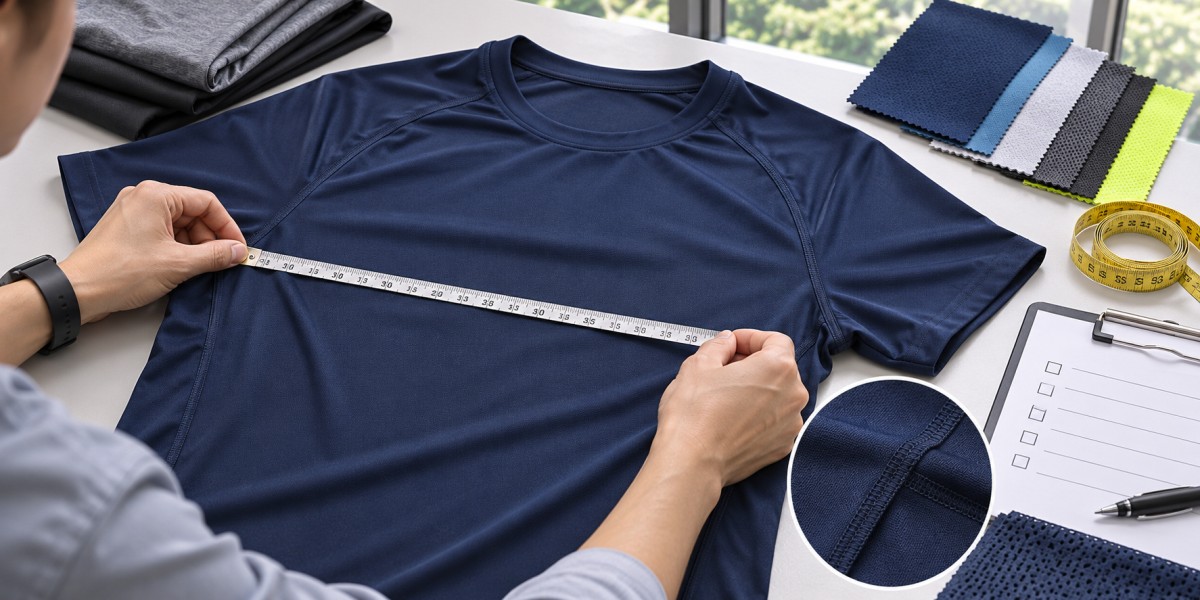
Use a sample made with the intended fabric, trims, construction, and branding wherever possible. If a substitute is necessary during development, record it and require approval of the final materials before production. An attractive prototype in a different fabric cannot establish how the bulk garment will fit or perform.
Create a measurement sheet with named measurement points, a measurement method, and agreed tolerances. Check the garment before and after washing according to the proposed care instructions. Review seam comfort during the intended movement and inspect print or transfer appearance after the agreed wash assessment.
How should you plan development, production and delivery?
MontForge's published OEM sequence runs from inquiry and design/sample submission through quotation and contract, fabric sourcing and production, inspection, and shipping. Ask the team to separate development approvals within that sequence and state what starts each stage's clock. Sample development, revisions, fabric availability, production capacity, inspection, and transit all affect the arrival date. A production estimate alone does not tell you when stock will be ready to sell.
Which service pathway matches your development brief?
Review the custom sportswear manufacturing service for the cooperation process, and its custom sports T-shirt service when assessing a first training-top range. Ask which fabric, fit, decoration, and packaging options apply to your design. Obtain written confirmation of MOQ, sample costs, revisions, and timing for the exact style-color allocation.
Which unresolved decisions should pause your order?
Pause bulk release until material substitutions, sample comments, size pairings and inspection responsibilities are resolved. Record the cost and schedule effects of approved changes.
What belongs in your first quotation request?
Prepare a tech pack or clear reference images, a size chart, fabric preferences, branding files, and quantities by style and color. Include the delivery destination, required arrival date, packaging needs, and which design features are essential. If technical details remain open, ask the supplier to identify the development work needed to resolve them.
Frequently Asked Questions
Should I start with a T-shirt or a training set?
Start with a T-shirt when your first launch tests one fit, fabric and branding package. Choose a training set when the coordinated outfit is central to your range; the listed T-shirt-and-shorts and hoodie-and-jogger combinations also require pairing, color and sizing decisions.
Does a catalog listing mean the garment is available as ready stock?
No. Treat the displayed product as a starting point for discussion and ask the team to confirm stock, customization scope and material availability. A catalog image alone does not establish a blank-garment or immediate-shipment service.
What is the minimum quantity for a first order?
Request confirmation for your exact style, color, material and decoration package. Published minimums vary across the site, so a collection total should not be treated as approval for every style-color combination.
Can the top and bottom use different sizes?
The linked training-set page describes independent top-and-bottom sizing configurations. Confirm the available size pairings, quantities and packing instructions for your project, and give each garment its own measurement sheet.
What should I send before requesting a sample?
Send a tech pack or clear references, garment measurements, material preferences, artwork and quantities by style and color. Include the destination and target arrival date, and identify any decisions that need development support.
About MontForge
MontForge is a custom sportswear manufacturer offering OEM and ODM services for brands developing men's performance apparel. Its range includes training T-shirts, coordinated sets, shorts, hoodies and outerwear. Buyers can discuss materials, customization, quantities and production terms against their project brief. Learn more about MontForge.