Athleisure Pants: Brushed Fleece and French Terry for Everyday Wear
- Share
- publisher
- MontForge Sourcing Team
- Issue Time
- Sep 22,2026
Summary
Athleisure pants manufacturing: brushed fleece vs French terry hand-feel, GSM and drape, care and pilling, coordinated sets, and MontForge lounge capabilities.
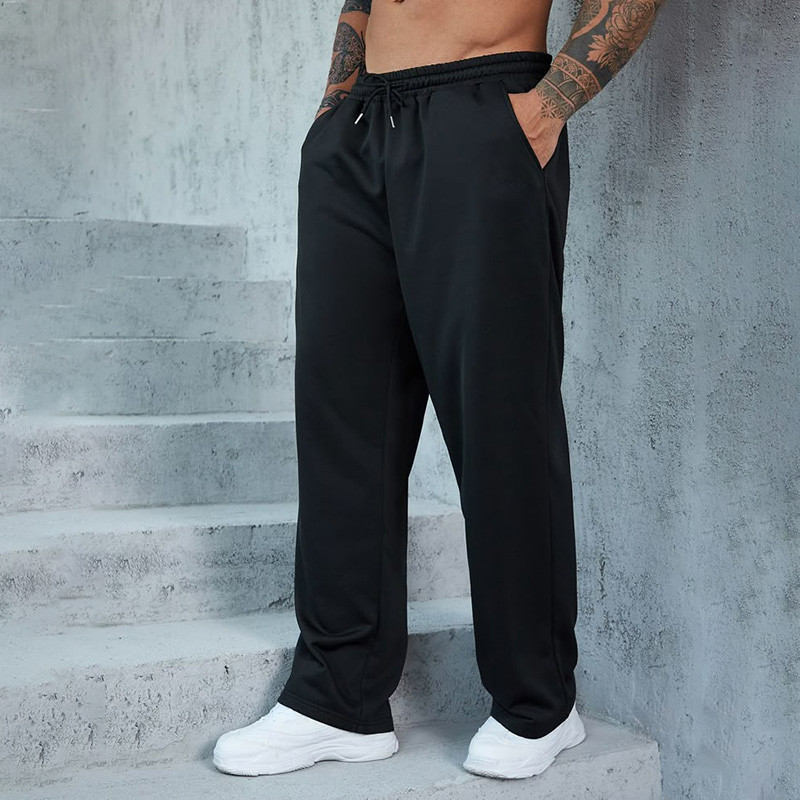
For an athleisure pant, the fabric is the product. The customer who buys a pair for everyday wear is buying hand-feel before they are buying anything else — the softness against the skin, the way the leg drapes, and whether it still feels the same after twenty washes. Two constructions dominate the category, and they are cousins rather than opposites: French terry and brushed fleece. This guide covers the hand-feel and comfort factors, GSM and drape, care and pilling, how to build coordinated sets, and MontForge's lounge capabilities.
Hand-Feel and Comfort Factors
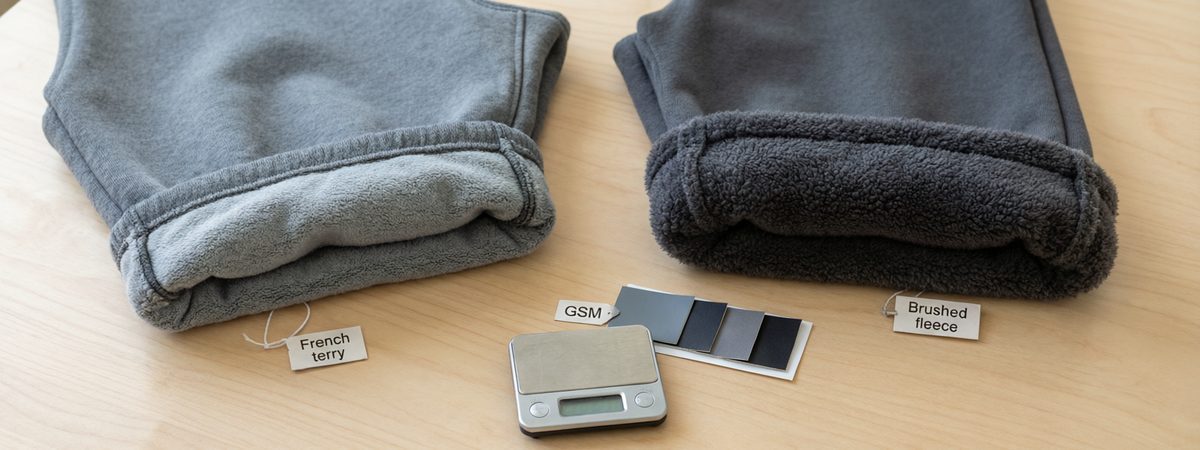
French terry and brushed fleece start from the same base: a cotton knit with a smooth face and a looped back. The difference is what happens to that back. French terry — also called loopback — leaves the loops intact and visible, which makes it lighter, more breathable and quicker to dry, with a crisper, cleaner hand that drapes and wears well for most of the year. Brushed fleece takes those loops and brushes them into a soft nap, which traps air and makes the fabric warmer, softer and heavier for the same yarn. That is the comfort trade-off in one sentence: weight for weight, fleece feels warmer and plusher, while terry feels lighter and more structured. The choice should follow the customer's intent — a pant bought for year-round or warm-climate wear leans terry, while a pant bought for the softness and a cooler season leans fleece. Yarn quality matters more than the label: a cheap base yarn will pill once it is brushed, which is where low-cost fleece gives itself away after a few washes.
GSM and Drape
Fabric weight, stated in grams per square metre, is the single best proxy for how substantial a pant feels, and it drives both drape and price. For joggers and athleisure pants the working range runs roughly 240 to 450 gsm. Below about 260 gsm the fabric drapes rather than holds shape and reads as loungewear; above about 400 gsm you are into heavyweight winter territory that feels substantial but runs hot, dries slowly and costs noticeably more, since fabric is bought by the kilo and a pant uses a great deal of it. The premium sweet spot most brands settle on is 300–400 gsm — heavy enough to hang properly and survive washing without being oppressive, with French terry at 280–320 gsm giving a light, fluid drape and brushed fleece at 320 gsm and above giving a fuller, softer drape. Note that two 300 gsm pants can feel nothing alike: the same weight in terry reads crisper and more structured, while in fleece it reads cozier and less structured. The practical rule is to feel the swatch, not just read the number. For the matching top, the same logic applies — see our guide to brushed fleece warmth and hand-feel.
Care and Pilling
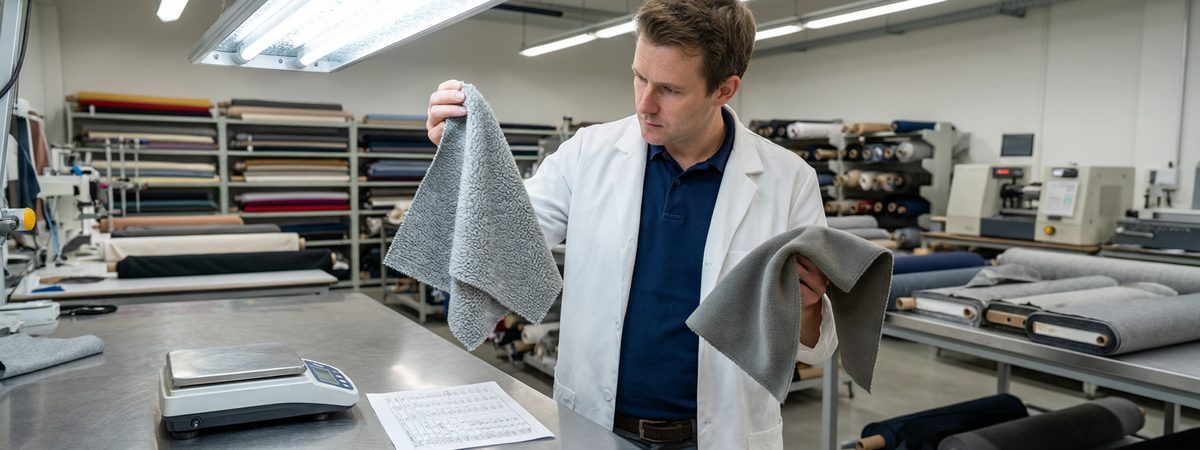
The two things that most disappoint a customer after purchase are shrinkage and pilling, and both are managed at the manufacturing stage rather than the care label. On shrinkage, all cotton knits shrink — typically three to five per cent, and more lengthwise than across — so a well-made pant is cut slightly oversized and the fabric is pre-shrunk or compacted before cutting, so the finished measurements after the first wash match the size chart rather than falling short of it. A factory that wash-tests the pre-production sample and sets the size chart from the washed measurements is doing the step most often skipped. On pilling, the brushed surface of fleece is the more pill-prone side, and how badly it pills depends heavily on yarn quality and whether the fibres are long-staple. A small amount of elastane — usually up to ten per cent, which GOTS still permits in a certified cotton garment — helps the seat and knees recover so the pant does not bag out after a few wears. Tell customers to wash cold and avoid high-heat tumble drying, but build the pant so that reasonable care keeps it feeling new.
Coordinated Sets
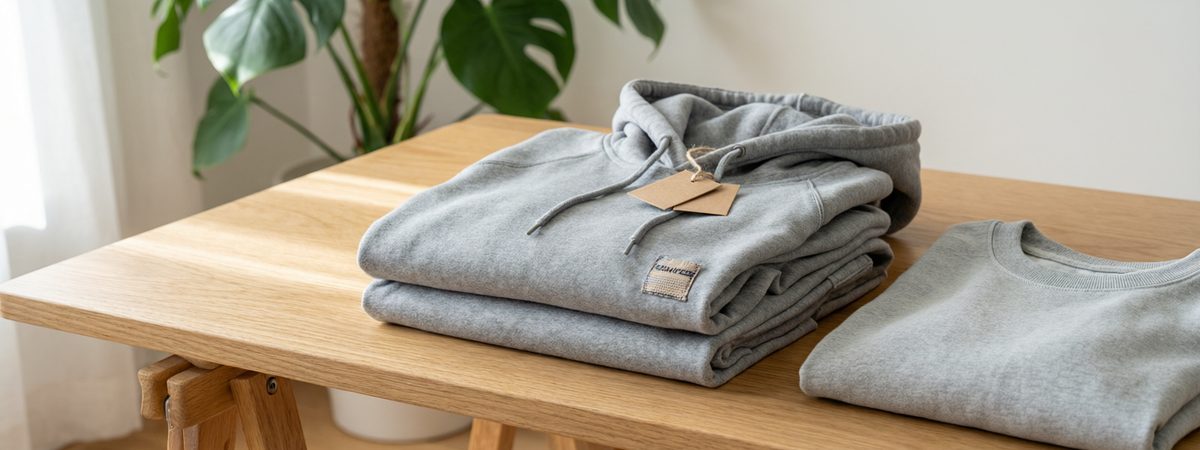
A matching hoodie-and-pant set is the signature athleisure product, and the coordination is more subtle than "same fabric, same colour." The two pieces do not need to be the same GSM, because a hood, kangaroo pocket, rib panels and upper-body structure change how a hoodie carries weight, while a pant has its own stress zones at the seat, knee, waistband and hem. The set should feel related, not numerically identical — same fabric family, same hand, same shade direction, with the hoodie often running slightly heavier than the pant so the proportions hold. The critical manufacturing detail is dyeing body and rib in the same lot, so the cuff is not a shade off the leg, and the hood's rib is not a shade off the body. A coordinated set is also where branding earns its keep: one treatment carried across both pieces reads as a system, and a jacquard logo woven into the waistband elastic is the upgrade most brands ask about, because it looks far more expensive than a print for roughly the cost of a knitting minimum. Sell the set as a set — it is the category's highest-margin and most repeatable SKU.
Waistband, Cuff and Construction Detail
The everyday-wear pant lives or dies on three construction details. The waistband should be a covered elastic with a flat drawcord through embroidered eyelets, and the elastic strength must match the fabric weight so a heavier pant does not pull it down; the drawcord holes should be bar-tacked so they do not tear. The cuff is the failure everyone recognises — a rib that goes slack and wavy after a season is a rib specification failure, usually a rib without elastane, a loose gauge, or body fabric used in place of rib. A properly knit 2x2 rib with elastane keeps the ankle closing wash after wash, and it should be dyed in the same lot as the body. Side-seam pockets are formed in seams that already exist and sit inside the standard price, while zipped pockets add a zip and an extra operation. On children's sizing, functional drawcords are restricted by US, EU, UK and Canadian regulations, so a fixed decorative cord is the compliant choice. These are small details, but together they separate a pant that stays new from one that looks tired in a month.
MontForge Lounge Capabilities
MontForge manufactures custom athleisure and lounge pants for streetwear, athleisure and loungewear brands. We build French terry and brushed fleece pants from roughly 240 to 450 gsm, with pre-shrunk and compacted fabric, elastane for seat and knee recovery, and GOTS-certified organic cotton options. Construction is specified rather than assumed: covered elastic or jacquard waistbands with bar-tacked drawcord eyelets, 2x2 rib cuffs with elastane dyed in-lot with the body, and side-seam or zipped pockets. Coordinated hoodie-and-pant sets are built on one fabric system with matched shade direction, and branding runs across embroidery, print, woven labels and jacquard waistbands. Low MOQ, wash-tested samples and archived tech packs keep a first drop and every reorder feeling identical.
Frequently Asked Questions
French terry or brushed fleece for athleisure pants?
French terry is lighter, more breathable and quicker to dry, with a crisper hand — ideal for year-round and warm-climate wear. Brushed fleece is warmer, softer and heavier, and it pills more readily if the yarn is poor. Choose by season and whether softness is the main selling point.
What GSM should athleisure pants be?
Most athleisure pants sit between 240 and 450 gsm. Below about 260 gsm reads as loungewear; above about 400 gsm is heavyweight winter wear. The premium sweet spot is 300–400 gsm, heavy enough to hold shape and drape without running hot.
How do you prevent joggers from pilling?
Start with a long-staple, high-quality yarn, since cheap fleece pills once it is brushed. The brushed surface is the pill-prone side, so fleece needs better yarn than terry. Washing cold and avoiding high-heat tumble drying also protects the nap.
Will my athleisure pants shrink?
Cotton knits shrink roughly three to five per cent, more lengthwise than across. A well-made pant is cut oversized and the fabric pre-shrunk or compacted, and the size chart is set from washed measurements so the first wash does not change the fit.
Do a hoodie and pant in a set need the same GSM?
No. A hood and kangaroo pocket change how a hoodie carries weight, so the hoodie often runs slightly heavier than the pant. The set should share the same fabric family, hand and shade direction — related, not numerically identical.
Ready to build an athleisure pant line? Send us your fabric and weight direction or browse MontForge custom lounge pants — French terry and brushed fleece, coordinated sets and wash-tested construction at low MOQ.