Compression Wear Manufacturing: Science, Technology, and Market Opportunities
- Share
- publisher
- MontForge Team
- Issue Time
- Jul 20,2026
Summary
A manufacturing guide to compression wear: the science of graduated compression, fabric and pattern engineering, and the fast-growing recovery-wear market opportunity.
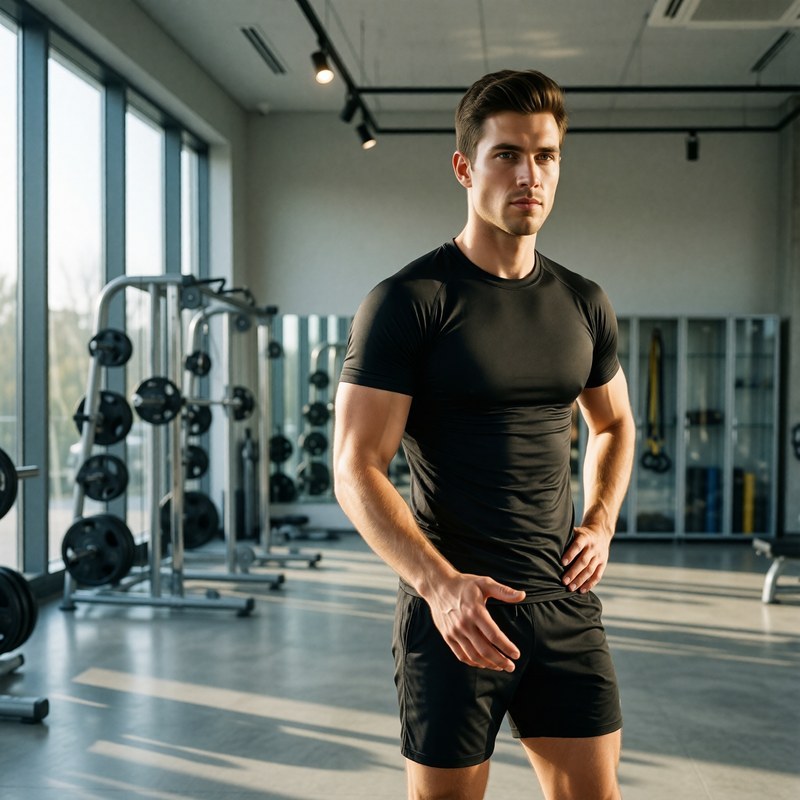
Compression wear has moved from medical clinics and elite locker rooms into the mainstream athletic wardrobe. For brands entering this category, the real differentiator is not a logo on a tight shirt—it is the engineering beneath the fabric. This guide breaks down the science of graduated compression, the fabric and pattern requirements that make it work, and the market opportunity behind the booming recovery-wear segment.
1. The Science Behind Compression Garments
True compression garments apply graduated mechanical pressure: tightest at the extremities (ankle or wrist) and gradually lighter toward the torso. This gradient follows Laplace's Law (P = T/R)—narrowing superficial veins raises blood velocity and drives deoxygenated blood back toward the heart, countering the "muscle pump" bottleneck that causes blood pooling after hard efforts.
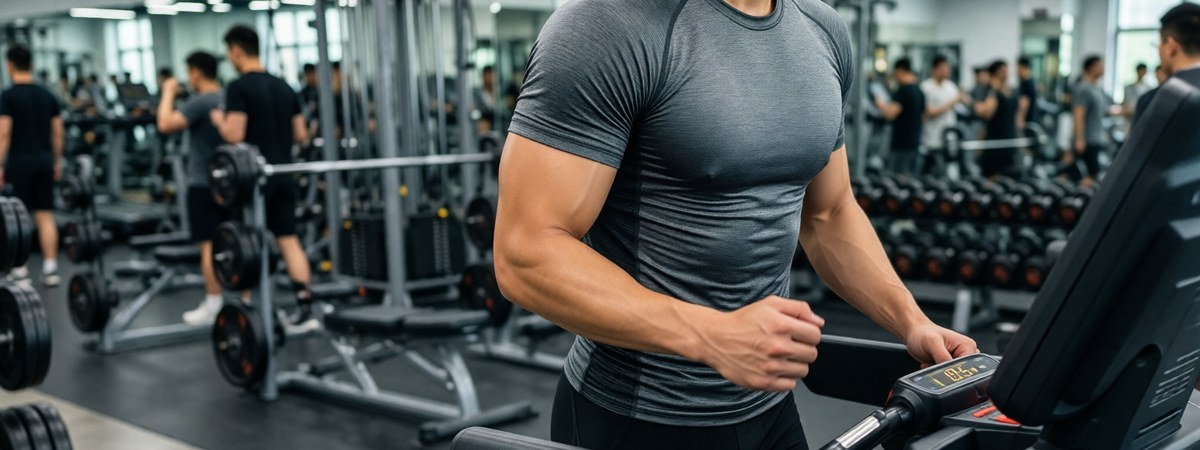
Pressure is measured in millimetres of mercury (mmHg). Performance-grade compression typically sits between 8 and 40 mmHg, while medical classifications run Class I (15–21 mmHg), Class II (23–32 mmHg) and Class III (34–46 mmHg). Three physiological mechanisms explain the effect:
- Reduced interstitial oedema: external pressure limits plasma-protein extravasation in the acute inflammatory window; MacRae et al. (2011) measured 8–12% less limb swelling via circumference.
- Attenuated muscle oscillation: a 10–18 mmHg garment lowers tibialis-anterior vibration amplitude by roughly 14% (8–12% per broader EMG studies), reducing the micro-trauma that drives soreness.
- Proprioceptive facilitation: cutaneous mechanoreceptors stimulated by graded pressure sharpen joint-position sense, aiding movement efficiency even before soreness resolves.
The recovery evidence is the strongest case. Kraemer et al. (2001) found collegiate basketball players in full-leg compression reported 27% less soreness at 24 h and 34% less at 48 h post-game. A 2019 meta-analysis by Hill et al. pooling 23 randomised controlled trials showed a clinically meaningful soreness reduction (standardised mean difference −0.67). Compression plus active recovery clears blood lactate about 18% faster than passive rest (Duffield & Portus, 2007), and a 2022 systematic review by Weakley et al. found creatine-kinase levels 15–22% lower at 24 h. On performance, the same 23-RCT meta-analysis showed no significant VO₂max gain but a consistent 3–8% delay in lactate threshold—the benefit is metabolic-waste clearance, not raw power.
2. Key Product Categories: Base Layers, Tights, and Sleeves
Compression is not one product. The category splits by coverage and use case:
- Base layers: skin-tight tops and bottoms worn under outer kit; they manage moisture and give light, full-torso support for training and travel.
- Compression tights and leggings: the volume leader. Zoned panels target the quadriceps (often ~15–20 mmHg) and calves (15–25 mmHg) for running, cycling and gym work.
- Sleeves and socks: calf sleeves (~15–20 mmHg) and arm sleeves (12–18 mmHg near the wrist) deliver localised recovery and proprioceptive support without a full garment.

For men's lines, tights and base layers dominate repeat purchases, while sleeves are the entry product for recovery-curious buyers—an easy first SKU for a new brand.
3. Fabric Requirements for Compression Wear
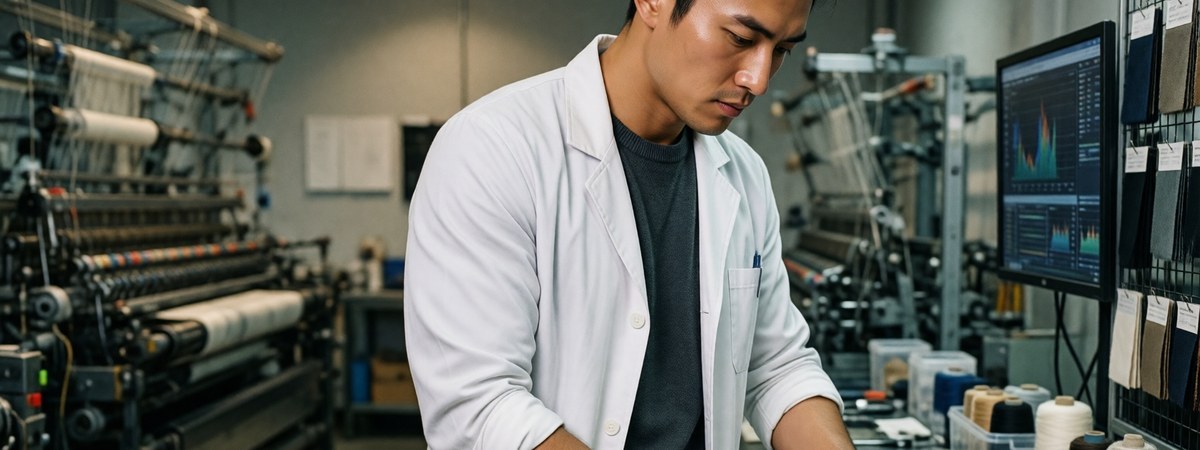
Compression lives or dies on the yarn and knit. Circular-knit compression fabrics typically blend 78–82% nylon/polyamide with 18–22% elastane, at a basis weight of 180–280 g/m². Recovery leggings often run a 75–80% nylon / 20–25% spandex mix at 30–40 denier; spandex content of 15–25% balances stretch with stability.
Knit structure sets the behaviour:
- Circular knit (seamless tube): uniform stretch, ideal for sleeves and tights; Santoni SM8-TOP2S machines achieve pressure uniformity with a coefficient of variation below 5%.
- Warp knit: firmer, more dimensionally stable—suited to performance tights that must hold shape.
- Interlock (double knit): thicker, opaque and smooth, used where coverage matters.
Functional finishes—antimicrobial silver-ion or mint-oil treatments, moisture-wicking and UPF—extend wear comfort. The pressure gradient itself is engineered into the garment geometry: highest at the calf (15–25 mmHg), lower at the thigh (10–15 mmHg), and 12–18 mmHg near the wrist fading toward the shoulder.
4. Ergonomic Pattern Engineering for Compression Fit
Cut-and-sew construction leaves seams that chafe and create pressure weak points. Seamless circular knitting forms the garment in one continuous piece, embedding compression zones directly in the knit. Body-mapping technology analyses 3D body scans to place higher tension over the quadriceps and calves and lighter support at the joints—matching movement, not a generic size chart.

Advanced workflows go further: 3D body scans are converted by compression algorithms into a digital pressure map, assigning target mmHg values to each body segment, then translated into stitch density and yarn placement. Pressure-mapping sensors (e.g. MST MK4) verify an 18–22 mmHg ankle-to-thigh gradient on every batch. Heat-setting stabilises the hand-feel, and an AATCC 135 wash test flags any garment with >3% post-wash shrinkage for rework.
5. Market Opportunity: The Booming Recovery Wear Segment
The numbers justify the engineering investment. The compression and recovery clothing market was valued at USD 3.45 billion in 2025 and is projected to reach USD 5.45 billion by 2032 at a 6.75% CAGR; North America led with USD 1.21 billion (35.1%) and sports & athletics took the largest application share at 53.5%. The broader compression-wear market tracks USD 4.87 billion (2025) toward USD 7.08 billion (2032).
Two sub-segments are accelerating fastest. Seamless compression wear is forecast to surpass USD 9 billion by 2030 (Global Industry Analysts, 2025), with demand growing roughly 12% annually through 2028. And within compression recovery tights, the muscle-recovery pants segment reached USD 1.28 billion in 2025 (up 11.6%) and is headed toward USD 2.29 billion by 2030 (12.4% CAGR); post-exercise recovery drives 62.3% of demand while medical-rehabilitation use is the fastest-growing application at 16.7%. China's <Sports Compression Pants> group standard, effective April 2026, signals a maturing, standardised Asia-Pacific market.
6. Manufacturing Considerations for Compression Garments
Compression raises the bar on manufacturing discipline:
- Construction choice: seamless circular knit for comfort and zero chafe, or cut-and-sew with flatlock seams (ISO 602) that minimise bulk where panels must be joined.
- Pressure validation: every production run should be pressure-mapped to confirm the gradient is consistent, not just "stretchy".
- Quality control: AQL inspection, Top-of-Production (TOP) samples, stretch-recovery trials and wash-shrinkage testing keep batches on spec.
- Compliance: garments with therapeutic claims may need FDA 510(k) / CE marking; even sports-grade pieces now face standards like China's 2026 group standard for compression pants.
- Vertical integration: a factory controlling yarn→knit→dye→garment under one roof removes the tension drift that ruins compression consistency.
7. Branding and Customization Options
Compression is highly brandable. Zoned panels can be dyed in brand colours, and logos survive high stretch when applied via heat-transfer or reinforced embroidery rated for elastane. Smart yarns—silver-ion or graphene coatings—add antimicrobial and thermoregulation stories, while recycled nylon (rPET) and bio-based elastane meet the sustainability expectations of 2026 buyers. Low-MOQ sampling lets a new brand test a compression capsule before committing to a full line.
8. Frequently Asked Questions
Do compression garments actually work?
The strongest evidence is for recovery: multiple RCTs and meta-analyses show meaningful reductions in DOMS (e.g. −27% to −34% soreness in Kraemer 2001) and faster lactate and creatine-kinase clearance. Performance gains are smaller and activity-specific—think better lactate-threshold delay, not a VO₂max jump.
Which pressure level should my product target?
For sports recovery, 15–25 mmHg zones are the sweet spot (light 8–15 for daily wear, firm 20–30 for high-impact). Anything above ~20 mmHg that implies therapeutic benefit should be validated and, where claimed, cleared as a medical device.
Is seamless or cut-and-sew better?
Seamless wins on comfort, chafe-free wear and waste reduction, and is ideal for tights and base layers. Cut-and-sew remains useful for complex colour-blocking or when flatlock seams are needed for structure. The choice is engineering, not fashion.
Can Chinese manufacturers deliver reliable compression wear?
Yes—vertically integrated OEMs with in-house knitting, pressure-mapping labs and body-scan fitting systems now produce sports-grade and medical-grade compression at scale, with consistent mmHg gradients across batches.
9. Conclusion
Compression wear rewards brands that treat fabric and pattern as science, not decoration. Get the gradient, the knit and the validation right, and you tap a recovery-wear market growing toward USD 5.45 billion by 2032 with double-digit pockets in seamless and medical-adjacent segments.
Planning a compression line? Share your tech pack with our engineering team →
Need pressure-mapping and body-scan fitting? Request a compression development consultation →
Ready to sample a low-MOQ capsule? Start your compression wear inquiry →