Coordinated Tracksuit Bottoms for Streetwear and Teamwear
- Share
- publisher
- MontForge Sourcing Team
- Issue Time
- Sep 27,2026
Summary
Coordinated tracksuit bottoms: matching tops and bottoms from one fabric lot, side stripe and trim, roster sizing, reorder and scale, and private-label retail.
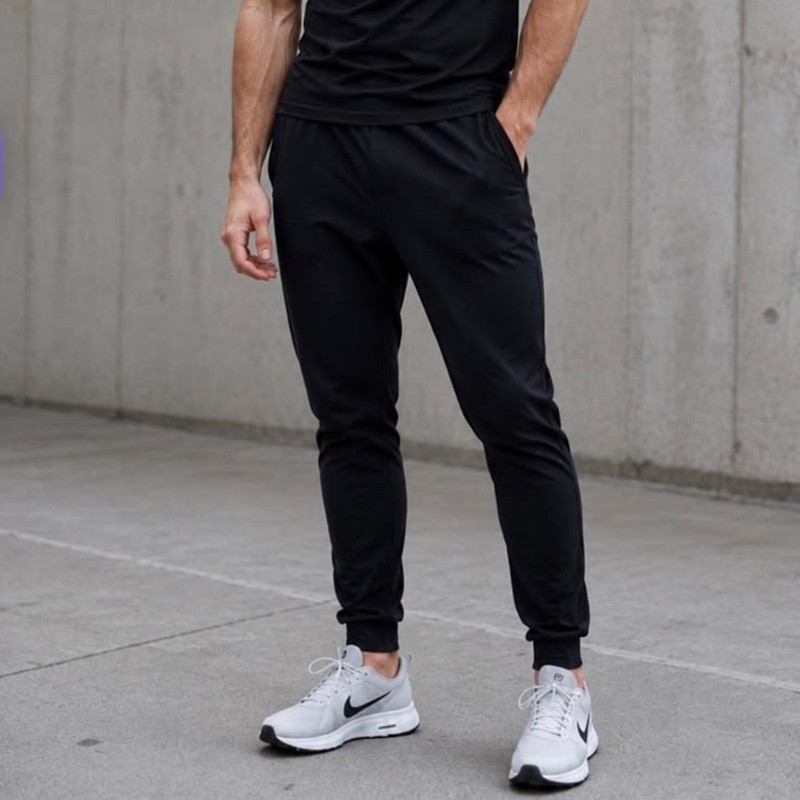
A coordinated tracksuit lives or dies on one thing the customer notices immediately: whether the jacket and the bottoms actually match. The single most common complaint in tracksuit manufacturing is colour mismatch between the top and the bottom — and it happens almost every time the two pieces are cut and sewn on different lines from different fabric lots. This guide covers how to build a matching top-and-bottom programme, side stripe and trim details, roster sizing for teams, reorder and scale, and private-label retail.
Matching Tops and Bottoms: One Lot, One Line
The only reliable way to guarantee a top and bottom match is to cut both from the same fabric lot and sew them on the same production line, then inspect them together as a set. When the jacket and pants come from different workshops, even a nominally identical colour drifts into two visibly different shades, and the "matching set" falls apart. The fabric choice then splits the market in two directions: for streetwear, heavyweight French terry and brushed fleece at 400–500 GSM with oversized fits, acid-wash and puff-print branding; for gyms, teams and athleisure labels, moisture-wicking polyester interlock and tricot with athletic fits and sublimation or heat-transfer logos. As a rough guide, complete sets run about $12–25 at 100–500 sets, with lightweight tricot at the low end and heavyweight washed French terry at the high end.
Side Stripe and Trim: The Identity That Runs the Full Length
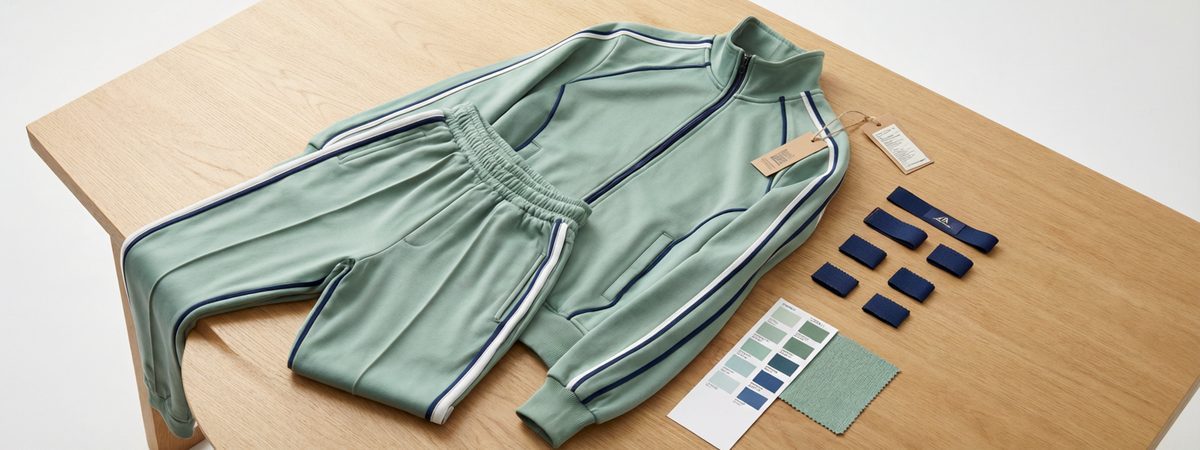
The side stripe is what turns two matching pieces into one system. A full-length stripe running down the outer leg — and echoed on the sleeve — carries a team or brand identity from shoulder to ankle, and it is the detail that makes a coordinated set read as designed rather than dyed. Specify the stripe as tape (a woven strip), contrast piping, or a cut-and-sewn side panel, and fix its width, colour and position so it registers identically on both the jacket and the bottom. Trim coordination matters just as much as the stripe itself: the rib cuffs and waistband, the drawcord and its aglets, and the zipper colour should all be specified against the body fabric in the same dye lot, so a white stripe, a black body and a matching drawcord read as one palette rather than three. For the fit-and-silhouette decision underneath the stripe, see our guide to jogger fits.
Roster Sizing: Build the Size Breakdown per Piece
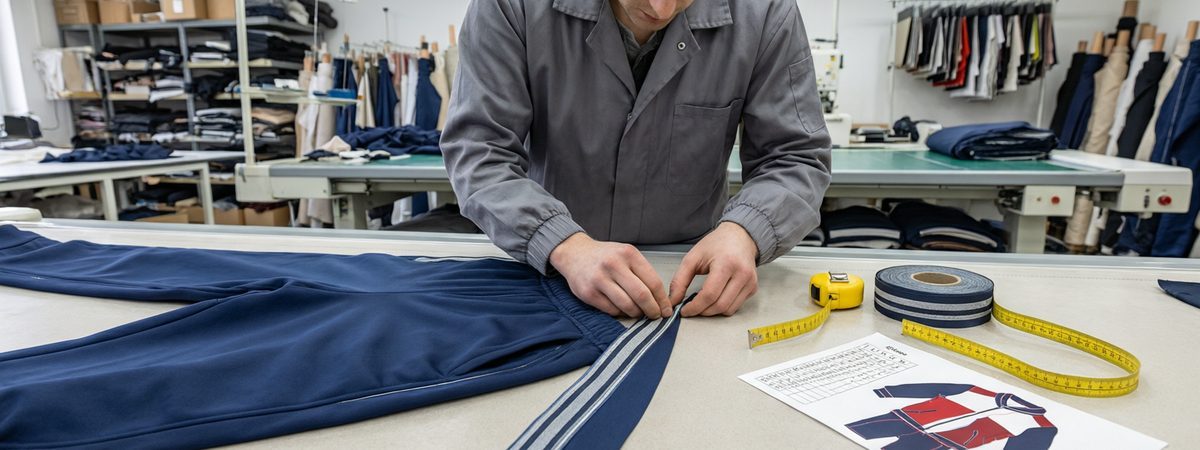
Teams and clubs rarely need the same size ratio in tops and bottoms — a squad may need more large jackets than large pants, or the reverse. The fix is to specify a size breakdown per piece, not per set, and let the factory produce to that ratio within your total quantity. Submit the approved measurement chart plus a roster with quantities by garment, colour and size, and keep the final roster and artwork version together before bulk decoration and packing. Teamwear minimums run higher than streetwear: tracksuits commonly carry a 300-set MOQ, while football and basketball uniforms sit around 500 sets per design and colour, each with Western grading across youth plus XS–3XL or extended sizes. Each garment in a programme has its own minimum — a combined order does not automatically combine the minimums.
Reorder and Scale: Keep the Block Library Stable
The value of a coordinated programme is that it scales cleanly. Lock a stable block library — the home, away and alternate colourways, the stripe colours, and the trim references — so a reorder of 500 sets matches a reorder of 10,000 sets with zero shade drift. Keep the dye lot references and Pantone codes on file, and reorder from the same fabric mill, because a different mill's "navy" is a different navy. This is the same discipline that underpins a DTC collection built to reorder — see our coordinated summer shorts collections for the collection-level version of the same logic.
Private-Label Retail: Ship It Ready to Sell
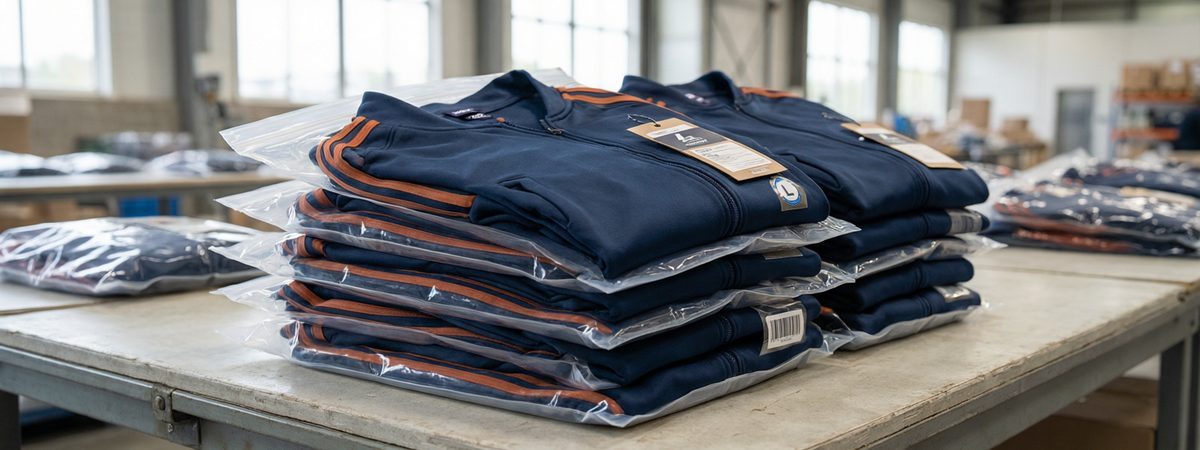
For a private-label or OEM programme, the product should leave the factory retail-ready under your brand. That means custom woven neck labels and care labels on both pieces, a hang tag, branded polybags, size stickers and barcoded cartons — and, for designs you are protecting, an NDA before the first sample. Specify the branding method against the fabric: embroidery for a durable, premium crest, sublimation for all-over team graphics, heat transfer for smaller runs, and tackle twill for names and numbers. Send artwork as clean vector files so shapes and lettering stay sharp at every size.
A Launch Checklist for Your Coordinated Programme
- Cut and sew tops and bottoms from the same fabric lot on the same line, inspected as a set.
- Specify the side stripe as tape, piping or a panel, with width, colour and position on both pieces.
- Match rib, drawcord and zipper trims to the body in the same dye lot.
- Submit a size breakdown per piece plus the roster, not a single set ratio.
- Lock a stable block library and reorder from the same mill for shade-stable repeat orders.
- Finish private-label with labels, hang tags, branded polybags and barcoded cartons.
Frequently Asked Questions
How do I keep a tracksuit top and bottom the same colour?
Cut both pieces from the same fabric lot and sew them on the same production line, then inspect them together as a set. Colour mismatch almost always comes from the two pieces being made on different lines from different lots.
Can the jacket and pants use different size ratios?
Yes. Specify a size breakdown per piece rather than per set, so you can order more large tops than bottoms or the reverse. Submit the measurement chart and roster with quantities by garment, colour and size.
What is a side stripe and how do I specify it?
A side stripe is a full-length stripe running down the outer leg, usually echoed on the sleeve. Specify it as woven tape, contrast piping or a cut-and-sewn panel, with width, colour and position fixed on both pieces.
What is the MOQ for a coordinated tracksuit?
Streetwear and private-label sets commonly start around 100 sets, while teamwear tracksuits carry a roughly 300-set minimum and football or basketball uniforms around 500 sets per design and colour.
What should a private-label programme include?
Custom woven neck and care labels, a hang tag, branded polybags, size stickers and barcoded cartons, plus an NDA for protected designs and vector artwork for sharp branding at every size.
Match every piece, every order. Explore MontForge custom tracksuit bottoms or send us your programme — same-lot tops and bottoms, side stripes and trims, roster sizing and retail-ready private label.