Custom Men's Sportswear Manufacturer: The Complete B2B Guide to Finding, Vetting, and Ordering from the Right Factory (2026)
- Share
- publisher
- Montforge Production Team
- Issue Time
- May 12,2026
Summary
Looking for a custom men's sportswear manufacturer? Read our 2026 complete B2B guide covering OEM/ODM models, performance fabrics, and full ordering processes.
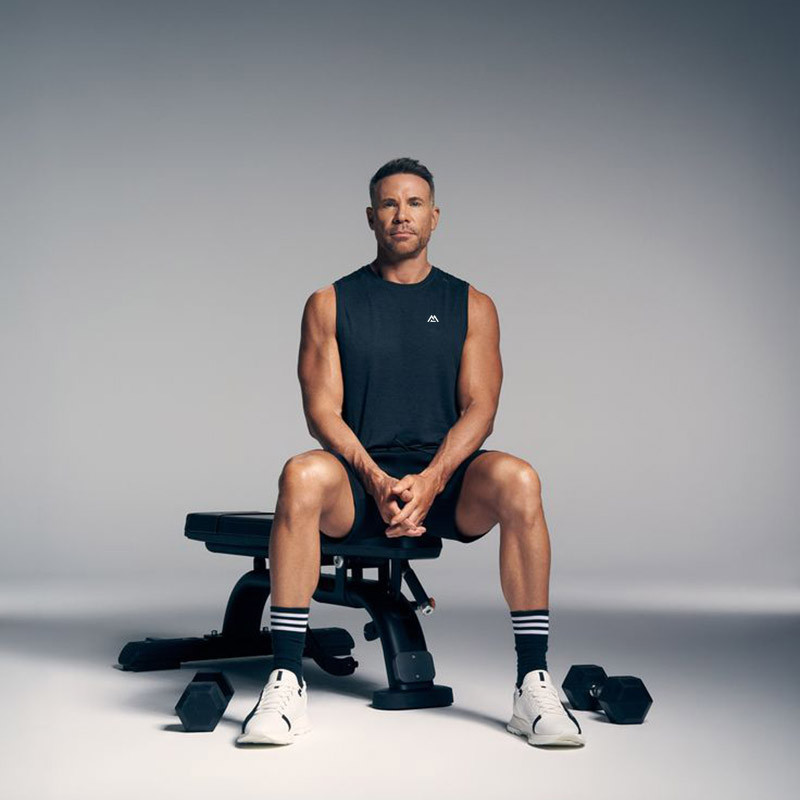
MontForge Manufacturing | Men's Sportswear Sourcing Guide
A custom men's sportswear manufacturer develops and produces garments to an agreed specification covering fit, material, construction, branding and packing. Begin with the product and intended order structure, shortlist suppliers with relevant work, and use samples and written commercial terms to establish whether the proposal meets your needs.
Choosing a manufacturer from the first low quote can leave important questions unanswered. This guide follows a first order from supplier discovery to bulk approval, showing what the buyer should define and what needs to be tested.
What Is a Custom Men's Sportswear Manufacturer?
A custom men's sportswear manufacturer is a factory that produces performance and lifestyle activewear for men — to your specific design, fabric, fit, and branding requirements. This is different from a wholesale distributor (who sells finished stock) or a print-on-demand service (who prints your logo onto generic blanks).
A genuine custom manufacturer does some or all of the following:
•Develops garments from your tech pack or reference sample
•Sources performance fabrics (nylon/spandex, polyester/spandex, recycled blends) to your specification
•Produces custom patterns and fit blocks for men's sizing
•Applies your branding — woven labels, heat transfers, embroidery, silicone logos
•Packages with your custom hangtags, polybags, or retail-ready boxes
•Manages export documentation and ships direct to your warehouse or 3PL
The men's custom sportswear category covers a wide range of product types:
| Product category | Development questions | Cost items to identify |
| Men's gym shorts | Movement, coverage, pocket construction and waistband | Fabric consumption, pockets, elastic and decoration |
| Men's compression tights | Intended support, fit, seam comfort and recovery | Material, panel construction, grading and testing |
| Men's training tank or tee | Weight, drape, armhole shape and decoration | Fabric, neck finish and print setup |
| Men's training suit set | Matching appearance, mobility and component consistency | Two garments, zippers, trims and packing |
| Men's track jacket | Knit or woven construction, closure and intended protection | Shell, lining where used, hardware and specialist operations |
| Men's hoodie or sweatshirt | Warmth, bulk, hood fit and rib recovery | Material weight, hood construction and rib |
| Men's streetwear jogger set | Silhouette, proportions and coordinated branding | Pattern work, material, trims and applications |
| Men's cycling or running set | Movement, placement, coverage and intended claims | Construction, specialist components and validation |
Why this matters: Not every factory produces all of these well. A factory that excels at basic gym shorts may not have the pattern capability for a structured men's woven track jacket. Always confirm product-specific experience before ordering.
The 4 Manufacturing Models: OEM, ODM, Private Label, and Cut-and-Sew
These service labels can overlap. Use them to start the discussion, then confirm the actual responsibilities, development work and rights in writing.
| Model | Design starting point | Production scope | Minimums | Ownership | Suitable question |
| OEM | Buyer specification | Defined by contract | Project-specific | Agree explicitly | Can the supplier execute this design? |
| ODM | Supplier design base with changes | Define development and manufacture | Project-specific | Agree licences and changes | Does an existing base meet the brief? |
| Private label | Existing or developed product with buyer branding | Specify garment and branding tasks | Project-specific | Agree explicitly | What can actually be changed? |
| Cut-and-sew | Patterns and materials developed or supplied | Cutting and assembly plus agreed tasks | Project-specific | Agree patterns and files | Who controls each input and approval? |
OEM, ODM, private label and cut-and-sew are used differently by suppliers and can overlap. Replace the label with a written scope: who designs, sources material, develops patterns, owns files and approves substitutions. Neither the service label nor the order minimum automatically determines ownership.
How to Find a Custom Men's Sportswear Manufacturer
There are four primary channels. Each has a different risk profile and cost structure.
1. Trade Platforms (Alibaba, Global Sources, Made-in-China)
The most accessible starting point. Thousands of factories listed, filterable by product category, certification, and MOQ. The risk: factory profiles are self-reported, photos can be misleading, and trading companies are often listed alongside genuine manufacturers.
Use platform verification information as one input. Check the business identity, named production site, relevant work and documents directly; a paid membership badge is not an order-quality guarantee.
Compare the same specification. A low quote may reflect another material, construction or delivery basis; identify the difference before judging its value.
2. Trade Shows (Canton Fair, Magic Las Vegas, Texworld)
Trade shows let you inspect display samples and discuss the product in person. Follow the meeting with document checks and an order-specific sample; a booth is an introduction, not a factory audit.
For an exhibition such as the Canton Fair, check the organiser's current product sectors, phase dates and exhibitor directory before planning a visit.
For sourcing events such as SOURCING at MAGIC, confirm that the particular edition includes the type of production partner you need.
3. Industry Referrals and Brand Communities
A referral can identify a candidate with relevant experience. Check whether the referred work matches your garment, order mix and market. Respect confidential client information and evaluate the new project on its own evidence.
4. Direct Outreach to Factory Websites
A factory website can help locate relevant product and service information. Check the actual business and production arrangements rather than inferring reliability from how selective or polished the website appears.
Look for relevant garments, a clear development process, contact information and documents that can be checked. A named owner for the enquiry is useful; the format of an email address alone does not establish service quality.
The 8-Point Vetting Checklist for a Custom Men's Sportswear Factory
Once you've identified 3–5 candidate factories, run each through this framework before requesting a sample.
Checkpoint 1: Men's Sportswear-Specific Portfolio
Request relevant men's garments and ask who developed and produced them. Compare the construction and fit questions with your own style. A factory working across several categories may still be suitable if it can show the required capability.
Checkpoint 2: Certifications — Verified, Not Just Displayed
| Certification | What It Means | How to Verify |
|---|---|---|
| OEKO-TEX STANDARD 100 | Harmful-substance testing for the articles within the certificate scope | Check certificate number, validity and covered products; it is not a universal legal entry requirement |
| amfori BSCI | Social auditing and improvement at a named site | Review dated audit findings and corrective actions through an authorised route |
| ISO 9001 | A quality management system | Verify entity, site, scope and certification body; it does not certify every garment |
| Laboratory report | A test on an identified sample under a stated method | Check sample identity, method, result and relevance; SGS and Intertek are service providers, not universal garment standards |
| Organic or recycled-content scheme | A defined material claim and chain of custody | Check the applicable scheme, scope and transaction evidence; do not infer a complete environmental benefit |
Checkpoint 3: Technical Fabric Capability
Ask specifically: 'What performance fabrics do you work with regularly for men's activewear?' A knowledgeable factory will answer with fabric compositions, GSM ranges, and treatment options (DWR, anti-odor, UV-blocking). A factory that answers with 'we use high quality fabric' is not giving you a technical answer.
Key fabrics for men's performance sportswear:
Nylon/elastane: consider as a stretch-material route, then evaluate actual recovery, hand-feel and fit. Fibre percentages alone do not determine compression or quality.
Polyester/elastane: assess the proposed construction, stretch, moisture behaviour and decoration compatibility rather than assuming every blend performs alike.
•Woven nylon or polyester — for track jacket shells, windbreakers, structured outerwear
•Brushed fleece or French terry — for hoodies, sweatpants, casual performance pieces
Recycled polyester: confirm content, traceability and the exact material reference. Recycled input does not automatically establish performance equivalent to another fabric.
Checkpoint 4: Sampling Process
A professional factory will have a structured sampling workflow. If a factory cannot describe their sampling stages, or wants to skip to bulk without a sealed sample approval, walk away.
| Sample stage | Purpose | Scheduling dependency |
| Tech-pack review | Identify missing specifications and feasibility issues | Completeness of the brief and proposed material |
| Prototype | Review initial fit and construction | Pattern development and sample material |
| Fit revision | Resolve documented measurement and movement issues | Accepted comments and any material changes |
| Sealed reference | Identify the accepted sample and revision | Approval of the relevant product features |
| Pre-production review | Check nominated bulk materials and production details | Material availability and completion of required trials |
Checkpoint 5: MOQ and Pricing Transparency
A trustworthy factory gives you clear MOQ numbers upfront and explains how unit price scales with volume. Red flags:
•MOQ stated as a range without conditions ("50–500 pieces" without specifying what changes)
•Unit price quoted without specifying fabric quality, construction spec, or branding inclusions
A quote issued before the specification is complete should state its assumptions. A supplier may reasonably need more information before pricing; the important question is whether the missing decisions are clearly identified.
Checkpoint 6: Export Experience to Your Market
Ask how the proposed order will be shipped to the destination, which documents each party supplies and who handles import clearance. Prior export experience is useful, but classification and responsibilities still need to fit this shipment.
Checkpoint 7: Communication Quality
Send a detailed inquiry email with 5–7 specific questions about their men's sportswear capability. Judge the response:
•Did they answer all questions specifically, or did they send a templated brochure?
Did they give a clear next step and meet an agreed response time, allowing for working hours and holidays?
•Was the response from a named person, or a generic account?
•Did they ask any clarifying questions about your project?
Use the first enquiry to judge whether the team can understand the brief and make the next decision clear. Continue checking those behaviours during sampling.
Checkpoint 8: Payment Terms
Agree deposit, balance, payment milestones, inspection rights and treatment of rejected goods in writing. Evaluate the exposure and payment safeguards for the relationship. One payment percentage alone does not establish whether a supplier is legitimate.
A first-order brief should distinguish decisions from questions
The factory needs to know which parts of the garment are fixed and which are open for development. A reference image may establish a silhouette without specifying the fabric, seam construction or finished measurements. Mark those gaps explicitly instead of allowing a preliminary quote to become an assumed specification.
Divide the brief into product requirements, proposed materials and unresolved choices. Ask for alternatives as separate options with their effect on sampling, price and order commitment.
Order structure can matter more than the headline minimum
Consider a hypothetical order rule of 100 units per style and colour. Two styles in three colours would require 600 garments under that rule. The total is not automatically 100 garments simply because a website advertises an MOQ of 100. The size breakdown would normally be allocated within the agreed order structure, subject to the supplier's conditions.
This is an explanation of order arithmetic, not MontForge's universal MOQ. Material, dyeing and trim minimums can introduce additional commitments and must be confirmed for the actual project.
| Requirement | Put in the written brief |
|---|---|
| Garment identity | Style code, intended use and target wearer |
| Fit | Finished measurements, fit direction and size range |
| Materials | Confirmed specification or a clear request for options |
| Decoration | Artwork revision, dimensions and placement |
| Order mix | Quantity by style, colour and size |
| Open questions | Decisions needed before a reliable bulk quote |
Approve what the sample actually proves
A fit sample in substitute fabric can help resolve some measurement questions, but it may not prove the intended hand-feel, recovery or print appearance. Approval should say what has been accepted and what remains conditional.
Before bulk release, align the sample, measurement chart, material references and artwork under one revision. Record the rules for substitutions and who can authorise them. A casual approval message should not silently accept elements that were never evaluated.
Make changes visible before they reach production
If a fabric, fit or decoration changes after costing, ask for the cost and schedule impact before approving it. Keep the purchase order and production file consistent.
Keep supplier qualification, sample comments and the production file connected. The practical result of the first-order process should be a product whose accepted features and unresolved conditions are identifiable.
The Step-by-Step Custom Men's Sportswear Ordering Process
Use the production sequence to identify the next approval and the work dependent on it. A visible handoff reduces ambiguity when the order moves between people or sites.
| Stage | Work to complete | Responsibility to agree | Release condition |
| 1. Product brief | Measurements, materials, artwork, quantity and intended use | Buyer with agreed development support | Enough detail for a scoped proposal |
| 2. Quotation | Itemised offer and open assumptions | Supplier | Buyer understands inclusions and exclusions |
| 3. Commercial agreement | Order, payment and delivery responsibilities | Both parties | Written acceptance of terms |
| 4. Materials | Nominated fabric, trims and colour | Named sourcing party | Required material approvals |
| 5. Prototype | Initial garment and observations | Development team and buyer | Documented sample comments |
| 6. Revision | Resolve specified issues | Both parties | Agreed corrections verified |
| 7. Production reference | Sample, files and approvals under one revision | Buyer approval and supplier confirmation | Outstanding conditions closed |
| 8. Bulk manufacture | Materials, cutting, assembly and agreed checks | Named production site | Order-specific inspection requirements |
| 9. Pre-shipment review | Conformance, quantity and packing | Agreed inspection party | Release decision recorded |
| 10. Delivery | Transport, documents and receiving | Parties named in delivery terms | Goods received and discrepancies recorded |
Build the total calendar from these dependencies and the destination route. Keep development, material procurement, post-approval manufacture, transport and receiving separate. Confirm order-specific dates instead of treating a generic lead-time range as a promise.
Fabrics That Define Men's Performance Sportswear
This is where brands get the biggest lift from working with a technically capable custom manufacturer. The fabric is the product for performance activewear — not just the substrate.
| Material route | Specification to define | Weight | Possible application | Evidence needed |
| Nylon/elastane knit | Composition, construction and finish | Project-specific | Stretch training garments | Recovery, comfort and fit on the nominated sample |
| Polyester/elastane knit | Composition, construction and finish | Project-specific | Tees, shorts or tights | Moisture behaviour, movement and decoration trial |
| Woven nylon or polyester shell | Weave, finish and intended protection | Project-specific | Windbreakers and track jackets | Construction and relevant performance checks |
| Brushed fleece | Composition, knit and brushing | Project-specific | Warm layers and joggers | Bulk, pilling, shrinkage and care evaluation |
| French terry | Composition and loop construction | Project-specific | Casual training layers | Hand-feel, drape and dimensional change |
| Recycled-content fabric | Material identity, content claim and traceability | Project-specific | Styles requiring the defined claim | Content documents plus product performance checks |
| Mesh | Structure, stretch and application | Project-specific | Ventilation panels or lining | Comfort, snagging and construction trial |
Specify composition, construction, target weight and tolerances, finish, colour and required performance. 'Nylon/spandex' describes a category, not a complete material specification. Assess the nominated material and decoration together.
Customization Options: What You Can Personalize
Here's the full scope of what a capable custom men's sportswear manufacturer can customize — organized by category so you can build a proper tech pack checklist.
Silhouette and Fit
•Men's fit options: Slim, Regular, Relaxed/Oversized — each requires different pattern grading
•Rise and inseam on shorts and tights
•Sleeve length and cuff style on jackets and hoodies
•Hem shape, split hems, or curved hems on tees and tanks
•Waistband style: flat elastic, drawstring, tunnel elastic, bonded, or structured waistband
Hardware and Trims
•Zippers: YKK vs generic; visible vs concealed; two-way vs one-way; coil vs metal
•Drawstrings: flat vs round; woven vs silicone-tipped
•Buttons and snaps (for casual-performance hybrid pieces)
•Reflective trims for running or cycling wear
•Velcro or magnetic closures for performance outerwear
Branding Application
| Method | Possible use | Cost dependency | Sample check |
| Embroidery | Stitched branding | Digitising, stitch count and backing | Puckering, comfort, detail and care |
| Sewn label | Brand and product information | Label production and attachment | Legibility, edges and security |
| Heat transfer | Printed logos or graphics | Film, artwork and application | Stretch, adhesion and agreed care trial |
| Silicone application | Raised branding | Material, tooling and process | Hand-feel, flex and attachment |
| Sublimation | Suitable polyester-rich designs | Fabric, coverage and production route | Colour, registration and care result |
| Screen print | Graphics on suitable fabrics | Screens, colours and print area | Curing, stretch and wash result |
| Engraving | Suitable hardware | Component and process | Legibility, finish and durability |
| Chenille or patch | Textured badge | Patch construction and attachment | Bulk, edge and care behaviour |
Packaging
•Polybag with header card — standard for wholesale
•Retail hang tag and tissue wrap — for D2C or boutique retail
•Custom mailer box with tissue — for premium DTC unboxing experience
•Garment on hanger — for retail rack-ready delivery
Red Flags: When to Walk Away
Use warning signs as reasons to investigate a proposal. They do not prove misconduct on their own. Ask for the missing information and decide whether the response makes the order controllable.
| Red Flag | Why It Matters | What to Do |
|---|---|---|
| Unusually low quote | May use another material, scope or delivery basis | Reconcile the specification and cost exclusions |
| No approval reference | Production acceptance may be ambiguous | Agree the required sample and file revision before bulk |
| Pressure to bypass necessary trials | A critical product question may remain unresolved | Identify what must be demonstrated before release |
| Uncheckable claims | Scope or site may differ from what was implied | Request the original document and use the appropriate verification route |
| Payment exposure without safeguards | Buyer bears unresolved commercial risk | Agree milestones, inspection and remedies before payment |
| Repeatedly missed commitments | May indicate a coordination problem | Record the issue and agree a workable communication plan |
| No shareable references | Confidentiality may restrict client disclosures | Request relevant nonconfidential samples and process evidence |
Planning a Men's Sportswear Range
Decide what the proposed range needs to achieve for your customer and inventory plan. Product differentiation can come from fit, material, construction or artwork; it does not always require a new fabric or a fully custom pattern.
Compare the development investment with the product control it provides. A stock blank, modified base or fully custom style can each be appropriate when it answers the brand's actual test.
What to Expect From a Purpose-Built Custom Men's Sportswear Manufacturer
Not all factories positioned as 'custom men's sportswear manufacturers' are built for that specific category. Here's what genuine specialization looks like in practice:
•Men's fit blocks developed and tested: Ready-to-use pattern blocks for slim, regular, and relaxed men's cuts across core categories — not adapted from women's patterns.
•Performance fabric expertise: Deep knowledge of nylon/spandex, polyester/spandex, woven shells, and recycled performance blends — with in-house or cluster access to textile mills.
•Technical construction capability: Bonded seams, taped seams, flatlock seams, laser cutting, sublimation — these are tools a technical factory uses regularly, not occasionally.
•OEM and ODM both real: Full OEM (execute from your tech pack) and genuine ODM (adapt existing designs) — not ODM as a disguise for sending you stock with a logo.
Order flexibility: ask for the specific minimums and commitments by material, style, colour and branding process.
•Transparent quality control: Staged QC checkpoints built into the production timeline — not a single end-of-line check. Pre-shipment inspection available on request.
Destination planning: confirm documentation, classification responsibilities, transport and receiving arrangements for the order.
MontForge offers custom men's gym wear, track jackets, training suits and streetwear-athletic development enquiries. Discuss the proposed fit, material, order structure and supporting documentation for your particular programme.
Frequently Asked Questions
What does a custom men's sportswear manufacturer actually do?
A custom men's sportswear manufacturer produces activewear garments built to your brand's specific design requirements — including fabric choice, fit, construction, branding, and packaging. They differ from wholesalers (who sell pre-made stock) and print-on-demand services (who apply graphics to generic blanks). A genuine custom manufacturer operates across OEM (your design) or ODM (their design base, your branding) models.
How much does it cost to manufacture custom men's sportswear?
Obtain a dated quotation for the identified specification and order mix. Separate sampling, setup, garment manufacture, branding, packing, inspection and delivery. Import charges depend on the shipment; adding one percentage to every factory price does not produce a reliable landed cost.
What is the minimum order quantity for custom men's sportswear?
Ask whether the garment minimum applies per style, colour or total order. Then check fabric, dyeing and trim minimums and ownership of any excess. A low advertised garment minimum does not describe the entire cash commitment.
How long does custom men's sportswear manufacturing take?
Request a calendar after defining the design, material route, approval rounds and destination. Identify which dates depend on buyer feedback, custom materials or line reservations. Transport should be quoted for the actual route separately.
What certifications should a men's sportswear manufacturer have?
Start from the destination requirements, retailer specifications and claims you intend to make. Management-system certificates, social audits, harmful-substance article certificates and recycled-content documents serve different purposes. Verify relevant scope and validity; none is a universal guarantee of every garment's quality or market access.
Can I protect my designs when working with a custom manufacturer?
Define confidentiality, use of artwork, pattern ownership, tooling and file access in the commercial agreement before sharing sensitive assets. Agree how these provisions work for the actual relationship and jurisdiction, obtaining professional advice where necessary.
Is it better to work with a factory directly or through an agent?
Compare the scope and total cost of managing the project. A direct factory relationship may suit a buyer with development and quality resources. An agent may add coordination or local inspection. Confirm responsibilities and fees rather than assuming either route is always cheaper or better.
When is a Chinese supplier appropriate for men's sportswear?
Evaluate a supplier when its material route, relevant construction experience and commercial conditions match the intended garment. Check the sample and planned production site; a location alone does not establish an advantage over other qualified proposals.
Start Building Your Custom Men's Sportswear Line
Whether developing a first collection or adding a new category, choose the production route around the garment and a manageable order commitment.
At Montforge, we work with men's activewear brands at every stage — from first-time founders developing their initial collection to established labels launching new categories. We specialize in:
•Men's gym wear — shorts, tanks, compression tights, hoodies
•Men's track jackets and training suit sets
•Men's streetwear-athletic hybrid collections — jogger sets, oversized pieces, technical streetwear
•Custom performance fabric development in nylon/spandex, polyester/spandex, and recycled blends
Discuss product development, sampling scope, minimums, production responsibilities and relevant documentation before placing the order.
Send your product brief, artwork and intended order structure to discuss the appropriate next development step.
Contact: admin@montforge.com | WhatsApp: +86 13528775886 | www.montforge.com
MontForge Manufacturing | Custom Men's Sportswear | OEM and ODM Enquiries