From Sample to Shelf: The Sportswear Product Development Timeline Explained
- Share
- publisher
- MontForge Team
- Issue Time
- Jul 10,2026
Summary
A week-by-week sportswear product development timeline from concept and tech pack to bulk production, QC, and shipment — plus how 3D sampling and an experienced partner compress it.
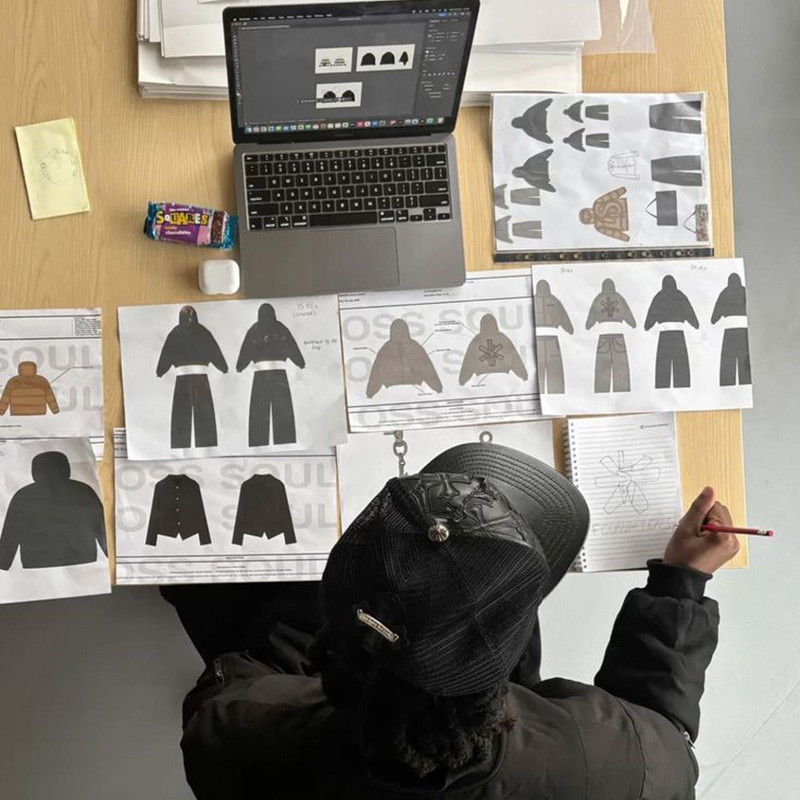
Bringing a sportswear collection from a sketch on a napkin to a box on a retailer's shelf feels mysterious the first time you do it. Most founders underestimate how many distinct, gated steps sit between "I have an idea" and "the container just cleared customs." This guide walks through a realistic, week-by-week sportswear product development timeline, the quality gates at each stage, and how an experienced manufacturing partner compresses the whole thing without cutting corners.
1. Week 1–2: Concept and Design Finalization
Every collection starts with a brief, not a drawing. You define the target wearer, the use case, the price architecture, and the margin goal. As Arcus Apparel Group's development roadmap notes, a tight brief prevents costly backtracking later — you work backward from the target retail price to a cost window (many DTC brands aim for a 3–4x cost multiple). From there you build mood boards, flat sketches, and a colorway plan.
The single most important document produced in this phase is the tech pack. It is the blueprint that aligns design, development, and manufacturing in one source of truth. A complete tech pack includes technical flats, a graded measurement chart with tolerances, the bill of materials (BOM), colorways, decoration placements, label and care instructions, and packaging details. Industry guidance consistently puts concept and tech-pack work at roughly 1–2 weeks each for a focused launch.
2. Week 2–3: Fabric Sourcing and Selection
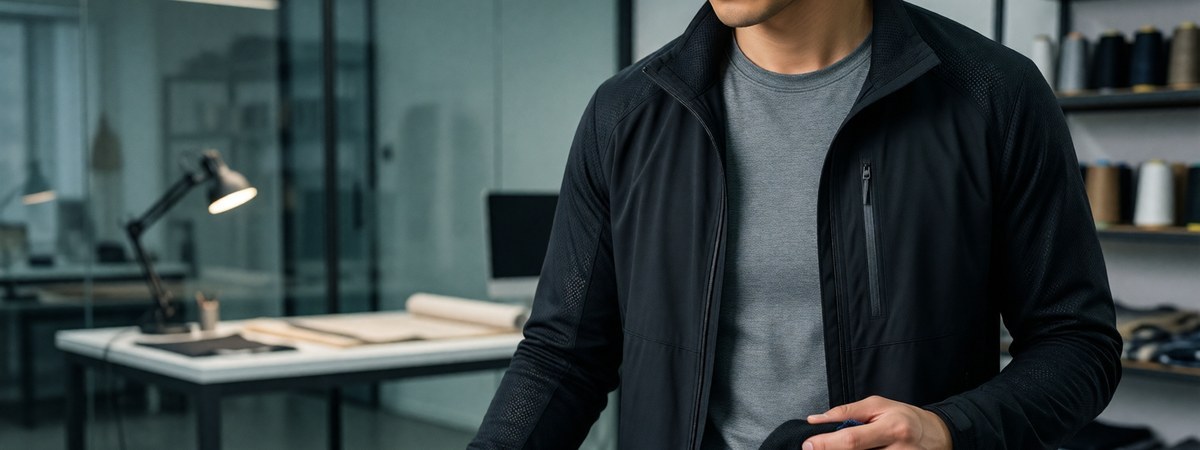
Fabric choice quietly determines hand feel, drape, print quality, and durability — and a large share of your unit cost. Shortlist two or three candidates and test early. Request lab dips and strike-offs, evaluate them under consistent light, and pre-test wash/dry cycles to measure shrinkage. For rubbing and washing colorfastness, recognized methods such as those from AATCC are the industry baseline; if your brand promises skin-safe product, ask for OEKO-TEX Standard 100 documentation.
This is usually the slowest stage. Arcus lists fabric and trim sourcing at 2–3 weeks; Baoxiniao notes in-stock fabrics can land in 3–10 days but sustainable or custom-dyed options take meaningfully longer. Plan around mill MOQs and lead times before you commit a launch date.
Choosing the right mill matters here. Send us your fabric requirements and we will shortlist certified options →
3. Week 3–4: Pattern Making and the First Sample
With an approved tech pack, a CAD engineer builds the digital pattern and grading, and the sample room cuts and sews the first prototype. This "Proto 1" is about structural accuracy, not perfection — you are checking silhouette, construction, and comfort.
Lead times here are tighter than most founders expect. HC Sportswear's breakdown puts pattern making at 2–4 days, sample cutting and sewing at 3–5 days, internal QC at 1–2 days, and brand review at 3–7 days — an average of 10–18 working days for a well-organized OEM/ODM factory, with top-tier partners hitting a first sample in as little as 10–15 days.
4. Week 4–5: Fitting and Revisions
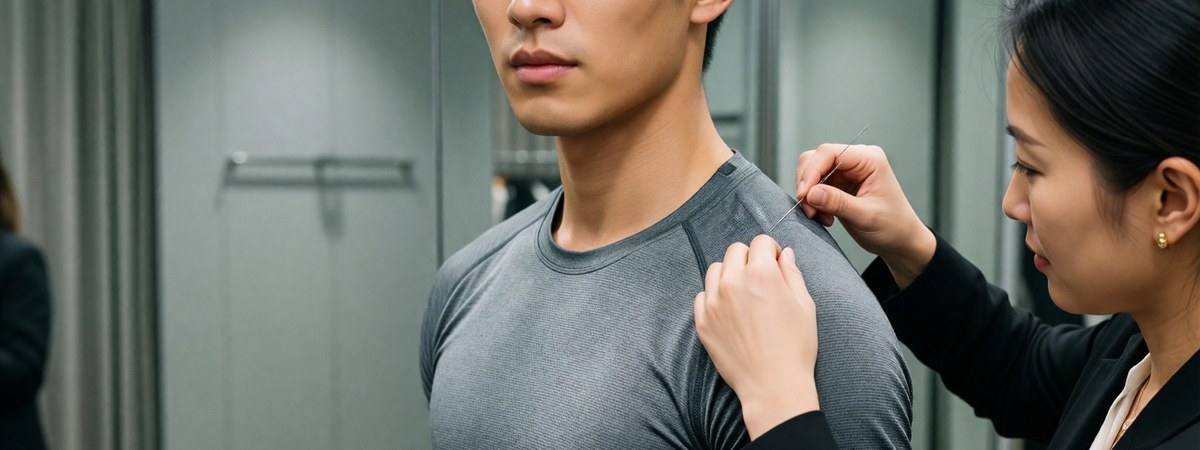
The fit session is where the garment meets a real body. A target-fit model puts the sample through movement tests — reaching, squatting, raising arms — while the team records fit comments and updates the spec. The revised garment is often called Proto 2 or the SMS (salesman sample).
Revisions are where timelines quietly fall apart if you are not disciplined. Fabrikn's 2025 benchmarks show an initial prototype at 7–14 days, each revised round at 3–7 days, and a final fit sample at 2–5 days. Consolidate feedback into one clear round instead of trickling notes over three emails — it is the fastest way to protect your calendar.
5. Week 5–6: Grading and the Size-Set Sample
Once the fit is locked, the pattern is graded across your full size range and a size set is sewn for try-on across sizes. This step catches scaling problems a single sample never reveals — a medium that fits perfectly can balloon or shrink strangely at 2XL if the grade rule is off.
Treat the size set as a quality gate, not a formality. Body-scan and 3D-avatar tools now let brands validate grading across XS–4XL and even posture variations before cutting bulk fabric, which is far cheaper than discovering a grade error after 2,000 units are sewn.
6. Week 6–8: Pre-Production and Bulk Fabric Order
Pre-production is where preparation pays off — and where rushed brands regret skipping steps. Finalize the graded patterns for every size, build production markers to minimize fabric waste, and approve the Pre-Production Sample (PPS) as the gold-standard reference the factory builds the whole run against.
This is also when you release the bulk fabric and trim order. Locking fabrics and trims early is the lever that keeps everything downstream moving; a late lab-dip approval can stall an entire production line. A documented QC plan — fabric inspection, PPS sign-off, inline checks, and a final AQL inspection — should be agreed in writing before a single panel is cut.
Need a production-ready tech pack reviewed? Share your files and we will prepare the pre-production plan →
7. Week 8–14: Bulk Production and Quality Control
Bulk production only begins after PPS approval. Fabrics are spread and cut to markers, assembled by specialized sewing operators, then pressed, trimmed, and finished. Timeline scales with complexity and volume: Baoxiniao cites 15–30 days for typical runs, while Topology's data shows small runs of 200–500 units at 6–8 weeks and 1,000+ unit runs at 10–12 weeks.
The difference between a clean run and a recall is continuous, inline QC rather than a single end-of-line inspection. Modern Tier-1 facilities run an MES (Manufacturing Execution System) for real-time production monitoring and AI-assisted visual checks that flag seam or alignment drift before it propagates across the order. Catch problems at unit #50, not unit #2,000.
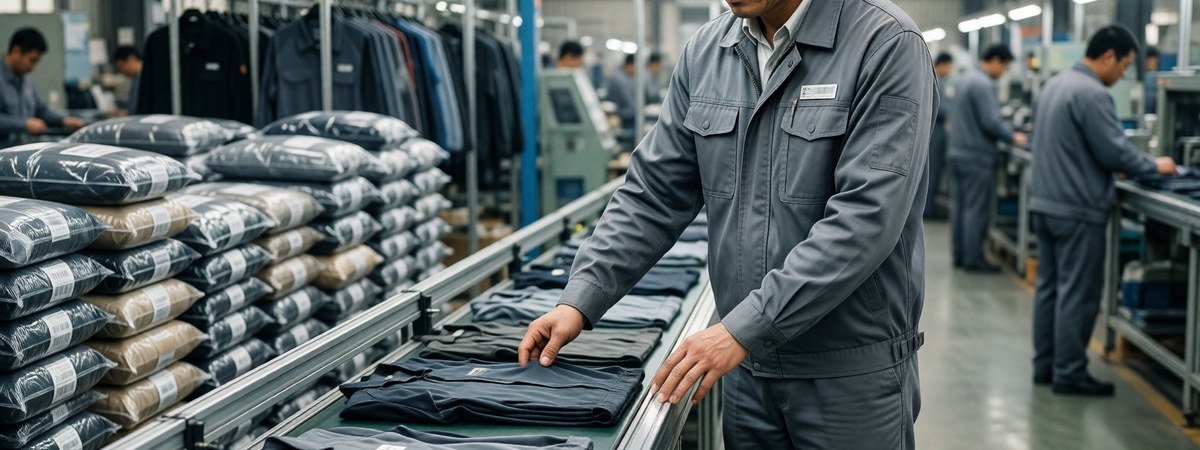
8. Week 14–15: Packing and Shipment
Finished goods are folded, labeled, and packed into branded polybags with barcodes and carton labels per your packaging spec, then palletized for transit. Shipping mode is a budget-and-speed trade-off: express courier runs 5–7 days, air freight 7–10 days, and sea freight 20–45 days (Topology's benchmarks). Build buffer time into your launch calendar for customs clearance and unexpected revisions.
9. How to Compress the Timeline with an Experienced Partner
A disciplined factory does not just execute faster — it removes the waiting. Four accelerators matter most:
- In-house fabric library. Partners holding 200+ active fabrics (nylon-spandex, recycled polyester, compressive "naked-feel" knits) skip the longest external lead time entirely.
- Digital tech-pack conversion and auto-grading. Pattern simulation minimizes human error and rework loops.
- Dedicated sample team. A standing group of senior sample makers keeps your proto queue moving instead of competing with bulk orders.
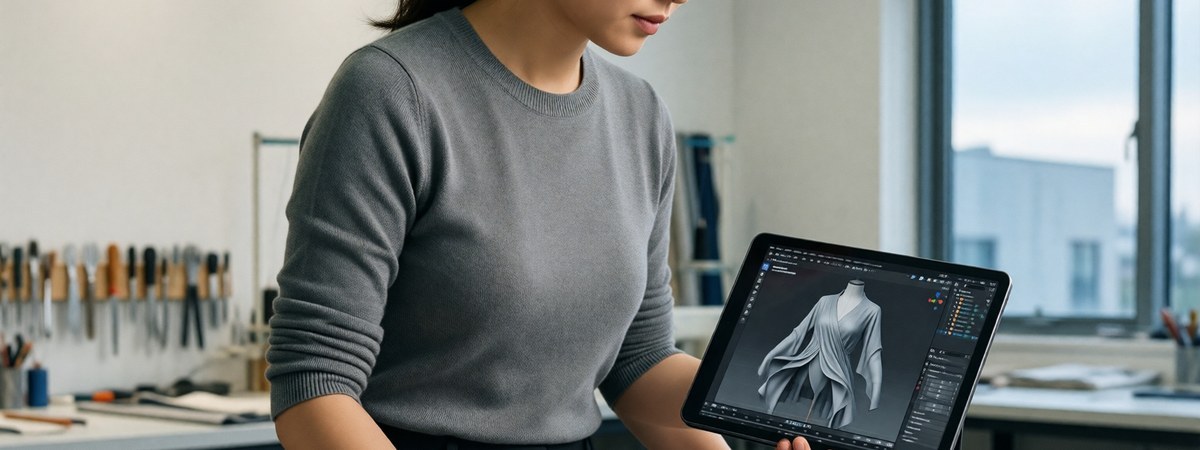
- 3D virtual sampling. Tools like CLO 3D (trusted by Adidas, Under Armour, and Tommy Hilfiger), Browzwear VStitcher, and Optitex render photoreal garments at 95%+ visual and fit accuracy. The Australian Fashion Council's FashTech Lab pilot ran 2–3 digital iterations before a single physical sample, and Browzwear clients report a 50–70% reduction in physical prototyping costs. Digital rounds take 1–3 days versus 7–14 for physical samples, saving a 10-style collection over $2,000 and shaving 2–3 weeks — while Fashion for Good estimates digital sampling cuts sample waste by 50–80%.
Rush paths exist too: some partners turn a first sample in as little as 3 days when the tech pack is complete and fabrics are in stock. The fastest brands pair a finished tech pack with a manufacturer that runs PLM (Product Lifecycle Management) so every stakeholder works from the same live document.
Ready to compress your next launch? Send your inquiry and timeline target →
10. Frequently Asked Questions
How long does sportswear product development really take?
From first concept to a shipped bulk order, a focused men's sportswear line typically runs 10–15 weeks with an experienced OEM/ODM partner, and 2–4 months for more complex or seasonal programs. Major seasonal retail launches can require 12–18 months of planning lead time.
What is the single biggest cause of delay?
Undisciplined revisions. Most first samples are not approved on the first pass, so budget for 2–3 fit rounds and consolidate feedback into one clear cycle. Late fabric or trim approvals are the close second.
Can 3D sampling replace physical samples completely?
Not entirely — you still want a physical PPS for hand feel, stretch recovery, and real-world fit. But 3D tools cut the number of physical rounds from 2–4 down to 1–2, which is where most of the time and cost savings come from.
When should I contact a manufacturer?
After you have a finalized pattern, at least one approved sample, a complete tech pack, and fabric/trim specs. Approaching too early — before development is done — often means the factory engineers decisions you cannot see, which leads to rework.
Conclusion
The sportswear product development timeline is a chain of gated stages: concept and tech pack, fabric sourcing, pattern and first sample, fitting and revisions, grading and size set, pre-production and bulk order, bulk production with continuous QC, and finally packing and shipment. Each gate is a chance to catch an error cheaply — or to let it compound. Partner with a manufacturer that runs digital sampling, holds fabrics in stock, and treats the PPS as the law of the run, and you turn a 15-week scramble into a predictable, repeatable launch engine.
Start your next collection with a partner who keeps the calendar honest. Send your inquiry today →