Global Sourcing for Sportswear Brands: Why More Companies Are Choosing Chinese Manufacturers
- Share
- publisher
- MontForge Team
- Issue Time
- Aug 1,2026
Summary
A data-driven look at why global sportswear brands are choosing Chinese manufacturers—cost vs value, quality control, one-stop supply chains, speed to market, certifications, and a practical vetting checklist.
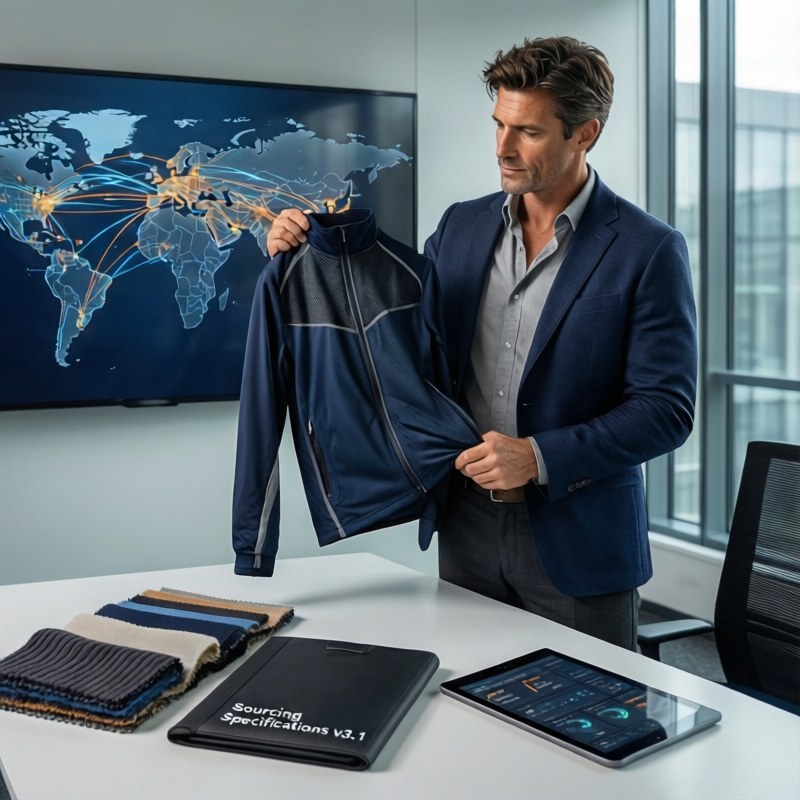
1. Global Sourcing Starts with the Garment
Global sourcing for sportswear begins with the product, not a country score. Identify what the wearer needs, what the supplier must develop and which inputs can interrupt the order. Use this guide to assess a Chinese proposal alongside other qualified routes.
2. Compare China, Vietnam and Bangladesh Using the Same Brief
Compare identified suppliers using an identical garment specification, quantity and delivery basis. Ask each to separate material, development, decoration and packing costs. A national average cannot tell you whether a particular factory can reproduce your fabric, meet the size range or reserve capacity for the launch.
For a Chinese sourcing proposal, ask where knitting or weaving, dyeing, specialist trims and assembly will take place. A nearby material network can be useful only if the nominated sources are available and can supply the required specification. Record imported inputs and subcontracted operations as carefully as work performed at the main factory.
3. Quality Control in Chinese Sportswear Manufacturing
Quality control should begin before cutting. Review incoming materials against the nominated references, check critical operations during sewing, and inspect the completed order against an agreed production sample. A final inspection can identify a problem; it cannot recover all the time and material already committed to the wrong specification.
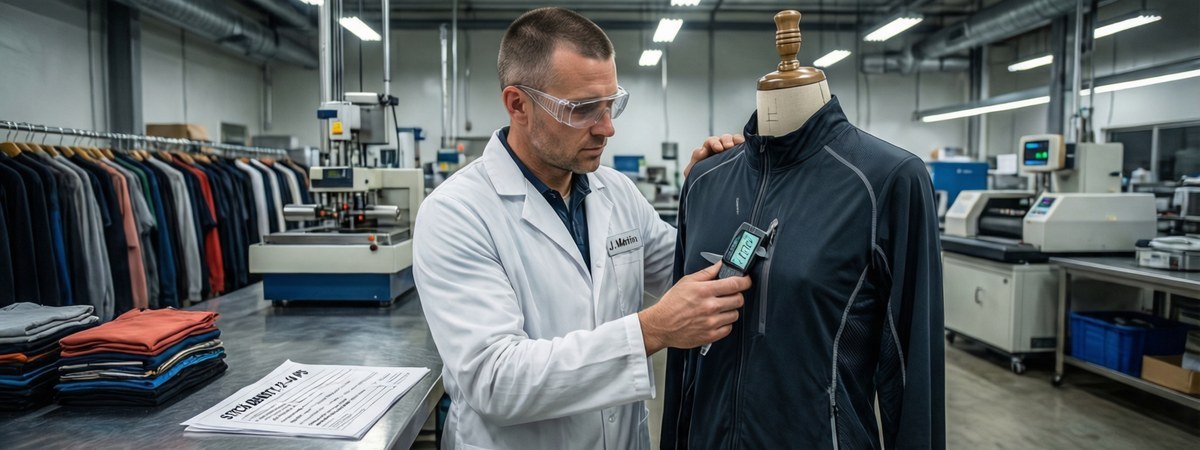
Agree the inspection method, lot definition, defect categories and acceptance criteria before production. If acceptance sampling is used, specify the complete plan rather than quoting an AQL number alone. Sampling is a decision method for a lot, not a promise that every unit is defect-free.
4. Supply Chain Integration: The One-Stop Advantage
An integrated service can coordinate material sourcing, pattern development, assembly, finishing and packing. Confirm which stages are operated directly and which are managed through other businesses. One commercial contact is useful, but it should not conceal who is responsible for a failed material test or a late trim approval.

Ask the supplier to draw the production route for your style. Mark the stages that can proceed in parallel and those that depend on an approval. Integration becomes commercially valuable when it reduces an identified handoff or resolves a specific development problem, rather than appearing only as a claim on a company profile.
Exploring a one-stop partnership for your next line? Request a sourcing consultation →
5. Speed to Market: Identify the Critical Path
Build the launch calendar from actual dependencies: material confirmation, colour approval, sample revisions, bulk release, production, inspection and delivery. A stock-material repeat order and a new custom fabric programme do not start from the same point. Request dates for your proposed order and identify what would make those dates change.
Keep the approval log alongside the schedule. If a material or construction changes, ask whether the sample, quotation and planned delivery need revision. A credible response explains the consequence of the change; a short headline lead time without these conditions gives the buyer little control.
6. Verify Certification Scope and Validity
Different documents answer different questions. ISO 9001 concerns a quality management system; OEKO-TEX STANDARD 100 concerns harmful-substance testing within a defined certificate scope. amfori BSCI is a social-audit framework. Recycled-content claims need the relevant chain-of-custody evidence. Verify the named entity, site, scope and current status rather than treating a group of logos as an approval for every garment.
7. What a Brand Should Verify Before Scaling
Before increasing volume, check that the factory can obtain the same material and trims and reproduce the approved construction. Ask for a capacity plan tied to the named production site. A larger order can require another line or subcontractor, and that change should be reviewed before production is released.
Evaluate a backup using the same garment reference. If both primary and backup depend on one unavailable mill or finish, adding a second sewing factory may not solve the underlying risk. Distinguish a genuine alternative supply route from another business using the same critical input.
A sourcing portfolio should be organised by failure mode
The most useful difference between two factories may be the type of problem each is equipped to control. A jersey tee can fail through shrinkage or decoration; a stretch garment through recovery and fit; a shell through construction and the relationship between the fabric, seams and closures. A country label does not resolve those questions.
Start by identifying the feature that would make a finished garment unacceptable. Then ask the supplier to show how that feature is developed, approved and checked. This produces a more defensible shortlist than ranking factories by broad claims about premium quality.
Separate material continuity from sewing capacity
A factory may have production space while the nominated fabric or custom trim is unavailable. A reorder therefore has at least two dependencies: the ability to reproduce the approved material system and the capacity to assemble it.
| Dependency | Evidence for the current order | What would trigger a new approval |
|---|---|---|
| Fabric | Nominated source, reference and available lot | A changed construction, finish or materially different result |
| Fit | Approved block and measurement chart | A changed pattern or grading rule |
| Decoration | Approved application on the actual fabric | A different film, ink, backing or substrate |
| Capacity | Production plan for the named site | An unreviewed move to another line or subcontractor |
The buyer's task is to decide which changes are acceptable without re-sampling and which must reopen approval. That distinction is particularly important when a backup supplier is introduced.
Compare the cost of uncertainty
A low quote with unresolved fabric, artwork or size requirements is not yet comparable with a quote that includes those items. List the assumptions next to the price. Ask which decisions could change the cost after the first sample.
For a supplier portfolio, keep separate roles for development, stable repeat production and contingency supply. One supplier may fulfil more than one role, but each role needs its own evidence. Qualify a backup against the same reference before relying on it for a deadline.
For import charges, use the product and shipment information required by the destination authority; CBP's guidance explains why the duty-rate question cannot be answered with one percentage for every garment from a country.
8. How to Choose the Right Chinese Manufacturer
Choosing well is a process, not a single decision. Borrowing from proven brand-vetting playbooks, the practical checklist is:
- Verify each relevant document with its issuer or authorised access route. For a social audit, review the site, date, findings and corrective actions; for a product certificate, check the covered articles and validity.
- Request test reports that identify the material or garment, method, conditions and result. Choose the tests for the intended performance claim rather than asking for a generic list of ASTM documents.
- Map lead time day-by-day, including dye-lot approval and QC, so hidden buffers do not surprise you.
- Confirm sampling charges, garment minimums and separate material or trim commitments. Record whether bulk minimums apply per style, colour or total order.
- Build landed cost from the actual quote, delivery responsibilities, freight, insurance where relevant, import charges and inspection. Keep development and setup costs separate. Check product classification, origin and destination treatment for the shipment instead of applying a fixed country-wide tariff.
- Require a live cutting-floor video tour and a single point of contact who owns your order end-to-end.
- Agree payment stages, inspection rights and treatment of nonconforming goods in writing. The appropriate arrangement depends on the order and relationship; no single deposit split establishes whether a supplier is reliable.
- Approve the pre-production reference and identify the production-file revision before release. Reassess the supplier when materials, operations or order conditions change.

Discuss your garment, material and delivery requirements with MontForge's production team.
9. Frequently Asked Questions
When is a Chinese manufacturing partner worth evaluating?
Investigate a proposal when the material route, relevant sample work and order conditions fit the intended product. Compare the actual delivered offer with alternatives rather than assuming a country-wide tariff or speed advantage.
Is "Made in China" sportswear lower quality?
Assess the individual factory and garment. Use material records, relevant samples, inspection findings and an approved specification. A country label or certificate alone does not establish fit, sewing quality or repeatability.
What certifications should I verify before ordering?
Start with the documents relevant to your customer requirements and intended product claims. Check scope, entity, site and validity. A management-system certificate, a social audit and an article certificate should not be treated as interchangeable evidence.
How fast can a Chinese factory deliver custom sportswear?
Obtain an order-specific schedule after the product, materials and approvals are defined. Separate development from post-approval bulk production and transport. Confirm the conditions and cost of any proposed acceleration.
Conclusion
Choose a production partner using a defined product, a relevant sample and an offer whose conditions can be checked. Reassess the route when the material, quantity or destination changes.
Send your product brief to MontForge to discuss the development route, order structure and approvals for your next collection.
Scene illustrations are for visual context and do not document a named factory, audit or customer order.