Hardshell Jacket Manufacturing: 2.5-Layer vs 3-Layer Explained
- Share
- publisher
- MontForge Editorial Team
- Issue Time
- Oct 20,2026
Summary
Compare 2.5-layer and 3-layer hardshell construction for material selection, use cases, garment comfort, seam sealing, costs and sample approval.
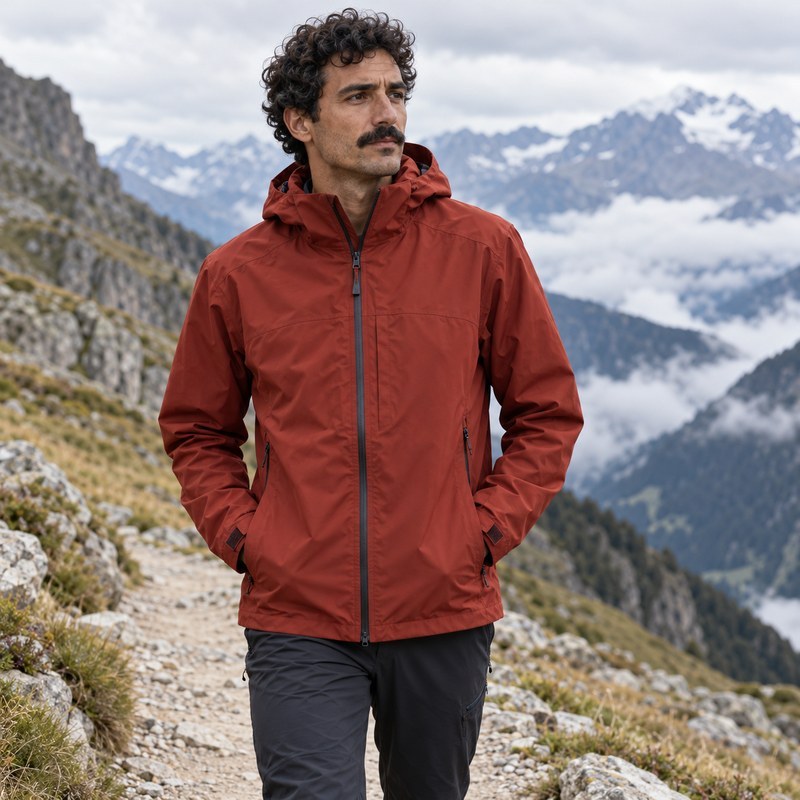
Choosing between 2.5-layer and 3-layer construction is a product-development decision, not simply an upgrade in layer count. For brands planning hardshell jacket manufacturing, the useful comparison connects inner protection, weight, comfort and durability with the intended activity—and then checks the complete garment, its cost and the evidence behind its claims.
Compare Hardshell Construction for Your Brief
Share the intended activity, layering system and performance priorities to discuss a suitable laminate direction.
What the Layer Count Actually Describes
In conventional hardshell fabrics, the layer count describes how the face fabric, waterproof barrier and inner protection are combined. It does not count the clothing the customer wears underneath, and it is not a standalone rating for weather protection.
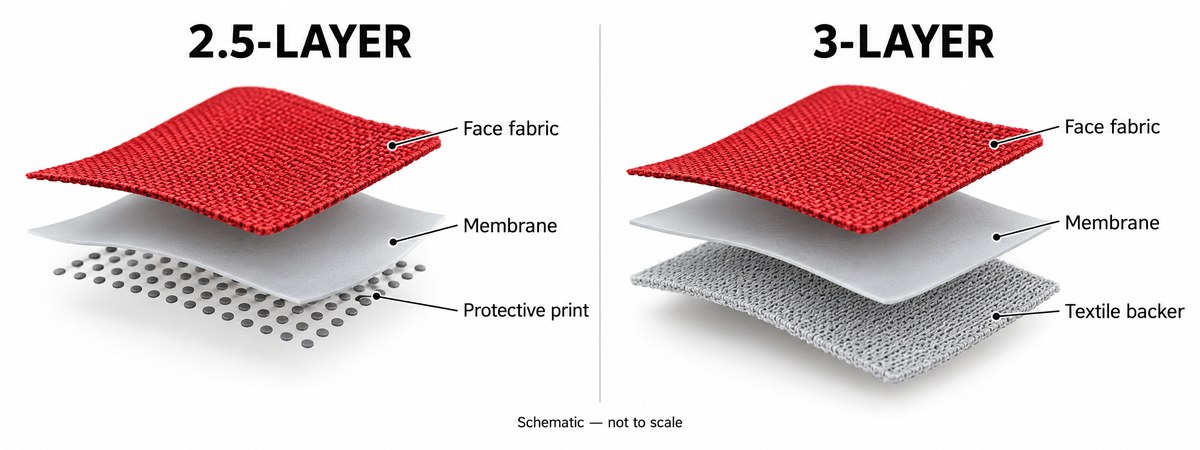
A 2.5-layer construction typically bonds a face fabric to a waterproof-breathable barrier and protects the inside with a print or lightweight protective treatment. A 3-layer laminate adds a textile backer bonded to the inner side. The “half layer” is a shorthand for that protective approach, not half a membrane.
Pertex describes Shield as a system of woven face fabric, membrane and optional backer, with both 2.5-layer and 3-layer options. For custom hardshell jacket manufacturing, request the exact material construction and reference rather than assume every fabric carrying the same layer label behaves alike.
How the Inner Protection Changes the Garment
The inside surface is the most visible distinction during material selection. In a conventional 2.5-layer fabric, the protective print reduces direct exposure of the barrier without adding a full textile backer. In a conventional 3-layer fabric, the bonded backer becomes the inner contact surface.
That difference can influence feel against a base layer, friction, moisture sensation and the way the material handles during assembly. Outdoor Research’s explanation of shell construction highlights the textile backer in 3-layer designs and its role in protecting the laminate. The exact result still depends on the selected fabric.
Compare physical samples with the proposed finish and backer. Bend and handle them, wear them over the intended layers and review the care guidance. A smooth swatch photograph cannot tell you how a finished sleeve will move against fleece or how the inside will feel during active use.
Compare Weight and Packability on Complete Samples
2.5-layer constructions are often chosen for a compact, weight-conscious product direction. A 3-layer textile backer adds a component, but that does not make every 3-layer fabric heavier than every 2.5-layer alternative. Face fabric weight, yarn choice, adhesive and backer design all matter.
Set a finished-garment weight target in a named reference size. Include pockets, seam tape, zippers, hood hardware and any pouch. A light laminate paired with heavy trims can produce a surprisingly bulky jacket.
Agree a repeatable packed-size check and test it with a larger garment size too. Inspect whether repeated packing forces the zipper, stresses pocket seams or leaves hard trim components pressing into the shell. Evaluate the storage function as a user task alongside its measured dimensions.
Do Not Rank Breathability by Layer Count Alone
Breathability depends on the waterproof-breathable system, material construction, test method and conditions. A layer label is not enough to establish which fabric will manage moisture better. Different membrane technologies and backers can lead to different results within the same construction category.
Ask the supplier for the test method, units, conditions and whether the result applies to the finished laminate. Compare like with like. Figures generated using different moisture-vapour methods or different reporting systems should not be treated as interchangeable rankings.
Garment fit and mechanical ventilation also influence comfort. Review front-zip access, underarm vents where specified and the base-layer system. A wearer’s damp feeling can have several causes; do not translate a fabric laboratory number into a promise that the jacket will prevent all internal moisture.
Specify Durability Around the Intended Contact
The bonded textile backer in a 3-layer construction provides inner protection that can suit repeated use and more demanding contact. Rab describes 3-layer construction as common in its most durable shells. That is a useful design tendency rather than proof that any 3-layer jacket outlasts every alternative.
List the likely wear areas: pack shoulders, waist belt, cuffs, seat and contact with equipment. Ask for relevant material information and agree appropriate testing with the supplier or laboratory. Tear resistance, abrasion, seam strength and laminate ageing are separate questions.
Keep care and storage in the brief. Approve instructions for the actual laminate, trims and decoration instead of copying another brand’s label. If a coating, adhesive or backer changes, review the affected evidence before accepting it as an equivalent replacement.
Match Construction to the Activity, Not the Prestige
| Product direction | Why consider 2.5-layer? | Why consider 3-layer? |
|---|---|---|
| Packable hiking or travel shell | A compact material direction where carried volume is a priority | A chosen backer and surface feel may justify the added construction |
| Active trail rain shell | A weight-conscious starting point, subject to actual performance requirements | A light 3-layer option may fit the same brief if weight and comfort work |
| Repeated mountain use with a pack | Assess the material carefully against contact and wear demands | Inner textile protection can be a useful part of the durability brief |
| Ski or more feature-rich shell | Compare the complete construction and required features | Often a practical direction for a durable, layered system |
Use the hardshell jacket product range to discuss comparable silhouettes, then confirm the material and construction for your project. If the customer primarily needs a wind layer, compare the windbreakers and light jackets instead of adding a waterproof laminate without a clear product reason.
Treat Seam Sealing as Part of the Waterproof System
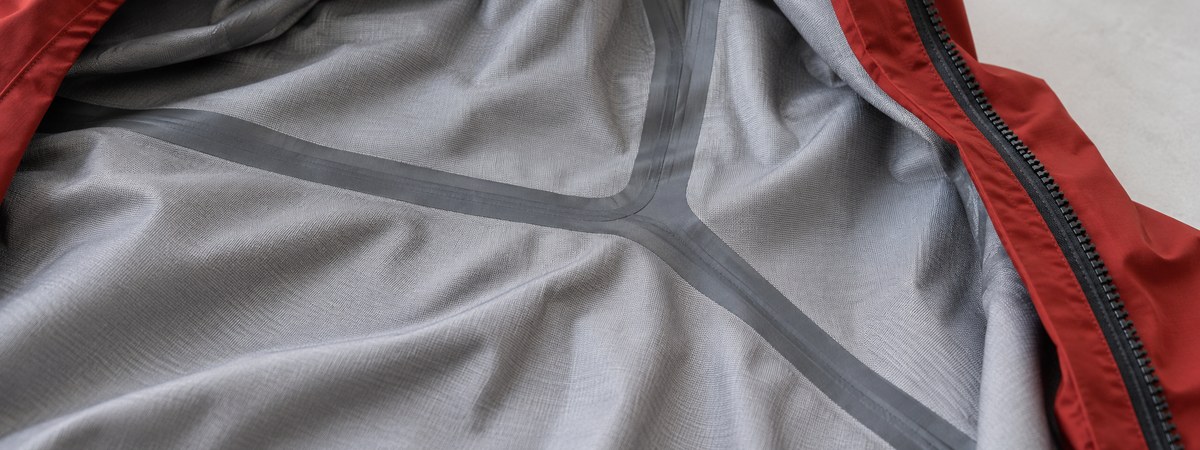
A waterproof laminate still has to be cut and assembled into a garment. Stitching, seam junctions, pockets and openings create additional construction decisions. Specify which seams will be sealed and how the tape or alternative sealing process is matched to the laminate.
Check tape compatibility with the inner surface, as well as width, junction coverage and application conditions agreed with the relevant suppliers. Review the finished appearance and required performance after the specified care or conditioning process. The same settings should not be assumed suitable for every laminate.
Inspect zipper ends, hood joins and complex pocket intersections where several materials meet. Waterproof claims should reflect the finished garment system and supporting evidence, not only the fabric swatch. Keep decoration that penetrates the laminate within the same review.
Resolve the Laminate and Seam System Together
Bring your shell references and intended weather-protection claims into the sampling discussion.
Develop Hood, Pocket and Sleeve Geometry With Layers
The shell needs to work over the insulation and base layers intended for the activity. Define ease and movement rather than specify only “athletic fit.” A jacket can measure correctly across the chest and still pull at the shoulders when the arms reach forward.
Test the hood for turning and visibility, with the planned headwear or helmet where relevant. Check sleeve coverage, cuff adjustment and hem ride-up. Review pocket access with the intended backpack belt or other equipment rather than approve placement on an unencumbered mannequin.
Keep heavier technical features purposeful. A helmet-compatible hood, two-way zipper or additional vent adds development and trim requirements. Decide which features the customer actually needs, then evaluate the full sample and its weight together.
Compare Cost and MOQ Against One Specification
The fabric system affects cost, but it is only one line in the quotation. Face fabric, membrane, backer, colour, order quantity, seam sealing and technical trims all contribute. A simplified 3-layer style and a complex 2.5-layer style can have a different cost relationship from the fabrics alone.
Ask for comparable quotations using the same size range, features, artwork and packing assumptions. Have the supplier identify the material minimum, dye-lot requirements and any separate minimums for custom trims. A garment MOQ does not necessarily equal the mill’s material minimum.
MontForge’s hardshell page lists an MOQ starting at 100 pieces per colour and style. Treat that as a starting reference and confirm the selected laminate, quantities and commercial terms in writing. Avoid publishing a fixed unit price or cost multiplier without a current project quotation.
Ask MontForge for a Material-and-Construction Proposal
MontForge’s published technical hardshell manufacturing page lists 2.5-layer and 3-layer development directions alongside seam-sealing, hood and trim options. Use these as discussion points, then request confirmation for your specific material and intended use.
Send technical flats, the activity brief, target garment weight, reference size, performance requirements, quantity by colour and size, and the intended delivery window. Ask which fabrics and colours are available and which details need sampling or external testing.
If a branded membrane is essential, identify it explicitly and ask the supplier to confirm legitimate sourcing and the conditions for making brand claims. A general statement that a factory makes laminated shells does not establish access to every proprietary membrane system.
Approve Evidence Before Releasing Bulk Production
Link the approved sample to a specific laminate reference, trim card, size specification, artwork version and seam-sealing plan. The garment production process should identify what is approved before material commitment, cutting and shipment.
| Approval area | What to confirm |
|---|---|
| Laminate | Construction, composition, material reference and relevant performance evidence |
| Sealing and closures | Tape compatibility, seam map, zipper and opening details |
| Fit and function | Intended layers, hood movement, reach and pocket access with equipment |
| Weight and packing | Complete reference-size weight and repeatable packed dimensions |
| Care and claims | Validated care instructions, decoration review and claim-specific evidence |
Keep material test results distinct from complete-garment findings. If the shell, tape or assembly process changes, review the affected checks before closing the substitution. The jacket tech pack guide provides a practical framework for documenting the handoff and revision loop.
Frequently Asked Questions
Does 2.5-layer mean half a waterproof membrane?
No. In conventional usage, it refers to a face-and-barrier system with lightweight inner protection, commonly a print, instead of a full textile backer.
Is a 3-layer jacket always heavier?
No. Compare the specific laminate and complete garment. Face fabric, backer, trims and construction can outweigh the simple layer-count difference.
Is 3-layer always more breathable?
No. Use comparable results for the actual materials, including test method and conditions. Fit and garment ventilation also affect the wearing experience.
Can a 2.5-layer jacket be waterproof?
Yes, an appropriate material and garment construction can support waterproof performance. The claim needs relevant evidence; layer count alone is not that evidence.
Which option suits repeated pack use?
A 3-layer textile backer can be useful, but assess the face fabric, wear points, laminate and complete design against the intended contact and testing requirements.
What should I send to request a quote?
Provide intended use, technical flats, size range, material direction, weight and performance targets, seam-sealing requirements, artwork and quantity by colour.
Ready to Develop Your Hardshell Jacket?
Send your technical brief, target weight, size range and colour quantities to discuss fabric options, sampling and a project quotation.
Sources
- Pertex Shield: face fabric, membrane and backer construction options.
- Outdoor Research: comparing shell fabric constructions.
- Rab: how waterproof fabrics and construction work.
- MontForge: hardshell development options and published minimums.
Sources checked 25 October 2026.