How to Build a Performance Running Brand: Manufacturing Insights for Entrepreneurs
- Share
- publisher
- MontForge Team
- Issue Time
- Jul 16,2026
Summary
A practical, manufacturing-first playbook for entrepreneurs building a performance running brand: find your niche, engineer real product features, use reflective safety tech, select lightweight fabrics, and choose the right manufacturing partner.

1. Start with a Niche, Not a Category
The running apparel market is large enough to reward focus and unforgiving enough to punish a vague one. According to Mordor Intelligence, the global running apparel market was valued at USD 106.23 billion in 2025 and is projected to reach USD 161.77 billion by 2031, growing at a 7.53% CAGR. North America remains the largest market, Asia-Pacific is the fastest-growing region, and the amateur and recreational segment drives the majority of demand. In the United States alone, running and jogging participation climbed from 48.31 million in 2023 to 51.05 million in 2024 (Sports & Fitness Industry Association).
That scale is exactly why "I want to sell running clothes" is not a strategy. The brands that break through pick a lane: trail vs. road, elite amateurs vs. weekend 5Kers, hot-climate training vs. four-season layering. Tracksmith, founded in Boston in 2014, deliberately serves what it calls the "Running Class" — committed amateur runners — rather than chasing everyone. Before you spec a single garment, write down the runner you are dressing and the problem their current kit fails to solve.

2. The Product Features Serious Runners Actually Pay For
Runners are a discerning buyer. They will tolerate a higher price for gear that demonstrably improves a run, and they will abandon a brand after one chafe, one swampy tee, or one pocket that bounces a phone. The features that earn repeat purchases cluster around three needs: stay dry, stay light, stay comfortable in motion.
- Moisture management — polyester and nylon blends still dominate performance wear because they wick roughly 50% faster than cotton and dry without holding weight.
- Chafe-free construction — flatlock seams and seamless knitting remove the friction points that destroy long runs.
- Secure storage — Bandit's best-selling men's half tight hides seven pockets that "melt away" when unused; gel and phone bounce is a top complaint among serious runners.
- Four-way stretch and body-mapped ventilation — engineered mesh zones keep airflow where effort is highest.
When you brief a manufacturer, lead with these functional specs, not with "make it look sporty." The product story writes itself once the engineering is real.
3. Safety by Design: Reflective Technology for Low-Light Runs
A huge share of training happens in the dark — early mornings and after-work runs in winter. This is where product responsibility meets brand differentiation. The data is sobering: 3M's visibility research shows that at 30 mph a driver needs more than 500 feet to react, yet a pedestrian in a white shirt may not be visible until within 300 feet. Roughly 65% of pedestrian fatalities occur between 6 p.m. and 6 a.m. In the UK, 409 pedestrians were killed on roads in 2024 (DfT/Brake).
The solution is retroreflective material, not bright color alone. 3M Scotchlite uses retroreflection to send light straight back to the source — the driver's eyes — rather than scattering it. Research from the University of Skövde in Sweden confirms that reflective details on moving arms and legs make runners far easier to recognize in low light. A credible running line should place certified reflective trim on limbs and offer 360° visibility front, back, and sides.

4. Lightweight Fabrics: Engineering the "Second-Skin" Feel
"Lightweight" is not a single fiber; it is a construction. The best 2025 running fabrics use double-knit (interlock) or warp-knit (tricot) structures with a two-layer gradient: a hydrophilic inner face that grabs sweat and a hydrophobic outer face that spreads it for fast evaporation. The result is a perceived dryness even at high output. Merino wool earns a place in base layers and long-distance pieces — it regulates temperature, controls odor, and can absorb up to 30% of its weight in moisture while still feeling dry — though it lacks the explosive wicking speed of synthetics for hard intervals.

Sustainability is now a purchase criterion, not a nice-to-have. Recycled polyester (rPET), Tencel and modal blends, and bio-based synthetics are mainstream, and recycled/bio-based synthetics are forecast to grow about 9.86% annually through 2031. Odor control is moving into the fiber itself — silver-ion, zinc, and plant-based finishes such as mint-oil (HeiQ Mint) survive 50+ washes. Specifying rPET with built-in antimicrobial treatment lets a new brand meet both performance and eco expectations in one fabric.
5. Build a Cohesive Collection, Not a Wall of SKUs
New founders instinctively overbuild. Resist it. A tight launch collection — say a signature short, a lightweight tee, a long-sleeve, and one outer layer — in a single color system reads as a brand. A scattershot catalog reads as a warehouse. Cohesion shows up in three places: a consistent palette, repeated detailing (reflective logo placement, signature seam), and a clear "hero" piece that anchors the story.
This discipline also protects margins and speed. Fewer, better-developed styles mean cleaner sampling, lower minimums, and a faster path to a second drop informed by real sales. Bandit grew from cushioned socks in 2020 to a full apparel line in 2021, then into lifestyle and innovation — breadth followed proof, not the other way around.
6. Choosing a Manufacturing Partner for Running Gear
Your manufacturer is a co-author of the brand. For running gear specifically, evaluate them on the same criteria serious runners use for the product:
- Fabric development — can they engineer the two-layer wick-and-disperse knit, or only assemble from stock?
- Low MOQ and fast sampling — 100-piece minimums let you test a drop before committing; 3-day rush sampling compresses the learning loop.
- Reflective and trim sourcing — certified 3M Scotchlite or equivalent, applied where it actually catches light.
- Quality systems — in-line QC and final inspection catch the seam or print defect that would otherwise surface in a customer review.
- Customization — sublimation, heat-transfer, and embroidery options that let your detailing stay yours.
A partner who can take you from tech pack to approved sample, then scale without quality loss, is worth more than the lowest unit price. The total landed cost — fabric, construction, sampling, shipping, duties — is the number that matters.
7. Sampling and QC: Where Running Brands Win or Die
Sampling is not a formality; it is where fit, fabric, and function are proven. A disciplined timeline runs from tech pack and fabric submission, through first proto and fit session, to a second sample and graded size set. Skipping steps to "save time" almost always costs more later in returns and reputation. Pair sampling with a real QC plan: fabric inspection up front, in-line checks during production, and a final random inspection against an agreed standard.
This is also where certifications build buyer trust — ISO, BSCI, OEKO-TEX, and GRS signals that matter to both DTC customers and wholesale buyers. A manufacturer who treats compliance as default, not optional, removes a future growth bottleneck.
8. Case Study: How Bandit and Tracksmith Built Running Brands
Two very different brands prove the same thesis: own a niche and a community, and manufacturing is just the engine.
Bandit Running started in a Brooklyn basement in 2020 with cushioned socks wear-tested by the Brooklyn Track Club and hand-packed by the founder. A strong NYC Marathon capsule took it full-time in 2021; a $14.25M Series A in 2023 (backers include A-Rod Corp and Collaborative Fund) funded its athlete-support program, The Unsponsored Project. In 2024 a women's top with integrated fuel pockets made TIME's Best Inventions. Bandit's edge is community and product detail — hidden pockets, quiet branding, fashion-led design — not ad spend.
Tracksmith, founded in Boston in 2014 by ex-PUMA executive Matt Taylor, grew revenues roughly 280% between 2019 and 2022 by serving serious amateur runners with a restrained, heritage aesthetic and a community hub — the Trackhouse on Newbury Street. Its lesson is patience: authenticity and credibility, Taylor argues, cannot be bought; they are earned over years.
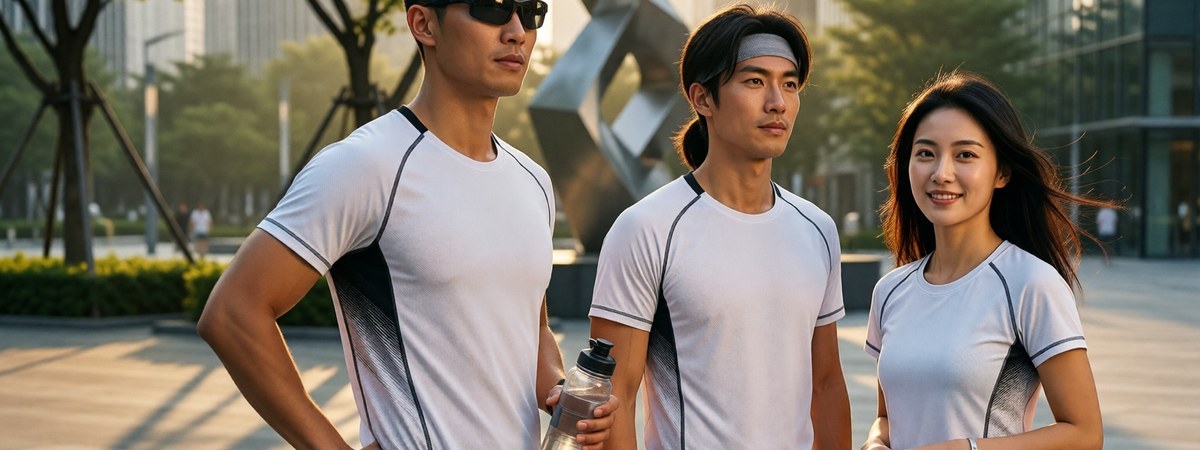
Neither brand won by out-spending Nike. Both won by knowing exactly whose run they were improving.
9. Your Roadmap to Launching a Performance Running Brand
If you are starting from zero, the sequence is straightforward: define the runner and the gap, spec three or four hero styles around real performance features (wicking, reflectivity, storage), choose fabrics that meet both function and sustainability, then select a manufacturing partner who can sample fast and scale cleanly. Let the first drop prove the concept before expanding the line.
Ready to turn your running-brand concept into wearable product? Our team develops performance running gear — from two-layer wicking knits to certified reflective detailing — at low MOQs with 3-day rush sampling. Send your inquiry →
Frequently Asked Questions
How much does it cost to start a running apparel brand?
Costs vary with MOQ, fabric choice, and sampling rounds, but low-MOQ manufacturing (around 100 pieces per style) lets founders validate a drop for a fraction of traditional minimums. Budget for sampling, shipping, and duties — not just unit price.
What fabric is best for running shirts?
Polyester or nylon blends with a two-layer knit remain the performance standard for hard efforts, while merino earns a role in base layers and long-distance pieces for temperature control and odor resistance. Recycled polyester meets growing sustainability demand.
Do running clothes really need reflective details?
Yes, if your customers train in low light. Certified retroreflective trim (such as 3M Scotchlite) returns light to drivers' eyes and is far more effective than bright color alone; place it on limbs for maximum recognition.
How do I choose a sportswear manufacturer?
Evaluate fabric-development capability, low MOQ with fast sampling, reflective and trim sourcing, QC systems, and customization options. A partner who scales without quality loss matters more than the lowest unit price.
Conclusion
Building a performance running brand is less about a clever logo and more about a disciplined product thesis: a real runner, a genuine performance gap, and manufacturing that can deliver the engineering. The market is growing, the tools for small-batch launch have never been more accessible, and the winners are the brands that show up for their community. Pick your lane, build the gear properly, and let the run speak for itself.
Want a manufacturing partner who understands running gear? Talk to our team →