How to Design a Custom Long Sleeve Training Top
- Share
- publisher
- MontForge Sourcing Team
- Issue Time
- Aug 26,2026
Summary
How to design a custom long sleeve training top: moisture management and four-way stretch fabrics, ergonomic raglan sleeves and flatlock seams, thumb holes and ventilation, 7-15 day sampling, and a tech-pack-to-bulk playbook.
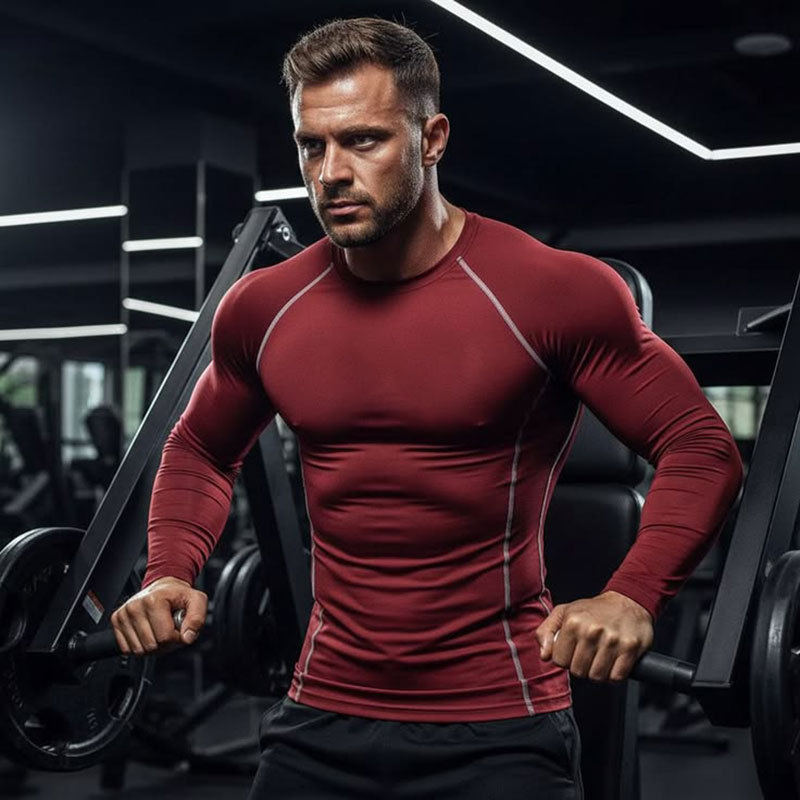
A custom long sleeve training top is one of the most versatile pieces a streetwear, CrossFit or teamwear brand can launch: it works as a base layer in winter, a standalone top in a cool gym, and a logo-ready uniform for a squad. The design, though, is where most first-time briefs go wrong — they pick a colour and a slogan and skip the fabric, seam and ventilation decisions that actually make the garment perform. This guide walks through moisture management and four-way stretch, ergonomic raglan sleeves and flatlock seams, thumb holes and ventilation, the 7–15 day sampling window, and the tech-pack-to-bulk path that takes a sketch to a sellable top.
Moisture Management and Four-Way Stretch: The Fabric Foundation
The foundation of any training top is the knit. The standard is a polyester–spandex blend tuned for wicking and recovery: you will see 88% polyester / 12% spandex at around 170 gsm, 90% polyester / 10% spandex, and 92% polyester / 8% spandex across the market — the spandex window of roughly 8–12% is the sweet spot for high-stretch performance knits. Polyester pulls sweat off the skin by capillary action and spreads it across the surface to evaporate, so the wearer stays drier than with cotton, which just holds water. A four-way stretch construction then lets the fabric move with the shoulder, elbow and torso through every rep instead of pulling against the body.
Add the finishes that separate a technical top from a basic tee: an antimicrobial or anti-odour treatment slows the bacteria that cause smell, UV50+ protection matters for outdoor training, and a matte interlock face reads premium and hides sweat marks. For most brands a lightweight 150–220 gsm polyester-spandex body is the right base — breathable enough for high-output sessions, substantial enough to stand alone.
GSM and Fabric Blends That Perform
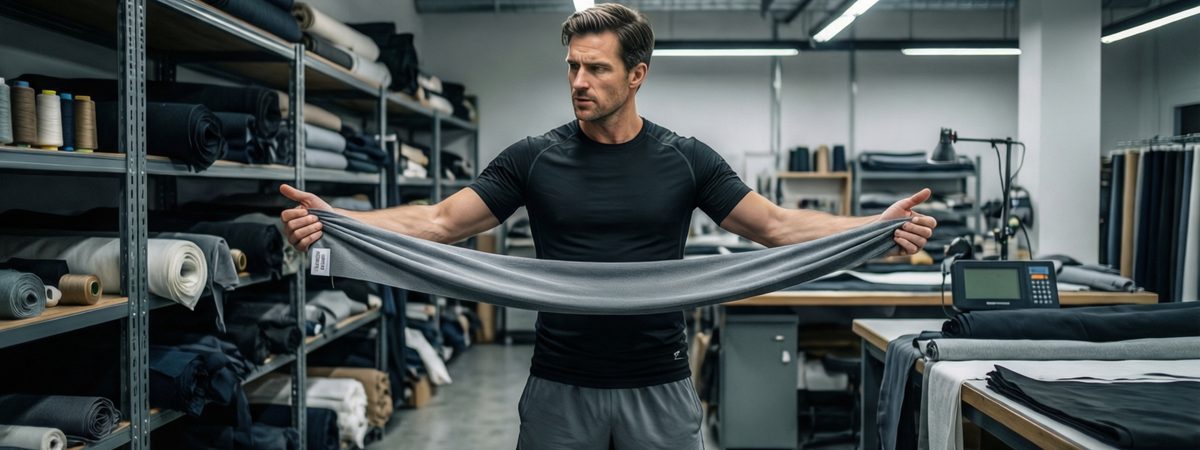
GSM (grams per square metre) sets the hand-feel, weight and breathability of the top. A 170 gsm polyester-spandex single jersey is the widely-cited "sweet spot" for training wear — robust enough for rigorous use yet light enough for extended wear — while 160 gsm bases are common in compression layers and 180–250 gsm interlock or rib knits give a denser, more supportive compression feel. Nylon-spandex blends (often 160–220 gsm) read softer and quicker-drying for premium lines, and a touch of bamboo or modal can soften a lifestyle drop. The rule: spec the GSM to the end use — a summer training top wants 150–190 gsm; a cooler-weather standalone can go 200+ gsm.
Ergonomic Seams and Raglan Sleeves
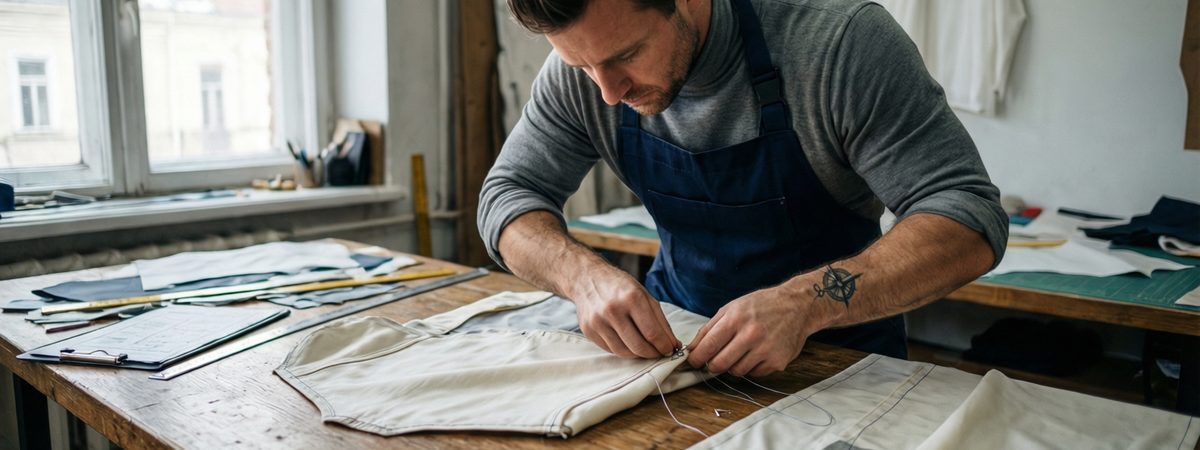
Cut is where a training top earns its name. The raglan sleeve — a single diagonal seam running from the collar to the underarm instead of a set-in seam capping the shoulder — removes the rigid shoulder point so the arm has an unrestricted, natural pivot. That is the difference between a sleeve that tightens across the shoulder when you reach, press or swing and one that simply moves with you. Raglan also fits broad, athletic builds more forgivingly than a set-in sleeve, and it slides cleanly under a jacket for layering. Finish those diagonal seams with flatlock stitching: a low-profile seam that lies flat on both sides, minimises chafing on the shoulder and underarm, and reads as a durable, premium construction. Pair flatlock with stretch zones mapped to the underarm and elbow — spandex-rich panels exactly where the body stretches most.
Thumb Holes and Ventilation Panels
Two details do the most for real training comfort. Thumb holes (or low-profile thumb loops) keep the sleeves in place during overhead movements and pull-ups, extend light coverage over the back of the hand for warmth and sun protection, and reduce palm friction when lifting — which is why they are a staple on running and training long sleeves. Ventilation is the second: mesh panels at the underarms and back, or laser-cut perforations mapped to high-heat zones, dump heat exactly where the body builds it without adding bulk. Build both into the tech pack from day one — they are cheap to include and impossible to retrofit after bulk.
Fit and Silhouette for Training
Training tops live between two fits: a slim compression cut that supports muscle and a regular athletic cut that layers easily. Most lifestyle and gym brands land on a regular-to-athletic fit with a crew or half-zip neck, raglan sleeves, and stretch cuffs that hold the thumb holes. Small signals of quality — a clean double-needle hem, 2×2 ribbed cuffs that spring back, reflective taping for low-light runs, and a tag-free heat-sealed care label instead of a scratchy woven tag — lift the perceived value without raising the cost much. Decide the fit block before sampling so the factory grades the size run correctly.
Branding and Decoration Options
A long sleeve top carries branding in more places than a tee: left chest, back yoke, sleeve, and even the zip pull or cuff. Embroidery sits firmly in the knit and survives stretch and washing; high-density heat transfer and sublimation both work on a high-polyester body (sublimation is permanent and never cracks or peels). Reflective logos, woven labels and a custom zip pull turn a commodity top into a recognisable piece. Give the factory a vector logo (.ai / .eps / .svg) and specify Pantone colours so the brand stays consistent across the body, cuffs and labels.
Sampling in 7–15 Days
You do not need a large first order to see a real sample. A competent custom manufacturer typically turns a long sleeve training top sample in about 7–15 days — fast enough to review the fit, fabric hand-feel, raglan seam quality, thumb-hole placement and ventilation before you commit to bulk. Order one blank in your target GSM and put it through two wash cycles during review: that two-wash check surfaces real shrinkage, stretch recovery and any pilling far better than a fresh showroom sample. Use the sample to lock the size chart and the decoration positions so bulk is a straight repeat.
From Tech Pack to Bulk
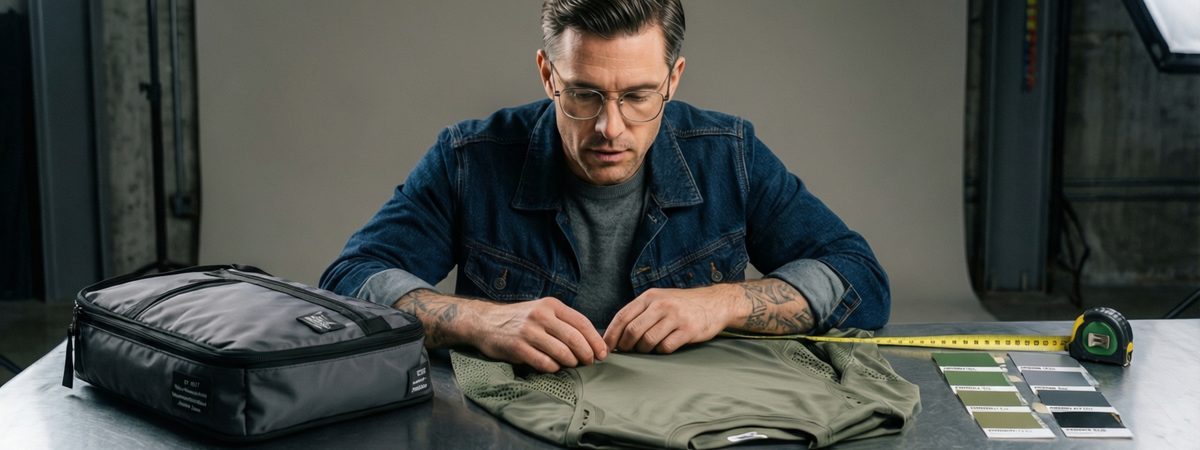
The tech pack is the document that turns a sketch into a repeatable product. It should hold the flat sketches (front, back, sleeve), the graded size chart, fabric composition and GSM, the colourways with Pantone codes, the decoration map (type, position, size), and the construction notes (raglan, flatlock, thumb holes, mesh panels). The workflow runs tech-pack development → sampling and prototype (fit and fabric testing) → confirmation → bulk production, with flexible MOQ that suits both small and large runs. Keep the communication tight at every milestone — lab-dip approval for colours, a fit sample sign-off, then bulk — and the result is a top that matches the brief on the first run.
MontForge Long Sleeve Capabilities
MontForge develops custom long sleeve training tops for streetwear, CrossFit and teamwear programs. We work across the GSM range — 150–220 gsm lightweight polyester-spandex bases through 200+ gsm compression knits — with four-way stretch, moisture-wicking and anti-odour finishes, raglan sleeves and flatlock seams as standard, and thumb holes plus mesh or laser-cut ventilation mapped to your heat zones. Our line covers crew and half-zip necks, stretch cuffs, reflective detailing, embroidery, sublimation and custom zip pulls, with a vector-logo and Pantone workflow for consistent branding. With low-MOQ support, a 7–15 day sample window and a clear tech-pack-to-bulk path, we help small brands get a training top to market on one spec.
Frequently Asked Questions
What fabric is best for a custom long sleeve training top?
A polyester–spandex blend is the standard: 88–92% polyester with 8–12% spandex gives moisture-wicking, four-way stretch and good recovery. Aim for 150–220 gsm for a breathable training base, or 200+ gsm for a cooler-weather standalone. Add an anti-odour finish for repeat-wear freshness.
Why choose raglan sleeves over set-in sleeves?
A raglan sleeve uses a diagonal seam from collar to underarm with no capped shoulder, so the arm pivots freely and the fit is more forgiving on broad, athletic builds. Finished with flatlock stitching, it also reduces chafing on the shoulder and underarm — the right call for training and layering.
Are thumb holes worth adding to a training top?
Yes for most training use. Thumb holes keep the sleeves in place during overhead work and pull-ups, extend light coverage over the back of the hand, and cut palm friction when lifting. They are cheap to build in and a strong signal of a purpose-made training garment.
How long does sampling take?
A custom manufacturer can usually deliver a long sleeve training top sample in about 7–15 days. Order one blank in your target GSM and wash it twice during review to confirm hand-feel, shrinkage, stretch recovery and pilling before bulk.
What should a tech pack include?
Flat sketches (front, back, sleeve), a graded size chart, fabric composition and GSM, Pantone colourways, the decoration map (type, position, size) and construction notes (raglan, flatlock, thumb holes, ventilation). A complete tech pack is what lets bulk become a straight repeat of the approved sample.
Ready to design a long sleeve training top that actually performs? Send us your tech pack or browse MontForge long sleeve tops — low MOQ, 7–15 day sampling, raglan and flatlock as standard.