Moisture-Wicking Fabric for Private Label Activewear: A Sourcing Guide for Brand Owners
- Share
- publisher
- Montforge-Bruin
- Issue Time
- Mar 16,2026
Summary
Planning a private label activewear line? This guide covers moisture-wicking fabric types, technical specs, and how MontForge helps brand owners source and manufacture performance apparel with professional moisture management.
Introduction
Moisture management has become one of the most important performance benchmarks in modern activewear. For private label brand owners and sourcing directors, selecting the right moisture-wicking fabric is no longer just a product decision — it's a brand positioning decision.
Since the late 1990s, when major sportswear brands demonstrated that synthetic microfiber fabrics could dramatically outperform cotton in sweat management, moisture-wicking construction has become the baseline expectation for performance apparel worldwide.
This guide explains how moisture-wicking technology works, what fabric specifications matter when placing OEM orders, and how MontForge helps private label brands build product lines that meet professional performance standards.
What Is Moisture-Wicking Fabric?
Moisture-wicking fabric refers to textile constructions engineered to pull sweat away from the skin, transport it through the fabric, and enable rapid surface evaporation — keeping the wearer dry and comfortable during physical activity.
The key mechanism involves capillary action through tightly engineered fiber structures. Rather than absorbing sweat (as cotton does), moisture-wicking fabrics channel it outward.
How it works in three stages:
1.Wicking — Sweat is drawn away from skin contact through hydrophobic fiber channels
2.Spreading — Moisture disperses across the fabric's outer surface area
3.Evaporation — The increased surface area accelerates evaporation, reducing chill and discomfort
Core Fabric Options for Moisture-Wicking Activewear
When sourcing for a private label line, the fabric choice defines cost, hand feel, performance tier, and sustainability positioning. The following are the most commonly specified options in professional OEM production.
1. Polyester Microfiber (Standard Performance Tier)
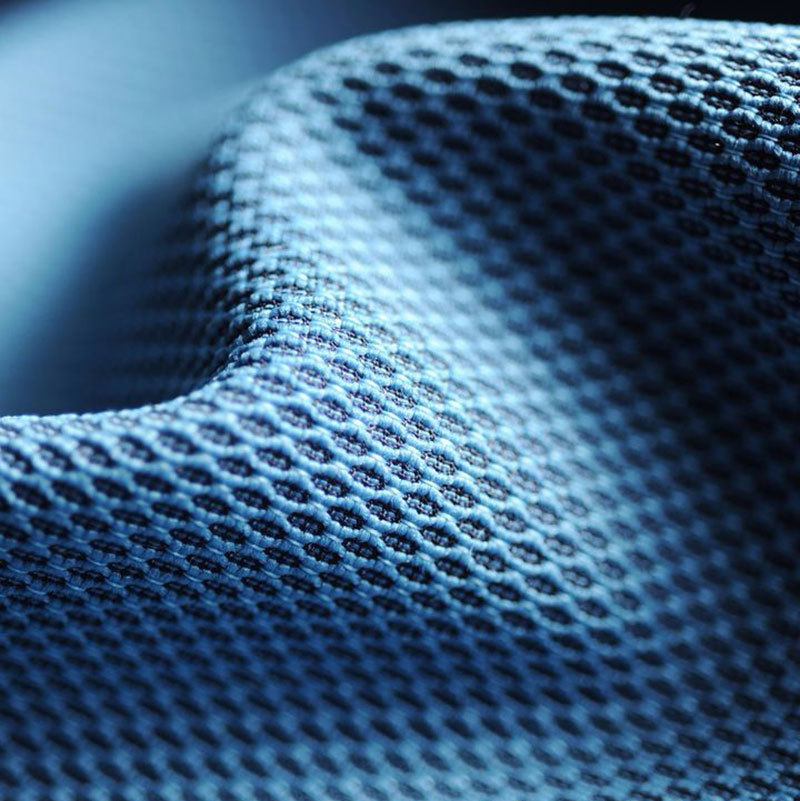
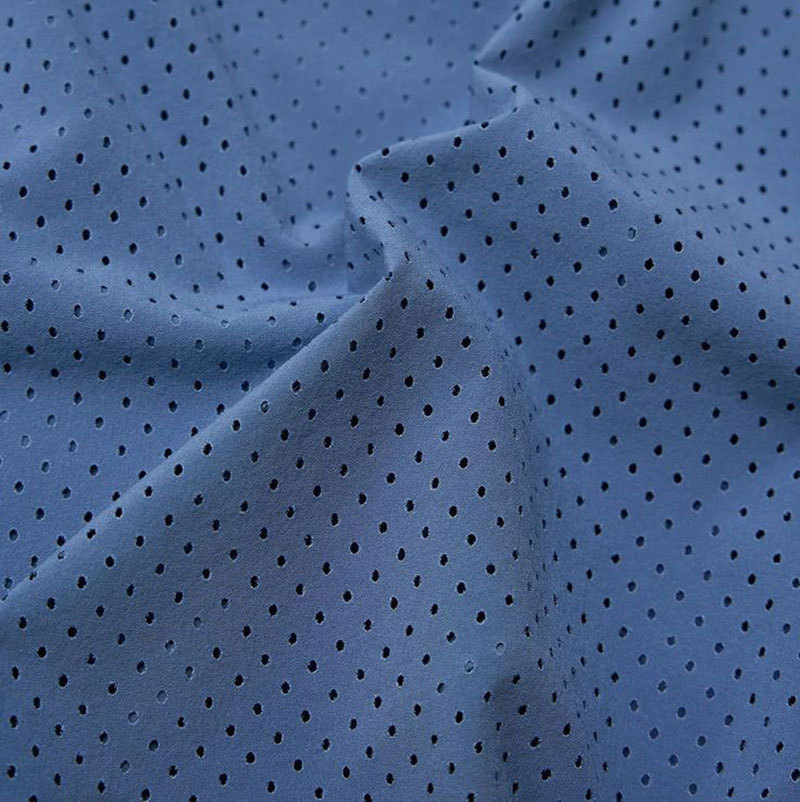
The most widely used moisture-wicking base fabric. Fine-denier polyester yarns are knitted into lightweight structures that provide excellent wicking, fast drying, and strong print retention.
Spec | Typical Range |
Fabric weight | 130–180 gsm |
| Fiber composition | 100% polyester or polyester/elastane blend |
| Yarn denier | 50D–75D (finer denier = softer hand feel) |
| Moisture dry time | < 20 minutes (standard lab test) |
| Suitable for | T-shirts, training tops, base layers, shorts |
MontForge note: This is the backbone of our men's performance T-shirt and training set production. We work with both standard and moisture-wicking-treated polyester, and can help clients match the fabric weight to their target market (e.g., lighter gsm for European summer performance wear).
2. Recycled Polyester (rPET) — Sustainable Performance
Functionally equivalent to virgin polyester, but produced from post-consumer PET bottles or textile waste. Increasingly preferred by European and North American brand owners who prioritize sustainability certifications.
Spec | Typical Range |
Certification | GRS (Global Recycled Standard) available |
| Performance | Equivalent wicking to virgin polyester |
| Price premium | +8–15% vs. standard polyester |
| Suitable for | Eco-positioned activewear collections |
MontForge note: We source GRS-certified rPET fabrics and can supply test reports for brand owners who need documentation for retail buyers or B Corp certification.
3. Polyester/Elastane Blend (Stretch Performance)
Adding 10–20% elastane (spandex) to polyester creates a fabric with four-way stretch and compression recovery — essential for fitted training wear, joggers, and compression base layers.
Spec | Typical Range |
Composition | 80–90% polyester / 10–20% elastane |
| Stretch recovery | >90% after 50 wash cycles |
| Fabric weight | 180–240 gsm |
| Suitable for | Compression tights, fitted joggers, training sets |
4. Polyester/Nylon Blend (Premium Hand Feel)
Blending polyester with nylon improves surface softness and abrasion resistance while maintaining moisture-wicking performance. Common in premium-positioned training wear and athleisure crossover pieces.
Spec | Typical Range |
Composition | 70–85% polyester / 15–30% nylon |
| Hand feel | Silkier than 100% polyester |
| Price tier | Mid to premium |
| Suitable for | Hoodies, joggers, premium training tops |
Key Fabric Specifications to Include in Your OEM Brief
When submitting a tech pack or sourcing inquiry to a manufacturer, these are the specifications that directly affect moisture-wicking performance — and should be explicitly defined rather than left to factory defaults.
1. Fabric Weight (gsm) Lighter weights (130–160 gsm) perform better in warm-weather/high-intensity applications. Heavier constructions (180+ gsm)
suit cooler-climate training wear or premium positioning.
2. Yarn Denier Lower denier = finer fiber = faster wicking and softer hand feel. For performance tees, 50D–75D is standard. Heavier fleece constructions use thicker yarns.
3. Knit Structure Bird's eye, piqué, and interlock knits all have different wicking characteristics. Piqué is the most common for polo-style performance tops; smooth jersey is standard for fitted training tees.
4. Moisture Management Treatment Some fabrics rely on fiber geometry alone; others receive a topical moisture-management or DWR (Durable Water Repellent) finish. These should be specified and wash-durability tested (typically rated to 20–30 wash cycles).
5. Stretch Requirement Two-way stretch (warp only) vs. four-way stretch (warp + weft) affects cut-and-sew method and fit behavior. Define this early in development.
6. Colorfastness Requirements Performance fabrics used in activewear must meet AATCC or ISO colorfastness standards, particularly for perspiration (ISO 105-E04) and light exposure.
What Private Label Brand Owners Need to Know Before Ordering
Minimum Order Quantities (MOQ)
For moisture-wicking performance fabrics at MontForge, standard MOQ is 200–300 pieces per style per colorway. Lower MOQs may be negotiable for development orders or sampling runs.
Sampling Process
We recommend a fabric swatch approval stage before full sample development, especially if clients are specifying a particular gsm, denier, or knit structure for the first time. This prevents costly resample cycles.
Certification Documentation
For European brand owners targeting retail channels, we can provide:
OEKO-TEX Standard 100 (fabric safety)
GRS (for recycled polyester styles)
REACH compliance documentation
Lead Times
Standard OEM production lead time for moisture-wicking activewear: 45–60 days from approved pre-production sample. Rush timelines available for select product categories.
How MontForge Supports Private Label Moisture-Wicking Apparel
MontForge is a Dongguan-based OEM/ODM activewear manufacturer specializing in men's performance apparel — including technical joggers, training tees, hoodies, and outerwear — for private label brands in Europe and North America.
Our in-house capabilities for moisture-wicking product development include:
Fabric sourcing and specification support — We work with audited mills and can help clients match fabric specs to performance targets and price points
Tech pack review and development — Our team reviews client briefs and flags specification gaps before sampling
Pre-production fabric testing — Moisture dry time, colorfastness, and wash durability testing available
Sustainable material options — GRS-certified rPET, organic cotton blends, and low-impact dyeing available on request
OEM and ODM — We handle both client-supplied designs and MontForge original designs adapted for private label
Frequently Asked Questions
What's the difference between moisture-wicking and moisture-absorbing fabric?
Absorbing fabrics (like cotton) soak up sweat and retain it. Wicking fabrics transport moisture outward through fiber structure and evaporate it at the surface. For activewear, wicking is preferable — cotton-heavy fabrics feel heavy and cold once saturated.
Can I request a specific gsm and knit structure for my collection?
Yes. MontForge supports custom fabric specifications. We recommend providing a target gsm range and a reference fabric or garment during the brief stage so our team can source or match appropriately.
Do you offer moisture-wicking options in recycled polyester?
Yes. We stock and source GRS-certified rPET fabrics in multiple weight and structure options, suitable for brand owners building sustainable product lines.
What testing is included in standard production?
All MontForge production lots include visual inspection and measurement spec checks. Performance testing (moisture dry time, wash durability, colorfastness) is available as an add-on and recommended for first-time orders of new fabric constructions.
How do I get started with a moisture-wicking activewear order?
Contact our team at montforge.com/contact-us with your product brief or tech pack. We'll respond within 24 hours with fabric recommendations, MOQ confirmation, and a development timeline.
Summary
Moisture-wicking fabric is the foundation of modern performance activewear. For private label brand owners, understanding the key technical specs — fabric weight, fiber composition, knit structure, and treatment durability — is essential to building a product line that meets customer expectations and holds up in the market.
MontForge specializes in OEM and private label manufacturing of moisture-wicking men's activewear, with sourcing support, sampling, and certification documentation for European and North American brand owners.
→ Explore our performance apparel range or contact us to discuss your next collection.
Related reading: