Packable Down Jackets for Travel and Hiking Brands
- Share
- publisher
- MontForge Editorial Team
- Issue Time
- Nov 3,2026
Summary
A buyer guide to packable down jacket construction, shell materials, storage, branding and small-order development.
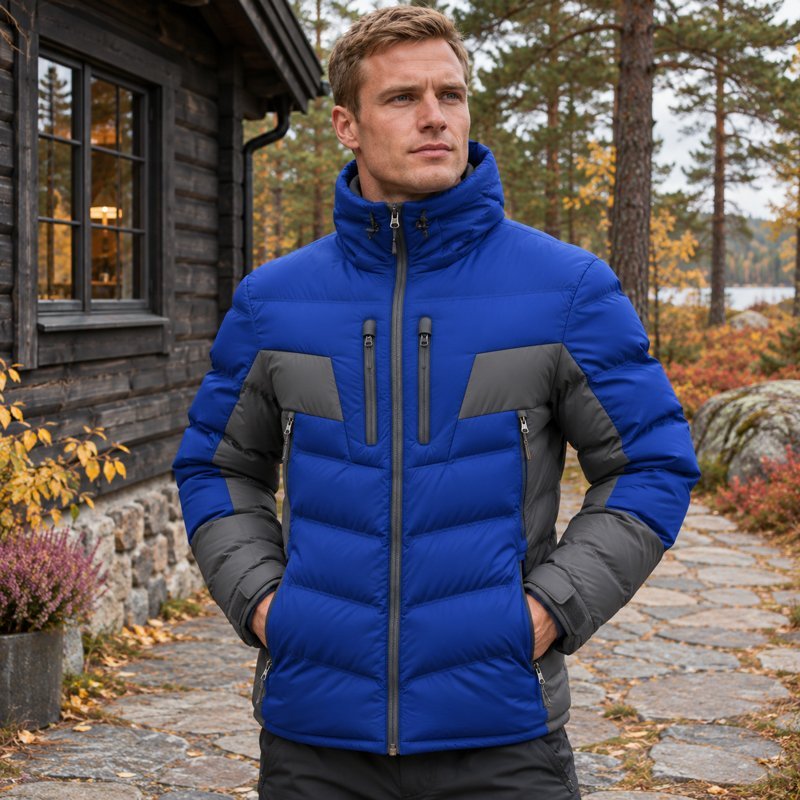
Packable down jackets should offer useful coverage on the wearer and manageable bulk in a bag. For travel and hiking brands, the development task is to connect filling, baffles, shell materials and a practical packing system, then verify the complete sample.
Develop Your Packable Down Collection
Share your intended use, packing targets and colour quantities to discuss materials, sampling and a project quotation.
Define the Travel and Hiking Brief
A travel jacket needs to move between luggage, transit and everyday wear; a hiking layer must work with the intended pack and layering system. Identify the primary role before setting a gram target. Specify whether the garment is mostly carried for stops or worn during regular movement.
For brands developing custom packable down jackets, the useful starting point is a clear wearer and use case. Describe expected layers, carried equipment, size range and weather role. A compact city jacket and a mountain rest layer may require different coverage and filling allocations.
Ask the supplier to identify open decisions before quoting. Keep packability, comfort and appearance as separate approval tasks, with a named reference size and agreed sample configuration.
Choose Baffles and Fill Together
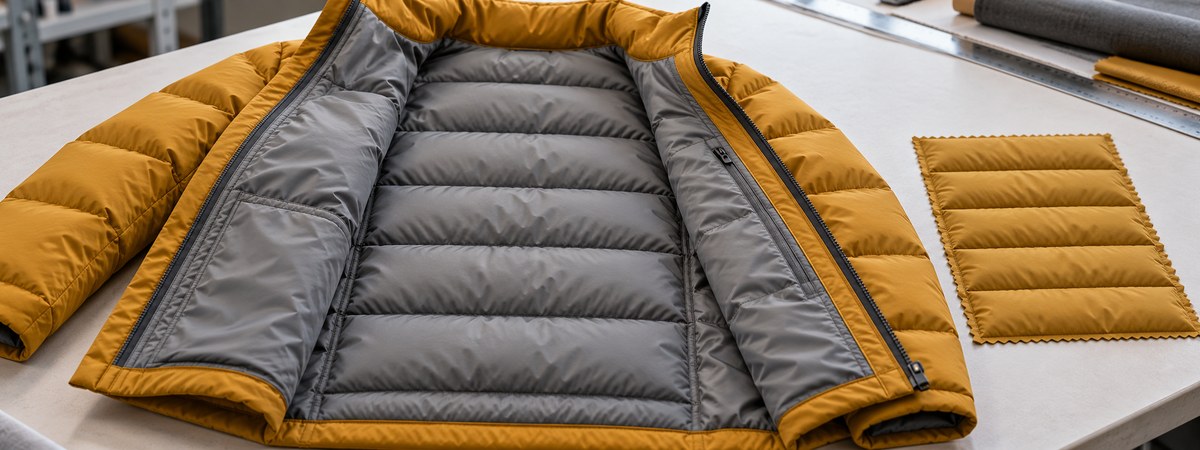
Quilting controls appearance, but chamber design also determines how filling is distributed. Specify chamber dimensions, filling allocation and the proposed joining construction. Closely spaced stitch lines and larger lofted sections involve different pattern and assembly decisions; neither appearance alone proves thermal performance.
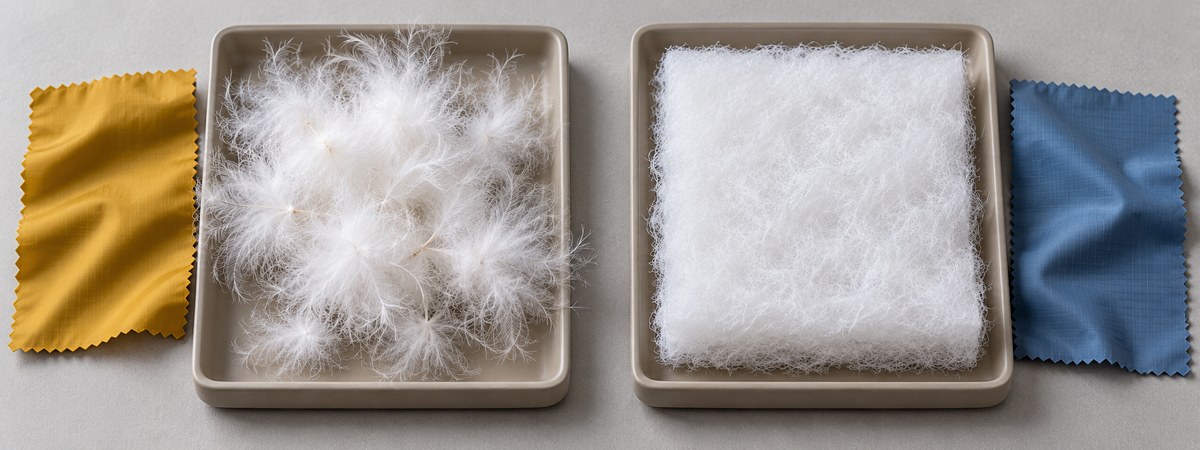
Fill power describes loft under a defined procedure, while fill weight records the amount of filling. Request both with the relevant material reference and test conditions. IDFL identifies these as separate jacket-testing considerations. Do not convert a fill-power number into a universal temperature promise.
Check the body, sleeves and hood separately where included. Review thin areas, uneven distribution and changes after agreed care or handling. Approve a complete sample rather than assume that a fill-material report proves the assembled garment.
Specify Shell Weight, DWR and Downproofness
Identify the actual shell and lining references, composition, mass and finish. Thin fabric can support a lightweight brief, but suitability also depends on its interaction with filling, seams, decoration and equipment contact. Denier alone does not establish abrasion resistance or down containment.
DWR helps the face fabric resist surface wetting. It does not make every quilted jacket waterproof, and it should not replace a separate weather-protection brief. Ask for the finish reference, care requirements and relevant post-care evidence for your selected fabric.
Review leakage on the assembled construction where required. IDFL’s down/fillproof guidance considers finished products, including the fabric and sewing. Retain the approved material references and revisit affected checks after substitutions.
Design the Packing System
Choose between a separate pouch, a self-stowing pocket and a folded bundle intended for an existing bag compartment. Each approach changes the user experience and component package. A pocket that stores small essentials during wear must also be sized and finished appropriately if it doubles as a storage system.
Define how the garment is packed, how much compression is applied and what is included in the measured bundle. Check the packed shape against the intended luggage or backpack compartment. Weight and packed dimensions should be recorded separately.
Assess zipper strain, access to the opening and ease of unpacking. Avoid forcing a prototype into an undersized pocket merely to produce a small-looking photograph. The approved packing method should be repeatable by the customer without undue effort.
Develop Your Packable Down Collection
Share your intended use, packing targets and colour quantities to discuss materials, sampling and a project quotation.
Review Recovery, Fit and Care
Agree a sample sequence covering packing, unpacking and recovery under defined conditions. Record visible filling distribution and any persistent flat areas. Avoid promising a universal recovery time without evidence for the actual filling and construction.
Check shoulder movement, forward reach, cuff retreat and hem coverage over the intended layers. Review the jacket with the travel bag or hiking pack used in the brief, including pocket access and pressure beneath straps. Assess representative sizes before accepting the full graded range.
Provide garment-specific washing, drying and storage instructions validated across filling, shell, lining, trims and decoration. Explain that temporary pack-away convenience does not mean the jacket should remain damp and tightly compressed in storage. Follow the actual garment label rather than copy another brand’s care procedure.
Keep Branding Compatible With the Construction
Plan logo size and placement around baffles, seams and the pack-away pocket. A flat artwork mockup cannot establish how the mark looks across lofted panels or repeated folds. Review a physical application on the proposed shell before bulk approval.
Transfers, embroidery and patches have different implications for heat, pressure, adhesives or needle holes. Ask the supplier to confirm compatibility and assess the result after the agreed care sequence. Do not approve a method simply because it worked on a different fabric.
Use private label down jackets as a starting point for silhouette discussions, then document your own artwork, label text and component references. Keep sourcing or certification claims separate from the visual branding approval.
Plan a Low MOQ Launch
For brands sourcing low MOQ down jackets, garment quantity and component availability need to be reviewed together. MontForge’s current manufacturing page lists a starting reference of 100 pieces per colour and style. Confirm terms for the chosen material, filling and construction rather than assume every option supports that quantity.
Custom shell colours, specialist filling, trims and packaging may introduce separate minimums or development costs. A focused initial colour range and shared components can simplify decisions, but actual savings and timing require a quotation.
Ask your down jacket manufacturer to quote the same size range, fill package, artwork and approval scope. Compare sample stages, available materials and delivery assumptions, not only the lowest unit price. Confirm any responsible-down claim through the appropriate current documentation before printing labels.
Approve the Sample Before Bulk
Send technical flats, a point-of-measure sheet, the bill of materials, filling allocation and packing method in one versioned brief. Name the reference size and identify which components are provisional. Record comments against a specific sample identifier.
Review the sample through practical gates: fabric and filling approval; fit and movement; packing and recovery; artwork and care; and production inspection requirements. Agree relevant methods and acceptance criteria with the supplier rather than invent a universal test for every jacket.
Link the approved sample to the garment production process. Our down versus synthetic insulation guide provides background for the fill discussion. Keep the final product description consistent with what the approved construction and supporting evidence can establish.
Frequently Asked Questions
Does high fill power guarantee a smaller packed jacket?
No. Fill amount, shell, lining, trims and packing method also affect the bundle.
Is a self-stowing pocket better than a separate pouch?
Choose from the intended user experience and review the actual sample; neither option is automatically best.
Does DWR make a down jacket waterproof?
No. Surface repellency and complete garment waterproofness are separate properties.
Can a small order use any custom fabric colour?
Confirm material and dyeing minimums separately from the garment MOQ.
Can the jacket stay compressed after a trip?
Follow its validated care and storage instructions, especially for drying and avoiding prolonged damp compression.
Develop Your Packable Down Collection
Share your intended use, packing targets and colour quantities to discuss materials, sampling and a project quotation.
Sources
- IDFL: jacket testing information
- IDFL: finished-product down containment
- Textile Exchange: Responsible Down Standard
- MontForge: development and MOQ references
Sources checked 3 November 2026.