Streetwear Hoodie Drops: Oversized Fit, Branding and Retail-Ready Finish
- Share
- publisher
- MontForge Sourcing Team
- Issue Time
- Sep 2,2026
Summary
Streetwear hoodie drops: oversized and boxy fit and sizing, label, drawstring and zip details, small-batch release strategy, coordinated tops and bottoms, and polybag and hang tag retail-ready setup.

A streetwear hoodie drop succeeds or fails on the details customers can touch: the fit that makes the silhouette, the drawcord and labels that signal quality, and the packaging that carries the brand from box to wardrobe. This guide walks through the oversized and boxy fit trend and how to grade it, the label, drawstring and zip details that read premium, small-batch release strategy, coordinated tops and bottoms, and the polybag and hang tag setup that makes a drop retail-ready.
Oversized vs Boxy: Two Fits, Two Silhouettes
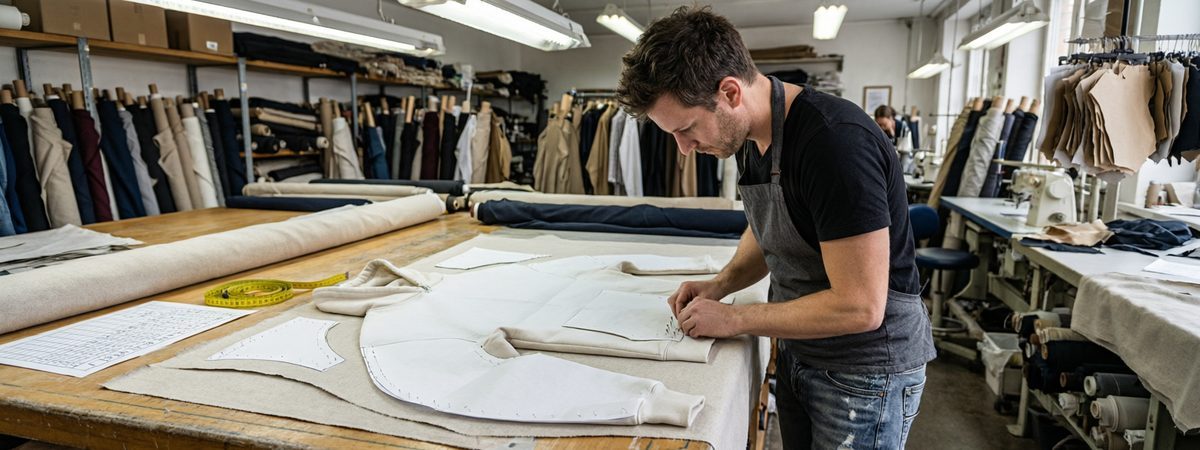
"Oversized" and "boxy" are often used interchangeably, but they are different patterns. A boxy hoodie is wider than it is long — a square silhouette with a cropped body that sits at or just below the waist, an exaggerated drop shoulder, and a stiff, structured drape that holds its shape. An oversized hoodie is wide and long — a baggy, enveloping silhouette with longer sleeves and body, heavier fabric and a fluid, "lived-in" drape. As a rough L-size reference, a boxy hoodie runs about 68–72 cm chest with a 64–66 cm cropped body length, while an oversized cut runs 65–70 cm chest with a 74–78 cm longer body. Decide which silhouette your brand owns before briefing the factory — they grade very differently.
Drop Shoulder and the Pattern Engineering
The drop shoulder is the technical heart of both fits. The shoulder seam sits below the natural shoulder — roughly 2–4 inches for a boxy cut and 4–8 inches or more for oversized — and the sleeve head must be re-engineered, not just lowered. Simply dropping a seam causes the sleeve to twist and bunch; a proper pattern adjusts the entire armscye curve and often adds an underarm gusset so the exaggerated proportions still move naturally. Premium construction reinforces the seam with twin-needle stitching and adds bar tacks at the kangaroo pocket corners, the points that take the most stress.
Sizing and Grading for Oversized Cuts
An oversized hoodie is not a scaled-up regular hoodie. If the pattern maker adds the same ease to an S and an XXL, the XXL becomes comically wide and the S loses the intended silhouette. The ease must be graded proportionally so the fit stays intentionally oversized at every size, and the sleeve-head curve adjusted so larger sizes do not pull. This is where a good OEM partner earns their fee: ask to see the graded pattern and how the ease distribution changes from S to XL. For the customer, the rule is simple — if the brand is built around the oversized cut, buy true size; if it is a regular fit hoodie, size up one or two.
Fabric Weight for the Silhouette
The fabric has to carry the cut. Below roughly 350 GSM, an oversized hoodie looks sloppy and thin; the premium range is 400–550 GSM, heavy enough for structured drape that pools attractively instead of collapsing. A boxy cut wants density even more — 450–500 GSM heavyweight fleece keeps the shoulders sharp and the hood standing rather than collapsing. GSM also maps to price positioning: sub-300 GSM reads fast fashion, around 320 gsm is the Reigning Champ tier, 380 gsm the Fear of God Essentials / Aimé Leon Dore tier, 420 gsm John Elliott territory, and 550 gsm ultra-heavyweight fashion. Match the weight to the retail price you plan to charge.
Label, Drawstring and Zip Details That Read Premium
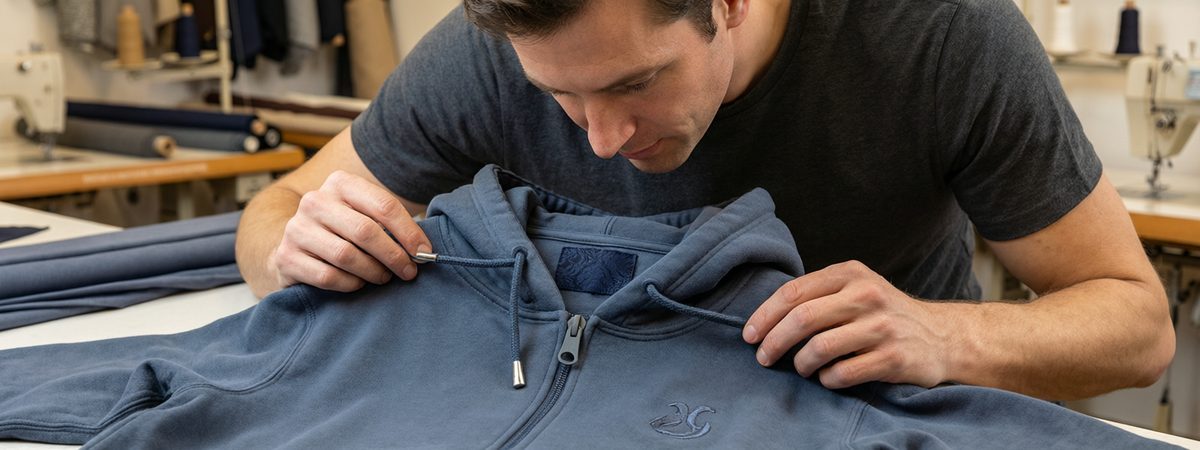
The details a customer touches first are the ones that set perceived value. Drawcords are on over 80% of contemporary streetwear pieces: a premium custom drawcord uses reinforced braided or flat-woven cord with a branded aglet — metal tips with a laser-engraved logo cost little more than plastic and immediately signal quality, and cord ends can be matched to Pantone or the body colour. The neck label is the second signal: a woven damask or taffeta label (fully bespoke logo and texture, roughly 300-piece MOQ) reads luxury, while a heat-transfer label gives a completely tag-less, itch-free feel for loungewear. On zip-ups, upgrade to YKK metal zips and match the zip pull finish to the garment. Add tone-on-tone embroidery instead of a chest print and ribbed cuffs with 5–8% elastane for recovery, and the hoodie reads $200 before anyone checks the price.
Small-Batch Release Strategy
Streetwear runs on drops, and the cadence maps to brand stage: emerging brands typically run 50–200 units per drop every 6–8 weeks, growing brands 100–500 units every 4–6 weeks, and established names larger weekly releases. Small runs keep upfront cost and dead stock low, and every sellout becomes the story that drives the next drop. Pair the scarcity with quality — an artificial-feeling drop fails, but a genuinely premium small batch builds the resale chatter that fuels the brand. Plan run sizes with the factory early so MOQ tiers, fabric and trim lead times, and wash programs all align with the release calendar.
Coordinated Tops and Bottoms
Premium streetwear sells sets: a hoodie with matching joggers or shorts reads as a designed collection rather than a random top. Use one fabric base for both so the set stays consistent — same GSM, same brushed or looped interior, same dye program — and lock the top and bottom to a single dye lot or batch so the colours match exactly. Garment dyeing supports small-batch flexibility here, but only if the set is cut from one dye run and a lab dip is approved against your Pantone reference before bulk. When the hoodie and the bottom arrive from the same lot, the set photographs and sells like a collection.
Polybag and Hang Tag: Retail-Ready Packaging
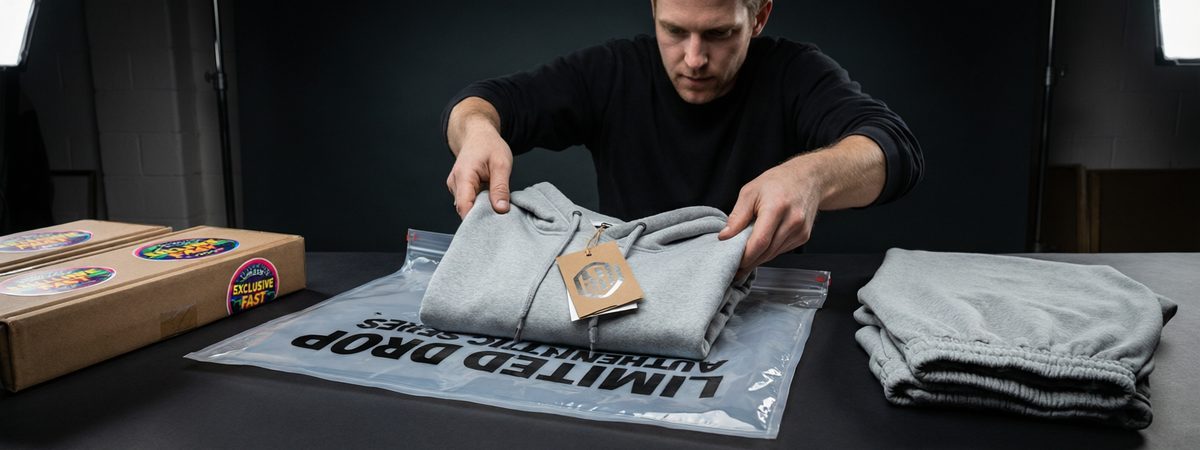
The packaging is the final 10% of branding — and the first physical touchpoint for a DTC customer. A printed polybag carries the logo, care instructions and a QR code, protects the garment through shipping, and can be made in recycled or biodegradable film with a self-seal or slider closure. The hang tag is the product's business card: premium stock (recycled kraft, heavy card or even wood veneer) with spot UV, foil stamping or embossing, attached with cotton twine or waxed cord, and carrying the size, material story and brand story. Brands that treat packaging as design see it show up in reviews — in one DTC case, 34% of customer reviews mentioned the packaging and labels. Build the label family — hang tag, neck label and care label — from one design system, and the unboxing becomes the first word-of-mouth moment.
Retail-Ready Checklist for a Drop
Run the drop against a simple checklist before bulk: fit block decided (boxy or oversized) and graded pattern approved; fabric weight 400–550 gsm for the silhouette; drawcord with branded metal aglets, woven or tag-less neck label, YKK zip on zip-ups; decoration chosen for the face (tone-on-tone embroidery, puff print or high-density work suit heavyweight pile); wash program locked with post-wash grading; sizes and colours matching the coordinated bottoms from one dye lot; polybags, hang tags and care labels in place; and run size matched to the release calendar. If every line is checked, the drop arrives retail-ready — box to wardrobe with the brand intact.
MontForge Hoodie Capabilities
MontForge manufactures custom hoodies for streetwear, CrossFit and teamwear programs. We develop boxy and oversized silhouettes with drop-shoulder pattern engineering, graded ease and underarm gussets, in heavyweight French terry and brushed-back fleece from 280 to 500 gsm. Our trim program covers custom drawcords with branded metal aglets, woven damask neck labels, tag-less heat-transfer labels, YKK metal zips and tone-on-tone embroidery, and our finishing floor runs enzyme wash, stone wash and garment dye with single-dye-lot set production. With low-MOQ drops, 10–12 day sampling and retail-ready packaging — printed polybags, branded hang tags and care labels — we help streetwear brands ship hoodies that arrive looking like a collection.
Frequently Asked Questions
What is the difference between oversized and boxy hoodies?
Boxy is wider than it is long: a square, cropped silhouette with a structured drape and exaggerated drop shoulder. Oversized is wide and long: a baggy, enveloping fit with longer sleeves and body and a fluid drape. They are different patterns and grade differently.
How should an oversized hoodie be graded?
Ease must be graded proportionally across sizes — adding the same ease to S and XXL makes the XXL absurdly wide. Ask the factory to show the graded pattern and how ease distribution changes from S to XL, and confirm the sleeve-head curve is adjusted so larger sizes do not pull.
What fabric weight do I need for an oversized drop?
400–550 gsm for premium drape; below roughly 350 gsm the silhouette looks sloppy. Boxy cuts want density too — 450–500 gsm keeps the shoulders sharp and the hood standing. Match the weight to your retail price positioning.
Which details make a hoodie feel premium?
Branded metal aglets on a reinforced drawcord, a woven damask neck label or tag-less heat transfer, YKK metal zips on zip-ups, tone-on-tone embroidery instead of chest prints, ribbed cuffs with 5–8% elastane, and bar tacks at the kangaroo pocket corners.
What does retail-ready packaging include?
A printed polybag with logo, care info and QR code (self-seal or slider closure, recycled film available), a premium hang tag on cotton twine carrying size and brand story, and a matching label family — hang tag, neck label and care label from one design system. Packaging is the first DTC touchpoint and shows up in reviews.
Ready to build a retail-ready hoodie drop? Send us your brief or browse MontForge hoodies — oversized and boxy fits, branded details and full packaging at low MOQ.