Streetwear T-Shirt Manufacturing: From Design Drop to Retail-Ready Tee
- Share
- publisher
- MontForge Sourcing Team
- Issue Time
- Aug 7,2026
Summary
A 2026 guide to streetwear t-shirt manufacturing: boxy fits, heavyweight GSM, garment dye, branding trims, small-batch drops, and end-to-end capsule production.
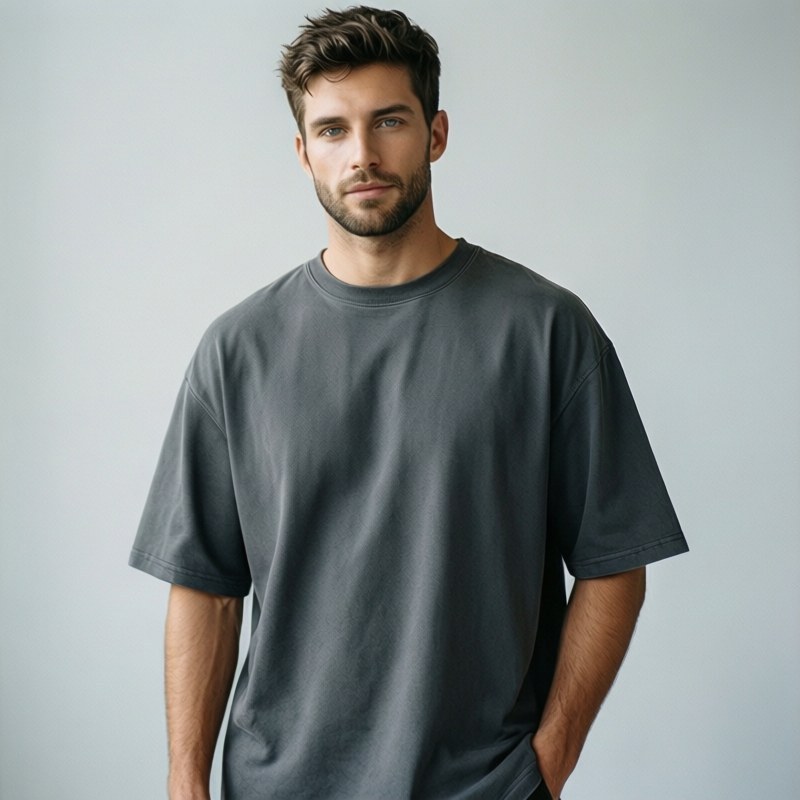
Streetwear in 2026 is won or lost on the cut, not the caption. A drop lives or dies by how the tee drapes, washes, and reads on a phone screen. The short answer: build a streetwear t-shirt around a controlled oversized or boxy fit in 180-300 GSM cotton, finish it with garment dye or vintage wash for the lived-in look, brand it with woven neck labels and custom hang tags, and release it in a small batch of 25-300 units on a timed drop. This guide walks the full path from design brief to retail-ready tee.
Why 2026 Streetwear Is Fit-First, Not Logo-First
The silhouette is now the first thing a shopper clocks. Oversized is still dominant, but the sloppy fast-fashion version is fading. What replaces it is controlled: wider through the body, dropped through the shoulder, balanced with cleaner drape and better proportions. Tees read boxier, hoodies feel heavier, and raw hems stay relevant only when the garment looks intentional. Two oversized tees can look identical on a product page and feel completely different on body: one hangs with structure, the other twists, stretches, and dies after three washes. Shoppers in 2026 are sharper about that gap, which is why fit and fabric now do more selling than the graphic.
The Boxy and Dropped-Shoulder Silhouette, Measured
A boxy tee is not the same as a generic oversized tee. Oversized means a bigger overall shape; boxy means a wider chest, shorter body length, and a cleaner square proportion. Get the measurements wrong by a centimeter or two and the whole look flips. The spec that buyers actually approve:
- Boxy: wide chest 22-24 in, cropped body length 24-26 in, relaxed armhole.
- Oversized: extended body length 28-30 in, dropped sleeves, dropped shoulder seam.
- Dropped shoulder: seam sits below the natural shoulder point for the relaxed, structured silhouette.
- Body length is the trap: too long becomes a normal oversized tee; too short without width reads as a cropped mistake.
Check shoulder width, chest width, sleeve opening, and body length together as a set, not one measurement in isolation. That is what separates a deliberate streetwear block from an unfinished sample.
Heavyweight Cotton and GSM: The New Premium Baseline
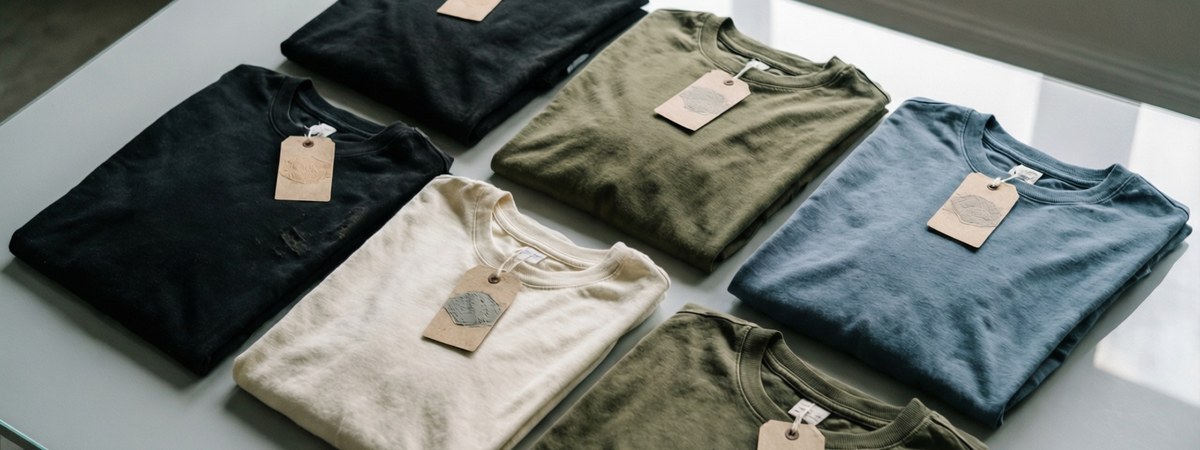
Lightweight blanks lose their shape after repeat wear. Premium heavyweight cotton keeps structure and reads more valuable. For streetwear, 220-300 GSM is the practical heavyweight range, with 180-240 GSM favored for breathable oversized summer cuts. Heavier is not automatically better: a 300 GSM tee feels rough if the yarn and finishing are poor. Beyond GSM, grade the yarn, softness, shrinkage, neckline stability, and drape. The goal is structure, not discomfort. When the blank is right, a single back graphic or tonal logo carries the whole piece.
Vintage Wash and Garment Dye: The Lived-In Finish
Vintage-washed cotton stays strong in 2026 because it gives a piece immediate character without weakening it. Acid wash, enzyme wash, pigment dye, garment dye, and sun-faded effects all create the worn-in look that drives streetwear drops. The production risk is color control: washed colors can shift after bulk washing, and different fabric batches react differently. Prints also move on pigment-dyed grounds. The fix is disciplined sample testing: approve the wash effect, shrinkage, print hand feel, and final color before bulk.
Garment Dye vs Piece Dye: Which to Brief
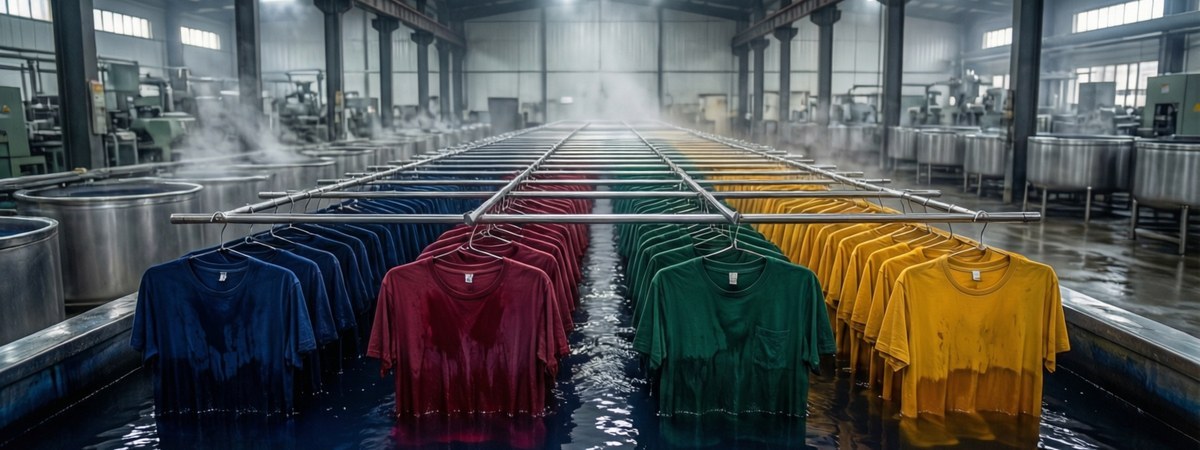
Piece dyeing colors the fabric before cutting and sewing: uniform color, lower cost, longer bulk runs, the standard for mass basics. Garment dyeing builds the whole tee first, then submerges it in the dye bath: the color flows through seams and threads, giving richer tonal depth and a soft, broken-in feel from the first wear. The commercial wash cycle removes roughly 99 percent of shrinkage, so a size M that fits on arrival still fits after 50 washes. That is a functional benefit, not just a finish.
Garment Dye
Soft, vintage shading, small-batch friendly, Pantone matching across 2,500+ shades. Costs more: roughly USD 3.50 per lb with a 250-unit minimum per dye color. Lead time is longer than piece dye.
Piece Dye
Consistent, flat color, cheaper at scale: about USD 0.50-1.00 per yard with a 500-yard minimum (roughly 250 garments). Best when exact color matching across a run matters more than character.
Brief garment dye for limited drops and seasonal color stories; brief piece dye for uniform team or bulk solid runs. For either, require a lab dip and a trim card so the shade repeats across seasons.
Branding Details That Signal Retail-Ready
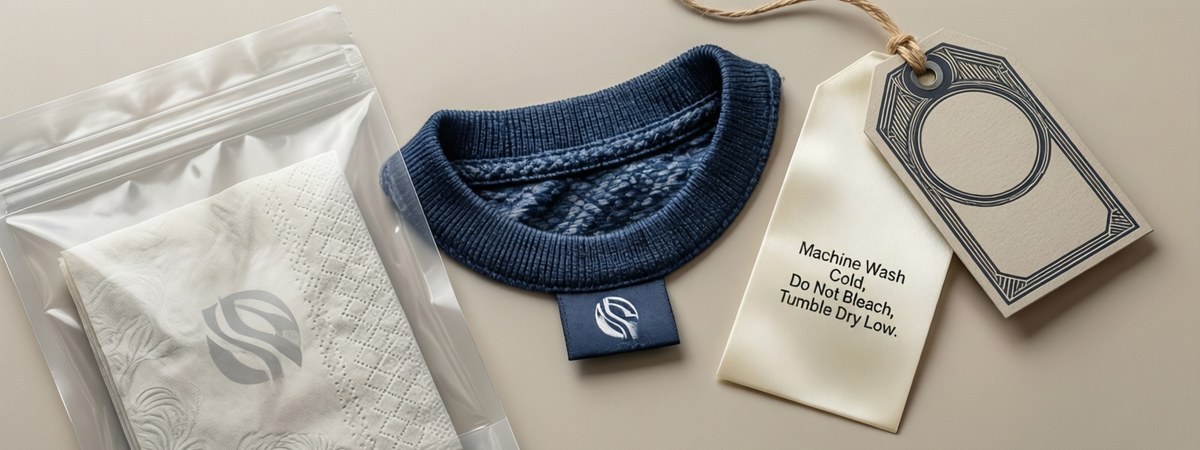
The moment a customer opens the bag is your brand's first physical impression. A great tee in a plain poly bag with a generic tag feels like a commodity; the same tee with a woven neck label, a custom hang tag, and branded packaging feels worth the premium. The core private-label trims:
- Woven neck label: damask, satin, or taffeta; brand name and size. About USD 0.04-0.30 per piece.
- Care label: satin or printed; fiber content, wash symbols, country of origin, RN number. FTC and EU compliant. About USD 0.01-0.04 per piece.
- Hang tag: 350 gsm cardstock, foil, emboss, or spot UV; string, pin, or fold attach. About USD 0.03-0.15 per piece.
- Poly bag: clear, frosted, or opaque with logo and suffocation warning; adhesive or zip. About USD 0.04-0.12 per piece.
- Size tab, tissue, sticker, carton: the finishing layer that turns a shipment into an unboxing.
Minimums vary by trim: neck and care labels often run with sampling, hang tags from 100-200, poly bags from 500. Lock a trim card and lab dip record per client so every run matches the approved standard.
Small-Batch Drop Strategy: Scarcity You Can Actually Ship
The drop model came from streetwear culture and now spans sportswear and creator merch. For independent brands the scarcity is real: a run of 25-100 pieces is a production reality, not a marketing trick. Controlled scarcity beats dead stock, and the data backs the urgency: about 31 percent of consumers across markets say they are more likely to buy a "limited edition" item, and Gen Z is roughly 82 percent more likely to be influenced by social and digital discovery. A timed drop needs a waitlist, teaser content (fabric close-ups, process shots, silhouette reveals), and a frictionless checkout. Sell out fast on the first drop; you can restock by request later.
How a Capsule Collection Is Produced End-to-End
A capsule is a small, cohesive set of tees built around one idea. The repeatable path from brief to retail-ready:
- Signal: let demand (saves, shares, completion) decide what to productize, not gut feel.
- Tech pack: flat sketch, fabric, GSM, fit, trims, artwork specs in one file.
- Sampling: 3-5 samples across sizes; in-person or influencer fit sessions.
- Branding integration: labels, tags, and bags produced in parallel with sampling.
- Small-batch run: 25-300 units after sample sign-off; 3-stage QC inline, mid, final.
- Retail-ready: folded, poly-bagged with branded sticker, packed by size run.
Use the Express track (about 2-4 weeks) for a hot moment and the Standard track (about 8-12 weeks) when fit testing and scale economics matter. Work backward from the launch date.
The Tech Pack: Your Manufacturing Contract in One File
The tech pack is the document that turns a vibe into a reproducible garment. It should state fabric and composition, GSM, fit and grading rules, construction (neck rib, side seams vs tubular, stitch density), trims with exact specs, artwork placement and print method, and a approved lab dip. A complete pack is also what lets a low-MOQ partner sample in 7-15 days and bulk in weeks without a second guessing round. If you brief from a mood board alone, expect a sample that looks close and fits wrong.
Why MontForge for Streetwear T-Shirt Drops
MontForge runs custom sports and streetwear tees for brands that want controlled oversized and boxy fits, garment-dye and vintage-wash finishes, and full private-label trims from a single line. Low minimums let a first drop stay at 25-300 units, sampling runs in 7-15 days, and GRS-certified recycled polyester is available for brands carrying a sustainability story. Every run is graded, lab-dipped, and 3-stage inspected so the capsule that sells out looks the same on reorder. Start from the product page or send a brief and get a quote.
Frequently Asked Questions
What GSM is best for a streetwear t-shirt?
For a structured premium feel, 220-300 GSM heavyweight cotton. For breathable oversized summer cuts, 180-240 GSM works. Grade yarn and finishing, not just the number.
Garment dye or piece dye for a drop?
Brief garment dye for limited, character-driven color stories and small batches; piece dye for uniform bulk solids where exact match across the run matters most.
What is the minimum run for a streetwear drop?
Many cut-and-sew partners start at 25-100 units. MontForge samples in 7-15 days and supports first drops in the 25-300 unit range.
Which branding trims make a tee retail-ready?
Woven neck label, compliant care label, custom hang tag, and a branded poly bag at minimum. Add size tabs, tissue, and a sticker for a stronger unboxing.