Team Hoodie Uniforms for Colleges and Sports Clubs
- Share
- publisher
- MontForge Sourcing Team
- Issue Time
- Sep 8,2026
Summary
Team hoodie uniforms for colleges and sports clubs: roster sizing and color matching, names, numbers and logos, reorder management, turnaround for events, and private-label retail options.
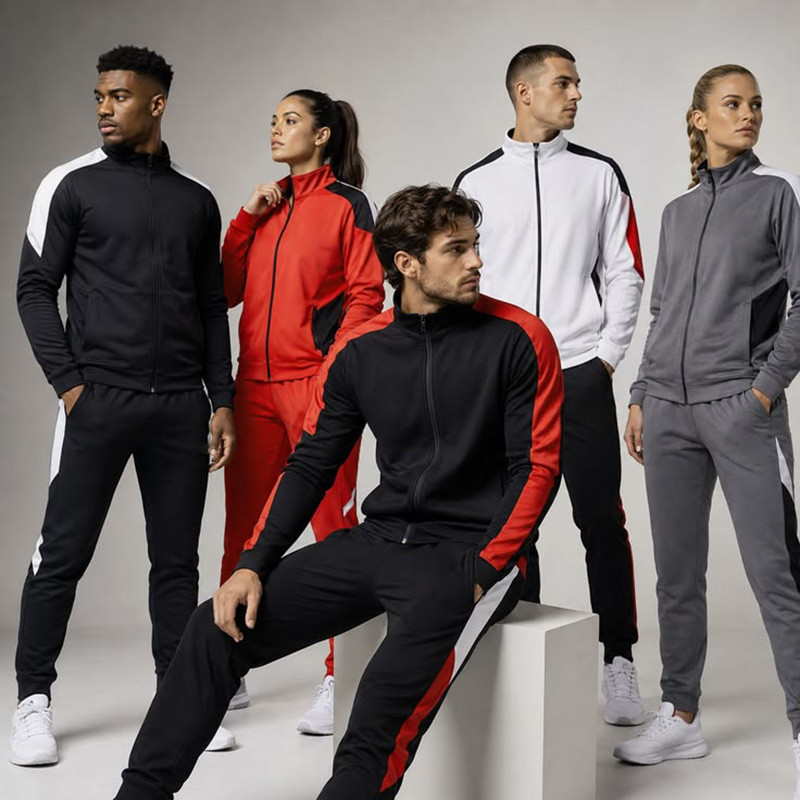
The team hoodie is the most ordered garment on a college campus after the jersey — it carries the school crest from the sideline to the bookstore, works for athletes and alumni alike, and turns a sports club into a recognizable brand. Ordering one well is about roster sizing and color matching, names and numbers and logos, reorder management, turnaround for events, and the private-label retail option that lets a campus store or club shop profit from the same run. This guide walks through each decision.
Roster Sizing and Color Match
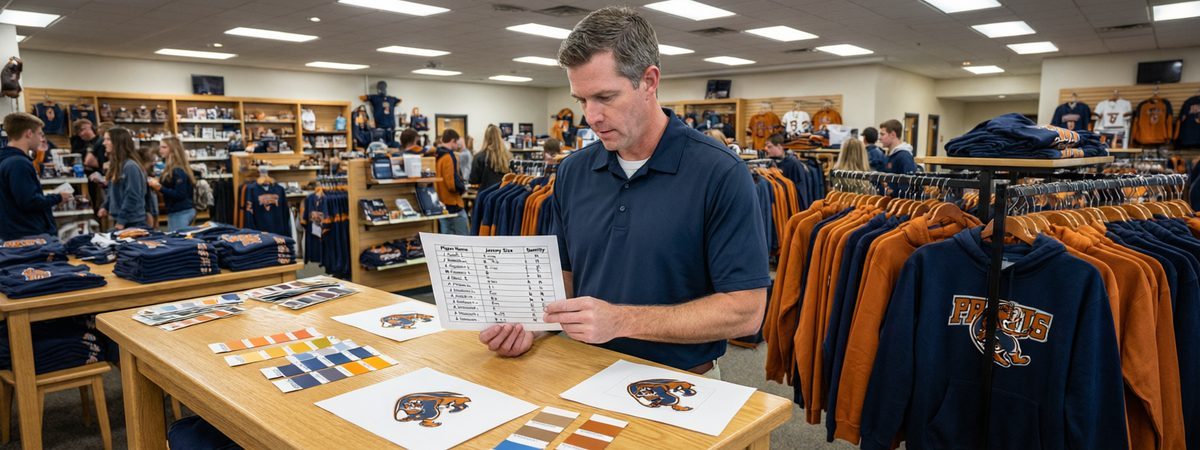
Team hoodie orders start with two documents: a roster and a color reference. Collect every name and size on one sheet — wait until the roster is final, then gather chest, body and sleeve measurements against the supplier's size chart rather than guessing retail sizes. Most adult teams skew toward M, L and XL, so weight the size run to the actual roster instead of ordering equal quantities, and add 2–3 spares in the most common sizes for roster additions and lost pieces. Color matching is the second discipline: schools and clubs identify their colors by Pantone reference (Alabama crimson is PMS 201 C, Princeton orange PMS 165 C, and so on), so hand the factory the PMS codes and approve a lab dip before bulk — "school red" means different things to different dye houses.
Names, Numbers and Logos
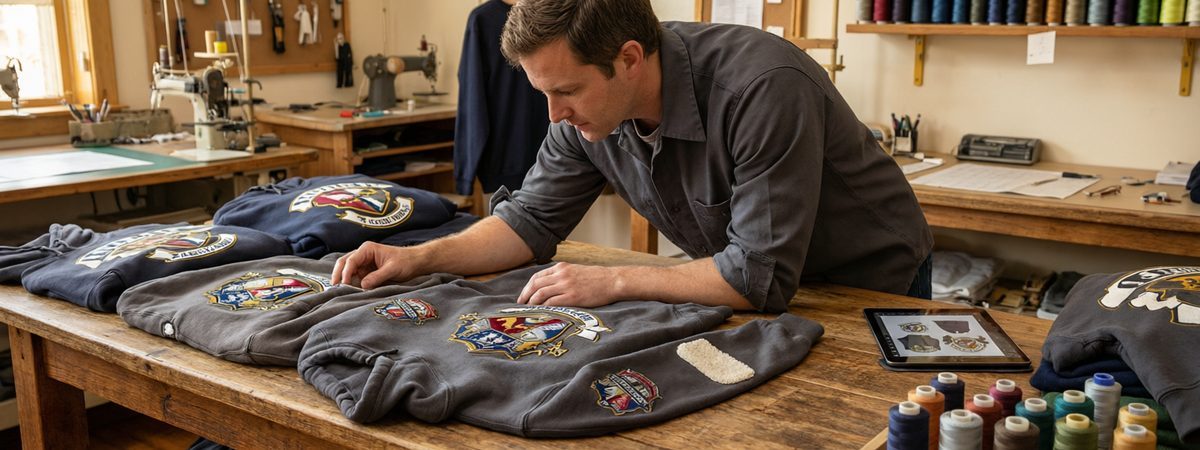
Hoodies carry branding in more places than a jersey: chest crest, back lettering, sleeve, hood. Choose the decoration method by the artwork and the fabric. Screen printing is the cost-effective workhorse for solid logos up to about three colors at volume. Embroidery is the premium choice for school crests, mascots and varsity patches — it lasts as long as the garment and reads as quality on a heavyweight hoodie, and a chenille varsity patch (typically 6–10 inches) is the classic athletic-department look. DTF handles full-color, photographic or gradient-heavy artwork that screen printing cannot reproduce cleanly, and sublimation is the permanent all-over option for polyester bodies. Give the factory vector artwork (.ai or .eps) with Pantone references — low-resolution JPGs cause redraw delays — and confirm placement and size on a digital mockup before any production starts.
Fit, Fabric and Weight for Team Wear
The fabric has to serve both the athlete and the student body. Cotton fleece and French terry between roughly 280 and 450 gsm cover the range: a 300–320 gsm mid-weight is the all-season team hoodie that athletes layer over practice gear and students wear year-round, while 380–450 gsm heavyweight reads premium for alumni and retail. Fit matters for athletes — a boxy streetwear cut restricts movement under a weight vest, so teams usually want a regular athletic fit with raglan or set-in sleeves, ribbed cuffs with elastane for recovery, and a double-layer hood that holds its shape. Choose pullover for a clean team look or zip-up for sideline venting, and match the choice across the whole order so the squad looks uniform.
Reorder Management
Teams change every season: seniors graduate, freshmen join, a hoodie is lost at the pool. Reorders are easy only if the first order was managed well. Keep the approved mockup, the Pantone codes, the fonts and placement specs, and the size-run totals on file — a single approval packet turns a reorder into a straight repeat instead of a re-design. Negotiate a small-batch top-up rate at the original order, because reorders under the first MOQ often carry surcharges or reset to a higher per-piece band; many suppliers hold the original price for up to a year as long as the reorder clears a minimum quantity, typically around 10–30 pieces. Order a handful of spares in the original run and top up against the archived design as the roster turns over.
Turnaround for Events
Event deadlines — homecoming, a championship, orientation week — are unforgiving, and the clock starts at approval, not at inquiry. Standard team apparel production runs two to four weeks after artwork, roster and payment are approved, with embroidery and sublimation at the longer end; bulk cut-and-sew hoodies typically run 25–35 days after sample approval. Championship and tournament orders often get priority queue status, which can pull a hoodie run from roughly 18 days down to 12–15. Work backwards from the event date, add a two-week buffer for artwork revisions and shipping, and ask explicitly whether priority production is available for a hard deadline. The most common delays happen before production — late rosters, missed approvals and artwork changes — so lock those early and the lead time takes care of itself.
Private-Label Retail Option
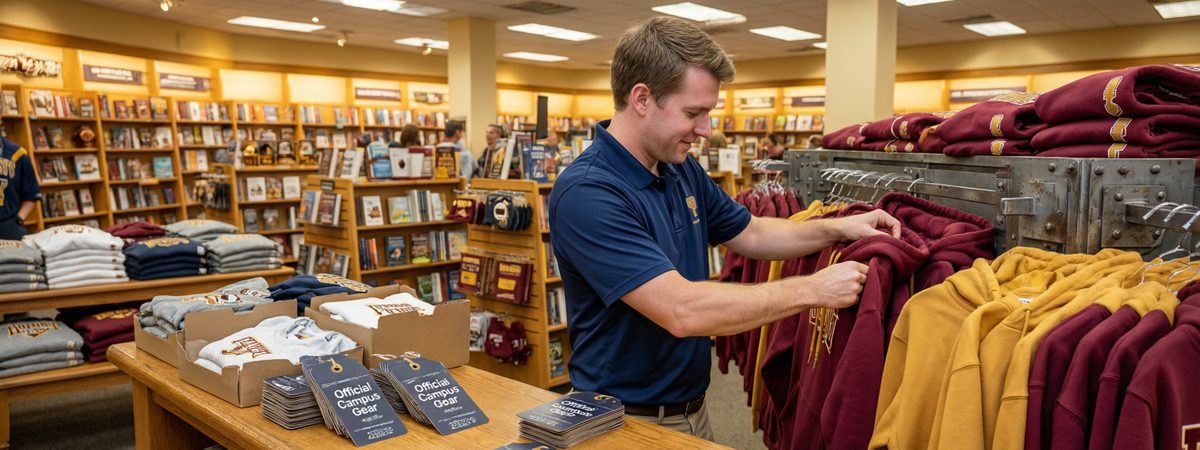
The same hoodie that dresses the team can stock the campus store or club shop. Private-label runs let a bookstore, athletic department or alumni association sell branded gear at retail margins instead of reselling another brand's stock, and they arrive retail-ready — woven neck labels, custom hang tags and branded polybags, not factory-generic. Wholesale programs ladder from roughly 24 units upward (24 / 48 / 72+ tiers with volume discounts), and low-MOQ suppliers let a student club order as few as 12–30 pieces for an event before scaling. For campus bookstores, work with a supplier that keeps your designs and color standards on file so restocks are fast and the school colors match from year to year.
Sampling in 7–15 Days
Do not order a full team run without a sample. A competent custom manufacturer typically delivers a team hoodie sample in about 7–15 days — fast enough to check the fit on a real athlete, the crest placement and size, the hood balance and the hand-feel before you commit. Ask for the crest embroidered or printed in your actual school colors, and wash the sample twice during review to confirm shrinkage, stretch recovery and how the decoration survives the care cycle the team will actually use. For chenille patches or multi-color crests, request a sample in your exact PMS colors before bulk, because color matching is where most premium team orders go wrong.
Budgeting the Team Order
Price the order by the decisions, not by a per-piece guess. Unit cost falls with quantity and rises with weight and decoration: a 300 gsm blank pullover with one chest print costs far less than a 400 gsm zip-up with an embroidered crest and back lettering. Names and numbers add a small per-piece cost; extended sizes (2XL and up) often carry surcharges; embroidery is priced by stitch count and patch size. Ask the factory to itemize the quote — garment, decoration, names, packaging, shipping — so the athletic director can compare apples to apples and the club treasurer knows where the budget went. Bigger orders spread setup cost, which is why combining the team run with a retail or alumni batch often drops the unit price.
MontForge Team Hoodie Capabilities
MontForge manufactures custom team hoodies for colleges, sports clubs and campus programs. We build cotton fleece and French terry from 280 to 450 gsm in regular athletic, boxy and oversized fits, with Pantone-matched school colors, lab dips and archived color standards so the crest matches year after year. Our decoration floor covers screen printing, embroidery, chenille varsity patches and DTF, with vector-artwork review and digital mockups before production. With roster-based size runs, small-batch top-up reorders, priority timing for event deadlines, and private-label retail packaging — woven labels, hang tags and polybags — we help campuses and clubs ship hoodies that look right on the sideline and sell right off the shelf.
Frequently Asked Questions
How do I order hoodies for a whole team?
Lock the roster first, then collect sizes against the supplier's chart and weight the size run to the actual team (most adult squads skew M, L and XL). Match colors to Pantone references, approve a digital mockup, then order a sample before bulk.
How should team colors be specified?
Use Pantone (PMS) codes — schools and clubs identify official colors by PMS number. Hand the factory the codes, approve a lab dip, and for embroidered crests or patches request a sample in your exact school colors before bulk.
What is the best decoration method for a school crest?
Embroidery for crests, mascots and varsity patches — it lasts as long as the garment and reads premium on heavyweight hoodies. Screen printing suits simple solid logos at volume; DTF handles full-color artwork; sublimation is permanent on polyester bodies.
How far ahead should a team order for an event?
Production runs two to four weeks after approval, with embroidery and sublimation longer. Work backwards from the event, add a two-week buffer, and ask about priority production for championship deadlines. Lock the roster and artwork early — that is where delays happen.
Can a campus store or club sell its own branded hoodies?
Yes. Private-label runs arrive retail-ready with woven labels, hang tags and polybags, and wholesale programs ladder from roughly 24 units up. Keep your design and color standards on file so restocks match year to year.
Ready to outfit your team or campus store? Send us your roster and crest or browse MontForge custom hoodies — Pantone color matching, roster sizing and private-label retail at low MOQ.