What Makes a Top Outdoor Waterproof Zipper Jackets Factory: Quality, Tech, and Customization
- Share
- publisher
- Montforge-Bruin
- Issue Time
- Jan 20,2026
Summary
This article defines the key traits of a leading waterproof jacket factory, focusing on quality fabrics, advanced membranes, seam sealing, and full OEM customization.
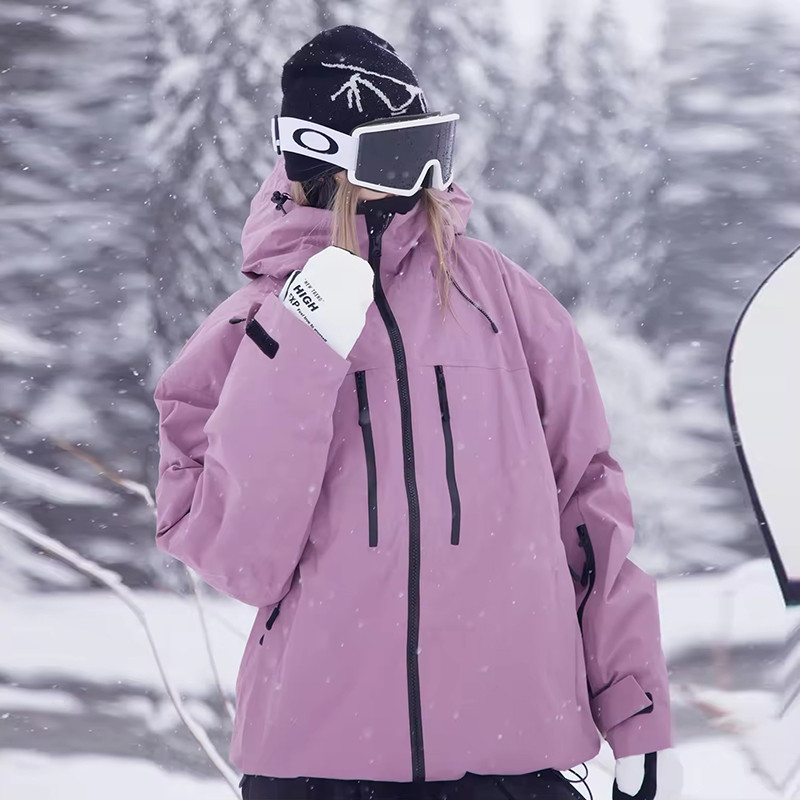
What Makes a Top Outdoor Waterproof Zipper Jackets Factory: Quality, Tech, and Customization
At MontForge, we understand that an exceptional outdoor waterproof zipper jacket isn't just about keeping dry; it's about pioneering the perfect synergy of quality, advanced technology, and personalized solutions. We believe the true mark of a leading outdoor waterproof zipper jackets factory lies in its unwavering commitment to these three pillars, ensuring adventurers, professionals, and everyday users are equipped with gear that performs flawlessly in any environment.
The market is saturated with options, yet few outdoor waterproof zipper jackets factories truly deliver on the promise of durable, comfortable, and highly functional outerwear. This guide delves into the essential characteristics that set top-tier factories apart, focusing on the meticulous craftsmanship, innovative materials, and comprehensive customization capabilities that define excellence in the industry.
Key Takeaways
- Quality is Non-Negotiable: The foundation of a superior waterproof jacket lies in high-performance fabrics like Nylon and Polyester, paired with advanced membranes such as Gore-Tex. Construction details, including fully taped seams and waterproof zippers, are critical for true weather protection.
- Technology Drives Performance: Modern waterproof jackets leverage technologies like DWR coatings, nano-coatings, and breathable membranes to balance protection with comfort. Strategic ventilation, like pit zips, is essential for regulating body temperature during strenuous activity.
- Customization Creates Value: Top factories offer extensive OEM/ODM services, allowing brands to tailor everything from fit and features to logos and colors. This enables the creation of unique products for specific applications like hiking, cycling, or professional workwear.
- Sustainability is a Responsibility: Leading manufacturers are increasingly adopting sustainable practices, including the use of recycled materials and PFC-free DWR treatments, to minimize their environmental footprint.
- Partnership is Key: A factory’s expertise, integrated production processes, and ability to adapt to market trends are crucial factors for a successful partnership that delivers high-quality, cost-effective apparel.
The Cornerstone of Excellence: Unwavering Quality in Outdoor Waterproof Zipper Jackets Factory Production
Quality is not just a feature; it's the fundamental principle upon which every reliable piece of outdoor gear is built. For an outdoor waterproof zipper jackets factory, this commitment translates into a meticulous process of material selection, precision construction, and exhaustive testing. Without this foundation, even the most technologically advanced jacket will fail when it's needed most.
Superior Fabric Selection: The Foundation of Waterproofing
The first decision in crafting a waterproof jacket is choosing the right fabric. This choice impacts everything from durability and weight to breathability and, of course, its ability to repel water.
Beyond Basic: Nylon, Polyester, and Advanced Membranes
The shell, or face fabric, is a jacket's first line of defense. The two most common materials used are Nylon and Polyester, each with distinct advantages.
- Nylon: Known for its exceptional strength-to-weight ratio and abrasion resistance, making it a popular choice for rugged, high-performance gear. It offers excellent durability against scrapes from rocks, branches, and pack straps.
- Polyester: Valued for its hydrophobic properties (it absorbs less water than nylon) and superior UV resistance, which helps it retain color and strength over time. It's often used in jackets where color vibrancy and resistance to sun degradation are priorities.
However, the face fabric alone doesn't make a jacket waterproof. It works in concert with a waterproof, breathable membrane or coating that is laminated to its underside. This combination creates a multi-layered fabric system designed to block external moisture while allowing internal water vapor (sweat) to escape.
Gore-Tex and ePTFE: Setting the Standard for Durability and Breathability
When discussing waterproof membranes, Gore-Tex is the name that has set the industry standard for decades. Its innovation lies in a material called expanded polytetrafluoroethylene, or ePTFE. This membrane was discovered in 1969 by Bob Gore, who found that by stretching PTFE, he could create a microporous structure with about 9 billion pores per square inch.
The genius of the ePTFE membrane is the size of its pores. Each pore is approximately 20,000 times smaller than a water droplet, making it impossible for rain and snow to penetrate from the outside. Simultaneously, these pores are about 700 times larger than a water vapor molecule, allowing sweat to escape from the inside. This dual function is what creates a truly "waterproof breathable" fabric, keeping you dry from both the elements and your own perspiration.
Gore-Tex and similar ePTFE-based technologies are often sold as laminates, typically in 2-layer, 2.5-layer, or 3-layer constructions, which are then bonded to face fabrics by factories to create the final material for the jacket.
Precision in Construction: Ensuring Immaculate Sealing and Structure
A waterproof fabric is useless if the jacket's construction allows water to seep through its seams, zippers, and other openings. Top-tier factories distinguish themselves through their fanatical attention to these vulnerable points.
Fully Taped Seams: The Non-Negotiable for True Waterproofing
Every stitch in a garment creates thousands of tiny holes where a needle and thread have passed through the fabric. For a standard piece of clothing, this is insignificant. For a waterproof jacket, these holes are potential entry points for water. To combat this, a process called seam sealing is used. This involves applying a special waterproof adhesive film over the seams.
There are two main levels of seam sealing:
- Critically Taped Seams: Only the most exposed seams, such as those on the shoulders, neck, and chest, are sealed. This is a cost-saving measure often found on less expensive, "water-resistant" jackets.
- Fully Taped Seams: Every single seam and stitch line on the jacket is covered with waterproof tape. This process is labor-intensive but is the only way to ensure the garment becomes as waterproof as the fabric itself. This is a hallmark of high-quality [Seam-Sealed Performance Jackets] and is a non-negotiable feature for anyone venturing into serious weather. Some advanced techniques even involve "welded" seams, which use heat and pressure to bond fabrics together without stitching, eliminating holes entirely.
Waterproof Zippers and Storm Flaps: Protecting Vulnerable Points
Zippers are another critical weak point. A standard zipper offers little resistance to driving rain. Top factories address this by using specialized zippers and construction features:
- Water-Repellent Zippers: Brands like YKK with their AquaGuard® line have developed zippers that feature a polyurethane (PU) coating over the zipper teeth. This lamination makes the zipper highly water-resistant, preventing water from seeping through the coil.
- Storm Flaps: These are flaps of fabric that cover the zipper. An "external" storm flap sits on the outside of the zipper, providing a primary barrier against wind and rain. An "internal" storm flap sits behind the zipper, catching any water that might make it through the teeth. Many high-end jackets use both for maximum protection.
Rigorous Testing: Our MontForge Commitment to Performance
A factory's claims of quality must be backed by empirical data and real-world validation. Rigorous testing is the final step in proving a jacket's performance and ensuring it meets the highest standards of reliability.
Hydrostatic Head Ratings: Quantifying Waterproof Resilience
The industry standard for measuring a fabric's waterproofness is the Hydrostatic Head (HH) test. This test measures the pressure at which water is forced through a fabric. A column of water is placed over a sample of the material, and the height of the column (in millimeters) at which water penetrates the fabric becomes its HH rating.
| Hydrostatic Head (HH) Rating | Level of Waterproofness | Suitable Conditions |
|---|---|---|
| 1,500mm - 5,000mm | Water-resistant | Light rain, short exposure, dry snow. |
| 5,000mm - 10,000mm | Waterproof | Moderate rain, average snow. |
| 10,000mm - 20,000mm | Very Waterproof | Heavy, sustained rain, wet snow. Suitable for all-day use. |
| 20,000mm+ | Extremely Waterproof | Extreme, torrential rain and wet snow under high pressure (e.g., from pack straps). |
In the UK, a fabric must have an HH rating of at least 1,500mm to be legally called "waterproof," but most quality jackets far exceed this. A rating of 20,000mm or higher is considered top-tier for all-weather use.
Real-World Application and Feedback Integration
While lab tests like the HH rating provide a vital baseline, they don't tell the whole story. A top factory understands the importance of field testing. This involves giving prototypes to athletes, outdoor professionals, and everyday users to test in real-world conditions. This feedback is invaluable for identifying weaknesses in design, fit, and feature placement that lab tests can't predict. Integrating this user feedback into the development cycle is what elevates a good jacket to a great one, ensuring it not only performs technically but also functions intuitively for the end user.
Embracing Innovation: Advanced Technology in Every Outdoor Waterproof Zipper Jackets Factory
The outdoor apparel industry is driven by a relentless pursuit of innovation. A leading outdoor waterproof zipper jacket factory doesn't just assemble garments; it functions as a technology hub, integrating cutting-edge materials, construction techniques, and sustainable practices to create gear that is lighter, more durable, and more comfortable than ever before.
Evolution of Waterproofing Technologies
The journey from clammy rubber slickers to breathable waterproof shells is a story of scientific breakthroughs. Early methods of waterproofing were rudimentary, often making garments heavy and non-breathable.
From Coatings to Membranes: A Leap in Functionality
The first waterproof garments were made of materials like oil-soaked sailcloth or rubberized fabrics, pioneered by figures like Charles Macintosh in the 1820s. While effective at blocking rain, they were also completely non-breathable, trapping sweat and leaving the wearer soaked from the inside. The introduction of synthetic fabrics like PVC and nylon in the mid-20th century made rain gear lighter, but the breathability problem remained.
The true revolution came in 1969 with the invention of the ePTFE membrane, which led to the first Gore-Tex fabrics in 1976. This marked a fundamental shift from simple waterproof coatings to advanced waterproof membranes that could be both waterproof and breathable.
Nano-Coating Technology: Lightweight and Enhanced Water Repellency
The latest frontier in waterproofing is nanotechnology. Nano-coatings involve applying a liquid polymer containing nanoparticles to a fabric's surface. These particles, often made of materials like silica, bond at a molecular level to create an ultra-thin, invisible protective layer. This layer is superhydrophobic (repels water) and oleophobic (repels oil).
When water hits a nano-coated fabric, it beads up and rolls off instead of soaking in. This technology offers several advantages:
- Enhanced Durability: The bond is incredibly strong and can withstand more wear and washing cycles than traditional DWR treatments.
- Maintained Breathability: The coating covers individual fibers without clogging the spaces between them, so it doesn't impair the fabric's breathability.
- Lightweight Protection: Because the layer is so thin, it adds virtually no weight to the garment.
Durable Water Repellent (DWR) Treatments: The First Line of Defense
Virtually all waterproof jackets have a Durable Water Repellent (DWR) finish applied to the exterior face fabric. This is a chemical treatment that works by increasing the surface tension of the fabric, causing water to bead up and roll off rather than spreading out and soaking in.
DWR is not what makes a jacket waterproof—that's the job of the underlying membrane. However, DWR is crucial for performance. If the face fabric "wets out" (becomes saturated with water), the breathable membrane can't function properly, as water vapor from your body has nowhere to escape. This can lead to a cold, clammy feeling, making you think your jacket is leaking when it's actually your sweat building up inside. DWR treatments are not permanent and need to be regularly cleaned and reactivated to maintain performance.
Strategic Ventilation Systems for Optimal Comfort
Even the most breathable fabric can be overwhelmed during high-exertion activities. That's why top-tier waterproof jackets incorporate strategic ventilation systems to allow for rapid heat and moisture dumping, giving the user control over their microclimate.
Pit Zips and Two-Way Zippers: Regulating Body Temperature
Pit zips (zippers located in the armpit area) are a simple but highly effective ventilation feature. Opening them creates a direct air vent that can rapidly dump excess heat and moisture, which is far more effective than relying on fabric breathability alone, especially in humid conditions. This allows a user to cool down quickly without having to remove layers.
Two-way zippers on the front of the jacket offer similar versatility. Unzipping from the bottom allows for ventilation around the core while the top of the jacket remains closed, providing protection. This is particularly useful when wearing a climbing harness or a backpack hip belt.
Breathable Fabrics and Moisture-Wicking Linings
Beyond the main membrane, other materials contribute to overall comfort. The inner lining of a jacket, especially in 2-layer and 3-layer constructions, plays a key role. A high-quality lining will be designed to wick moisture away from the skin and spread it across a larger surface area, helping it to evaporate more quickly and pass through the breathable membrane. This prevents a sticky, damp feeling and keeps the wearer more comfortable during activity.
Sustainable Practices: MontForge’s Responsibility in Manufacturing
As custodians of the outdoors, leading apparel factories have a responsibility to minimize their environmental impact. This involves a commitment to sourcing sustainable materials and optimizing the manufacturing process.
Recycled Materials and PFC-Free DWR Options
The industry is moving towards more sustainable material choices. This includes:
- Recycled Fabrics: Using recycled polyester (often from plastic bottles) or recycled nylon reduces reliance on virgin petroleum, conserves energy, and lowers carbon emissions.
- PFC-Free DWR: Traditional DWR treatments were based on perfluorocarbons (PFCs), which are highly effective but have been shown to be persistent in the environment and harmful to living organisms. The industry is rapidly transitioning to PFC-free DWR alternatives. While early versions were less durable, modern PFC-free treatments offer excellent performance with a significantly lower environmental impact.
Minimizing Environmental Impact in the Outdoor Waterproof Zipper Jackets Factory Model
A factory's responsibility extends beyond materials. Top manufacturers focus on reducing waste, water usage, and energy consumption throughout the production process. This can involve investing in energy-efficient machinery, implementing water recycling systems for dyeing and finishing processes, and adopting lean manufacturing principles to minimize material waste. These efforts not only benefit the planet but also lead to more efficient and cost-effective production.
The Power of Personalization: Customization from a Leading Outdoor Waterproof Zipper Jackets Factory
In a crowded marketplace, the ability to create unique, purpose-built products is a powerful differentiator. A top outdoor waterproof zipper jackets factory acts as a strategic partner, offering extensive customization services that allow brands to translate their vision into high-quality, market-ready apparel. This goes far beyond simply adding a logo; it encompasses fit, features, materials, and aesthetics.
Tailoring to Diverse Needs: Beyond Standard Offerings
Every brand has a unique identity and target audience. A one-size-fits-all approach is no longer sufficient. Leading factories provide flexible manufacturing models to cater to these diverse requirements.
OEM/ODM Services: Bringing Visions to Life
Understanding the difference between OEM and ODM is crucial when choosing a manufacturing partner:
- OEM (Original Equipment Manufacturer): In this model, the brand provides the complete design, including the tech pack, material specifications, and fit details. The factory's role is to execute this vision, acting as the production engine. This offers full creative control and is ideal for brands with strong in-house design capabilities that want to create a completely unique product.
- ODM (Original Design Manufacturer): In this model, the factory provides existing designs and styles that a brand can choose from. The brand then customizes these pre-designed products by adding their own logo, changing colors, or making minor modifications. This is a faster, more cost-effective option, ideal for startups or brands looking to quickly launch a new line with lower risk.
Many top factories offer a hybrid approach, allowing brands to use ODM for basic items and OEM for their signature, high-value pieces.
Custom Sizing and Ergonomic Design: Comfort for Every Body
Fit is paramount to performance and comfort. A poorly fitting jacket can restrict movement, create cold spots, and reduce the effectiveness of its features. A premier factory works with brands to develop custom sizing charts and ergonomic designs tailored to their specific customer base. This includes considerations like:
- Articulated Elbows and Shoulders: Patterning that builds shape into the arms and back to allow for a full range of motion without the sleeves riding up or the hem lifting.
- Helmet-Compatible Hoods: Hoods designed with enough volume to fit over a climbing or ski helmet, complete with multiple adjustment points for a secure fit when worn without a helmet.
- Adjustable Hems and Cuffs: Drawcords and cuff tabs that allow the user to seal out drafts and customize the fit.
Branding and Aesthetic Customization for Your Outdoor Waterproof Zipper Jackets Factory Partner
A jacket is a walking billboard for your brand. Aesthetic customization ensures that the final product not only performs well but also perfectly represents your brand's identity.
Logo Integration: Embroidery and Screen Printing
Placing a logo on technical outerwear requires methods that are both durable and aesthetically pleasing. A factory should offer a range of options, including:
- Embroidery: A classic, high-end look that offers excellent durability. The factory must use techniques that don't compromise the fabric's waterproofness, often involving a sealing patch behind the embroidered area.
- Screen Printing: A versatile method for applying complex, multi-color logos. Modern inks and application processes ensure the print is flexible and resistant to cracking or peeling.
- Heat Transfer: This method applies a pre-made design using heat and pressure. It's excellent for achieving fine details and a clean, modern look.
Custom Color Matching and Unique Design Elements
Color is a key part of brand identity. A top factory should offer custom color matching services, often using the Pantone Matching System (PMS) to ensure that the fabric color is precisely consistent with the brand's guidelines. Beyond color, customization can include unique design elements like contrasting zipper colors, custom zipper pulls, and unique pocket configurations that help a brand's product stand out.
Adaptability for Specific Applications
The ideal waterproof jacket for a cyclist is very different from one for a mountaineer or a construction worker. Leading factories have the expertise to adapt designs and features for highly specific use cases.
Specialized Features for Hiking, Cycling, and Workwear
A factory partner should be able to engineer application-specific features, such as:
- For Hiking: Pockets placed higher on the torso to remain accessible while wearing a backpack with a hip belt; reinforced shoulder and hip areas to resist abrasion from pack straps.
- For Cycling: A longer "drop tail" back to protect from road spray; reflective elements for visibility; a slimmer, more aerodynamic fit to reduce drag.
- For Workwear: Highly durable face fabrics to withstand job site abrasion; pockets designed for tools; compliance with high-visibility safety standards (e.g., ANSI/ISEA 107).
Seasonal Adaptations: From Lightweight Shells to Insulated Jackets
Customization also extends to seasonality. A factory must be able to produce a wide range of waterproof garments, including:
- Lightweight Shells: Minimalist, highly packable jackets designed for "just-in-case" use during activities like trail running or summer hiking. They prioritize low weight over extreme durability.
- All-Around Shells: The versatile workhorses designed for three-season use, balancing durability, features, and weight.
- Insulated Jackets: Garments that combine a waterproof shell with a layer of synthetic or down insulation. This creates a single, all-in-one piece for cold and wet conditions, such as skiing or winter mountaineering.
Comparing Leading Outdoor Waterproof Zipper Jackets Factories: What Sets MontForge Apart
Choosing the right manufacturing partner is one of the most critical decisions a brand can make. While many factories can produce waterproof jackets, only a select few possess the deep expertise, integrated capabilities, and forward-thinking approach that define a true industry leader. At MontForge, we have built our reputation on being such a partner.
Our Expertise: Decades in Outdoor Apparel Manufacturing
Experience is not something that can be bought; it must be earned. With decades spent dedicated to the art and science of outdoor apparel manufacturing, MontForge brings a level of institutional knowledge that is second to none. This expertise manifests in every stage of the production lifecycle.
Integrated Design, Development, and Quality Control
A significant advantage of partnering with a factory like MontForge is our vertically integrated structure. Vertical integration means controlling multiple stages of the supply chain, from material sourcing to final assembly, under one roof. This provides numerous benefits:
- Enhanced Quality Control: By managing every step, we can enforce rigorous quality standards from raw materials to the finished garment, ensuring consistency and excellence.
- Improved Efficiency and Speed: An integrated system eliminates the delays and communication gaps that occur when working with multiple external vendors. This streamlines the entire process, leading to faster sampling and shorter production lead times.
- Greater Transparency & Sustainability: Controlling the production chain allows for better implementation and monitoring of sustainable practices, from responsible material sourcing to waste reduction.
Proven Track Record with Global Brands
A factory's portfolio is a testament to its capabilities and reliability. We are proud of our proven track record of collaborating with leading global brands. These partnerships are built on a foundation of trust, discretion, and a shared commitment to quality. Our experience working with a diverse range of clients—from high-performance athletic brands to rugged workwear companies—has given us the versatility to meet any challenge and deliver products that succeed in competitive global markets.
MontForge’s Signature Collections: Innovation in Action
A leading factory doesn't just follow trends; it helps create them. Our in-house signature collections serve as a showcase for our innovative capabilities and a source of inspiration for our partners. These collections embody our core principles of quality, technology, and performance.
MontForge ProShield: Durability for Extreme Conditions
The ProShield series is engineered for the most demanding environments. It utilizes robust, high-denier face fabrics with superior abrasion resistance, paired with our most advanced waterproof breathable membranes with HH ratings exceeding 20,000mm. Construction is uncompromising, with fully taped seams, reinforced high-wear zones, and features designed for professionals and serious adventurers who cannot afford gear failure.
MontForge EcoGuard: Sustainable Performance
The EcoGuard collection demonstrates that high performance and sustainability can go hand-in-hand. These jackets are crafted from recycled and bluesign®-approved materials and feature the latest generation of high-performance, PFC-free DWR treatments. The EcoGuard line is for the conscious consumer who demands gear that protects them and the planet they explore.
MontForge FlexPro: Unrestricted Movement and Comfort
Designed for dynamic activities like climbing, trail running, and backcountry skiing, the FlexPro series prioritizes mobility and breathability. This collection utilizes stretch-woven face fabrics laminated to highly breathable membranes, combined with ergonomic, articulated patterning. The result is a jacket that moves with the body, providing protection without ever feeling restrictive.
The MontForge Advantage: Cost-Effectiveness and Rapid Adaptability
In today's fast-moving market, quality must be paired with agility and value. Our operational model is designed to deliver a superior return on investment for our partners.
Optimized Production Processes for High-Quality at Competitive Prices
Through lean manufacturing principles and vertical integration, we have optimized our production workflows to maximize efficiency and minimize waste. This allows us to reduce unnecessary costs without compromising on the quality of materials or construction. By eliminating the markups of middlemen and streamlining logistics, we can offer competitive pricing that provides exceptional value for our clients.
Quick Response to Market Trends and Client Needs
The apparel industry is dynamic. A factory must be agile enough to respond quickly to shifting market trends and client needs. Our integrated structure and experienced team enable us to be highly adaptable. Whether it's incorporating a new fabric technology, developing a prototype for an emerging niche, or scaling production to meet a surge in demand, MontForge has the flexibility to respond swiftly, helping our partners stay ahead of the curve.
Frequently Asked Questions (FAQ)
1. What is the main difference between "waterproof" and "water-resistant"? "Water-resistant" means a fabric can handle light rain or showers for a short period before water begins to seep through. "Waterproof" implies a much higher level of protection, using a membrane and sealed seams to block sustained, heavy rain from penetrating the garment, typically qualified by a Hydrostatic Head (HH) rating.
2. How do I care for my outdoor waterproof zipper jacket? Proper care is essential to maintain performance. Always follow the manufacturer's instructions. Generally, you should wash the jacket with a technical detergent specifically designed for waterproof apparel, as regular detergents can leave residues that harm the DWR coating. To revive the DWR, you can tumble dry the jacket on low heat (if the care label permits) or use a spray-on or wash-in DWR replenishment product.
3. What Hydrostatic Head (HH) rating do I actually need? For casual use in light showers, a rating of 5,000mm to 10,000mm is sufficient. For all-day hiking in potentially heavy and persistent rain, you should look for a jacket with a rating of at least 10,000mm to 20,000mm. For extreme conditions or activities where you'll be putting pressure on the fabric (like carrying a heavy pack), a rating of 20,000mm or more provides the most reliable protection.
4. Why are some waterproof jackets so much more expensive than others? The cost difference is driven by technology, materials, and construction. More expensive jackets typically use premium, patented membranes (like Gore-Tex), have a higher HH rating, are fully seam-taped, use high-quality water-repellent zippers, and feature more complex, ergonomic designs with advanced features like pit zips and helmet-compatible hoods. The factory's quality control, ethical standards, and R&D investment also contribute to the final cost.
5. What are PFC-free DWRs and are they effective? PFC-free Durable Water Repellents are newer chemical finishes that do not use environmentally harmful perfluorocarbons. Early versions were less durable than traditional DWRs, but modern PFC-free technologies have improved significantly and now offer excellent water repellency and durability, making them a responsible and effective choice for outdoor gear.
Conclusion
In conclusion, a top outdoor waterproof zipper jackets factory like MontForge is defined by its unwavering dedication to quality materials, cutting-edge technology, and comprehensive customization. These three pillars are not independent goals but an integrated philosophy that guides every decision, from the initial fabric selection to the final stitch. We are committed to not only meeting but exceeding the evolving demands of the outdoor apparel market by ensuring every garment is built with precision, performance, and purpose.
By choosing a manufacturing partner that prioritizes these critical elements, businesses can ensure they deliver superior products that enhance user safety, comfort, and performance. This commitment to excellence solidifies a brand's reputation in the competitive outdoor gear industry and fosters lasting trust with customers. At MontForge, we empower your brand with the best, turning your vision into reality with gear that is ready for any adventure. We encourage you to share this guide and join the conversation about what makes great outdoor apparel truly exceptional.