Polyester-Spandex vs Cotton Tank Tops: A Buyer's Guide
- Share
- publisher
- MontForge Sourcing Team
- Issue Time
- Aug 19,2026
Summary
Polyester-spandex vs cotton tank tops: a buyer's guide comparing performance and comfort, cost and MOQ, care and durability, best use by activity, and sustainable rPET and organic cotton upgrades.
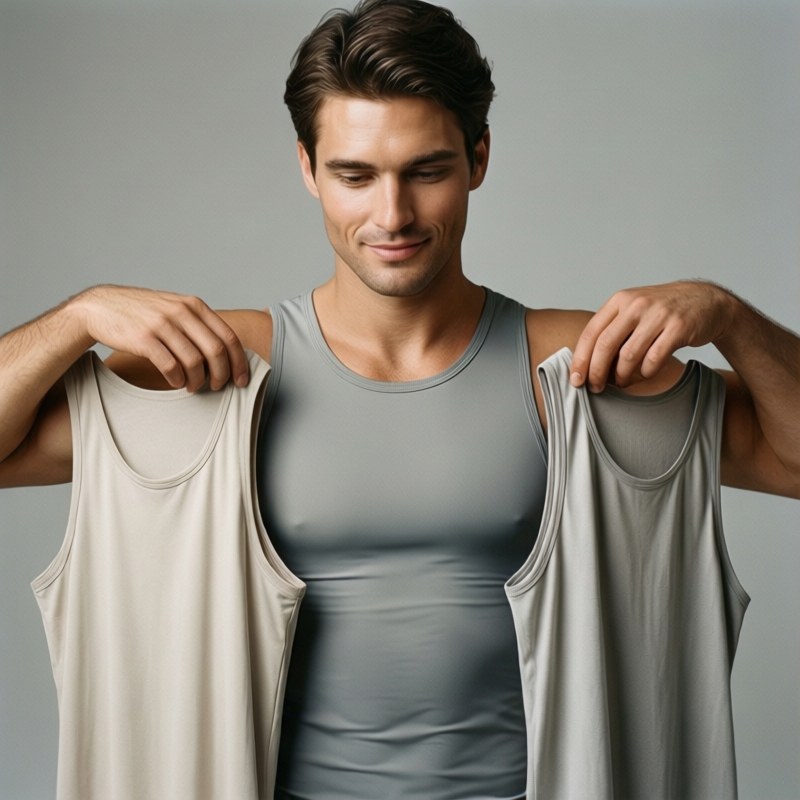
Picking between polyester-spandex and cotton for a custom tank top is not about which fiber is "better." It is about matching the fiber to the job: polyester-spandex moves sweat and holds shape under hard training, while cotton breathes and feels soft in low-intensity and lifestyle wear. The short answer: choose polyester-spandex blends (typically 88 to 92 percent polyester with 8 to 12 percent spandex) for gym, running and high-sweat training; choose cotton or a cotton-rich blend for yoga, lounge and everyday lifestyle; and use recycled polyester or organic cotton when sustainability is a brand pillar. This buyer's guide breaks the trade-offs down by performance, cost, care, activity and eco upgrades so you can brief your manufacturer with confidence.
How Each Fiber Handles Sweat: Absorption vs Wicking
The single biggest difference is what the fiber does with water. Cotton is hydrophilic: its cellulose fibers bond with water and can hold 24 to 27 times their own weight in moisture, which is why a cotton tank feels soft and cool at first but turns heavy, clingy and slow to dry once you sweat. Polyester is hydrophobic: it absorbs less than half a percent of its weight, so instead of soaking sweat in, it channels moisture along engineered capillary fibers to the outer surface where it evaporates. Measured wicking capacity reaches roughly 1,500 grams per square meter per hour on hollow multifilament polyester knits, more than double cotton's peak, and on a rack polyester dries in about 10 to 15 minutes versus 40 to 50 minutes for cotton. The trade-off is comfort at rest: cotton jersey typically permits 450 to 600 liters per square meter per second of air permeability against 150 to 300 for many synthetic knits, so cotton feels cooler and less clammy when you are not moving. Choose the fiber by the sweat load, not by the label.
Polyester-Spandex Blends: Composition and GSM That Perform
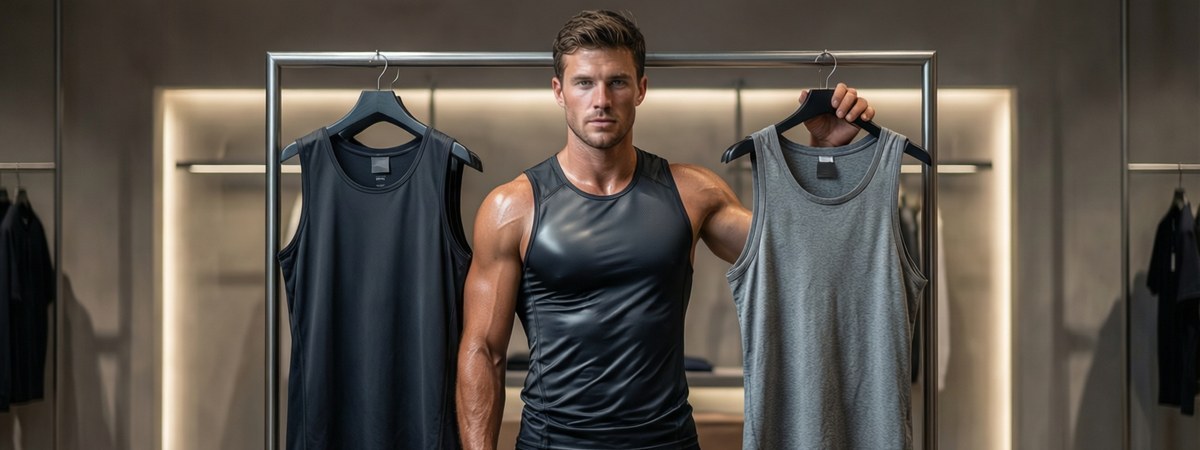
For training tanks, a polyester-spandex blend is the workhorse, and the ratio decides the hand feel. Common activewear constructions run 95/5 for light fashion stretch, 92/8 for soft four-way stretch in casual and printed knits, 88/12 for better recovery and support in yoga and fitted tops, and 82/18 for higher stretch and light compression in performance pieces. Spandex (elastane) itself can stretch 500 to 800 percent and snap back, but recovery matters more than maximum stretch: a fabric that stretches and fails to return will bag at the waistband and knees. Weight follows use, with 140 to 170 GSM for light summer tops, 170 to 220 GSM for balanced athleisure and yoga tops, and 220 to 280 GSM for more support and opacity. Always specify four-way stretch for tanks that move with the body, confirm recovery above 95 percent, and request a squat-proof opacity check if the tank is fitted. Polyester also takes dye-sublimation printing cleanly, which is why most all-over printed training tanks are polyester-based.
Cotton and Cotton-Blend Tanks: Softness and Breathability
Cotton wins on next-to-skin comfort and breathability, which is exactly why it suits yoga, walking, lounge and lifestyle tanks. Its open fiber structure lets air circulate and it is hypoallergenic, making it the safer pick for sensitive skin and for long, low-intensity wear. The downside is performance under sweat: cotton holds onto moisture, can shrink 3 to 5 percent on the first wash (sanforization brings that under 2 percent), wrinkles easily, and pills faster than polyester over time. A cotton-rich blend, often 60/40 or 70/30 cotton over polyester, splits the difference and is the most common "everyday active" choice because it keeps cotton's soft hand while improving shape retention and drying speed. If your tank is meant for the studio, the street or the couch rather than a WOD, cotton or a cotton-rich blend is the honest answer, not a compromise.
Cost and MOQ: What Each Fabric Means for Your Order
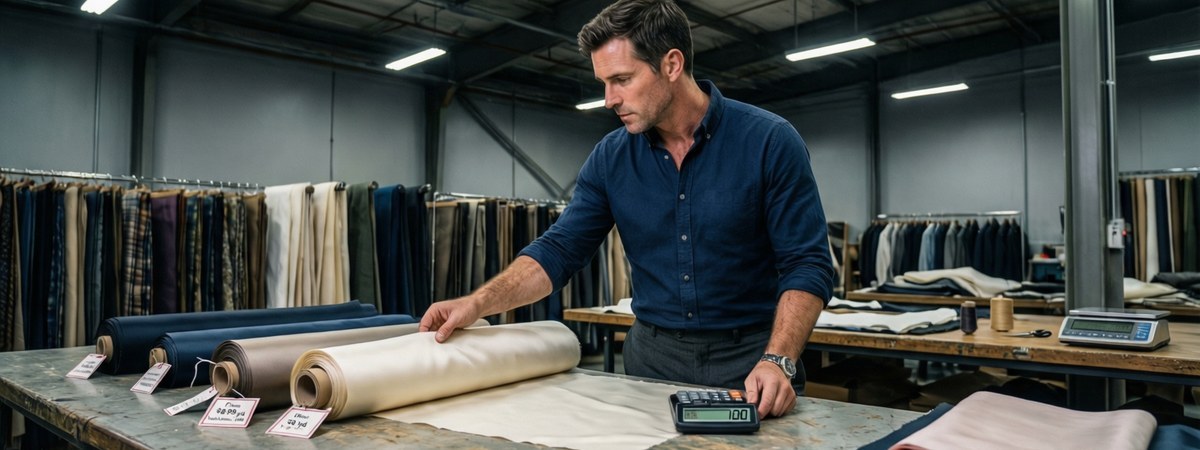
Fabric cost and minimums shape the order as much as the hand feel. Raw polyester is usually the cheaper input, roughly 110 to 150 per kg against cotton's 220 to 280 per kg, and recycled polyester is competitive at scale, which is why high-volume team and bulk programs lean synthetic. The real floor is the dye and decoration minimum, not the fiber: custom-dyed knits commonly carry a fabric MOQ around 300 kg per color, and some mills quote 3,000 meters per color, so a long color palette raises the effective minimum well above the headline number. Cotton is no different on MOQ but adds finishing steps such as sanforization and reactive dyeing that extend lead time. Blends sit in the middle on both cost and minimum. When you brief the factory, state fiber, composition, GSM and Pantone colorways up front so the quote reflects the real minimum, not a generic "low MOQ" claim that hides the dye-lot floor.
Care and Durability: Washing, Pilling, Shrinkage
Durability is where polyester pulls clearly ahead on the numbers. Abrasion resistance measured by Martindale runs about 20,000 to 40,000 cycles for cotton versus 30,000 to 100,000-plus for polyester, and in wash-cycle tracking polyester tanks last roughly 60 to 100 wears against 30 to 50 for cotton before noticeable thinning. Polyester barely shrinks (under 1 percent) and resists wrinkles, while cotton shrinks 3 to 5 percent initially and creases unless sanforized. The two weak spots are polyester's tendency to pill after many washes and its habit of holding odor because bacteria cling to synthetic fibers, which is why many performance tanks add an antimicrobial finish. Cotton, by contrast, is easy to care for, biodegrades and carries no microplastic concern, but it wears out faster under repeated friction. Match the care story to the use: hard-training tanks should be polyester for lifespan; lifestyle tanks can be cotton for feel.
Best Use by Activity: Gym, Yoga, Lifestyle
The cleanest way to choose is by the session. For the gym, HIIT, running and CrossFit, polyester-spandex is the right call: it wicks, dries in minutes and holds shape through hundreds of washes, so the tank performs rep after rep. For yoga, pilates and low-intensity studio work, cotton or a cotton-rich blend breathes better and feels softer against the skin during slow, sweat-light movement. For lifestyle, travel and everyday wear, cotton wins on comfort and wrinkle-freedom, while a poly-cotton blend keeps the tank presentable after a full day. Team and basketball or boxing programs that train hard and wash often should default to polyester-spandex for durability, then add cotton-rich lifestyle colorways if the brand wants a softer off-court look. Let the activity set the fiber, and the tank will do its job.

Sustainable Fabric Upgrades: rPET and Organic Cotton
Sustainability is no longer a niche add-on, and two upgrades dominate the conversation. Recycled polyester, or rPET, is spun from post-consumer PET bottles, with about 27 bottles going into a kilogram of fiber; it uses roughly 90 percent less water than virgin polyester and cuts carbon emissions by 50 to 75 percent, while keeping all the wicking, quick-dry and shape-retention performance that makes polyester the training choice. The caveats are real: rPET still sheds microplastics in the wash and is not biodegradable, so a microfiber laundry bag and GRS (Global Recycled Standard) certification matter. Organic cotton, certified under GOTS, eliminates synthetic pesticides and biodegrades in months rather than centuries, making it the better story for basics, sensitive skin and lifestyle tanks, though it still carries a heavy water footprint in conventional farming. Many brands blend the two, such as 60 percent organic cotton with 40 percent rPET, to get softness and performance in one fabric, and OEKO-TEX Standard 100 confirms chemical safety across both.
How MontForge Specs Your Tank Fabric
MontForge builds custom tank tops from a fiber decision, not a default. For training, gym and team tanks we Spec 88 to 92 percent polyester with 8 to 12 percent spandex in the 140 to 220 GSM band, four-way stretch with recovery above 95 percent, and dye-sublimation or Pantone-matched colorways locked before cutting. For yoga and lifestyle lines we offer cotton and 60/40 cotton-rich blends with sanforized shrinkage control and softer hand feel. Sustainability programs run on GRS-certified rPET or GOTS organic cotton, with OEKO-TEX verification on request. Sampling proves the hand feel and opacity on the production line, tolerances are written into the tech pack, and bulk starts only after the pre-production sample is signed, so the fabric you approve is the fabric you receive. Whether you arrive with a finished tech pack or just a use case, the build begins at the product page or a short brief.
Frequently Asked Questions
Is polyester-spandex or cotton better for a gym tank top?
For the gym, HIIT, running and CrossFit, polyester-spandex is better because it wicks sweat, dries in roughly 10 to 15 minutes versus 40 to 50 for cotton, and holds shape through many washes. Cotton is the better choice for low-sweat yoga, lounge and lifestyle wear where breathability and softness matter more than moisture transport.
What polyester to spandex ratio should a training tank use?
Most training and yoga tanks use 88 to 92 percent polyester with 8 to 12 percent spandex, which gives soft four-way stretch and reliable recovery. Go to 82/18 for higher stretch and light compression, or 95/5 for light fashion stretch. Always confirm four-way recovery above 95 percent rather than judging by ratio alone.
Which fabric lasts longer, cotton or polyester?
Polyester lasts longer on the measured numbers: Martindale abrasion resistance of 30,000 to 100,000-plus cycles against cotton's 20,000 to 40,000, and about 60 to 100 wears versus 30 to 50 for cotton before thinning. Cotton is easier to care for and biodegrades, but polyester resists shrinkage, wrinkles and shape loss far better.
Is recycled polyester good for activewear tanks?
Yes. rPET keeps the wicking, quick-dry and shape-retention performance of virgin polyester while using about 90 percent less water and cutting carbon by 50 to 75 percent. It still sheds microplastics and is not biodegradable, so pair it with a GRS certification and a microfiber wash bag. It is the standard eco upgrade for training tanks.
What is the MOQ difference between cotton and polyester tanks?
The fiber price favors polyester, roughly 110 to 150 per kg against cotton's 220 to 280, but the binding minimum is usually the dye lot: custom-dyed knits often start around 300 kg per color and some mills quote 3,000 meters per color. Cotton adds sanforization and reactive dyeing lead time. State colorways up front so the quote reflects the real minimum.
Ready to choose the right fiber for your tank line? Send a use case or a tech pack and we will spec polyester-spandex, cotton or a sustainable rPET or organic blend to match how your customers actually train and live.