Quarter-Zip Pullover Manufacturing: The Layering Piece Every Brand Needs
- Share
- publisher
- MontForge Sourcing Team
- Issue Time
- Aug 25,2026
Summary
Quarter-zip pullover manufacturing: why the 1/4 zip sells year-round, performance vs fleece fabric systems, neckline and YKK zip construction, custom zip-pull branding, and a low MOQ launch playbook.
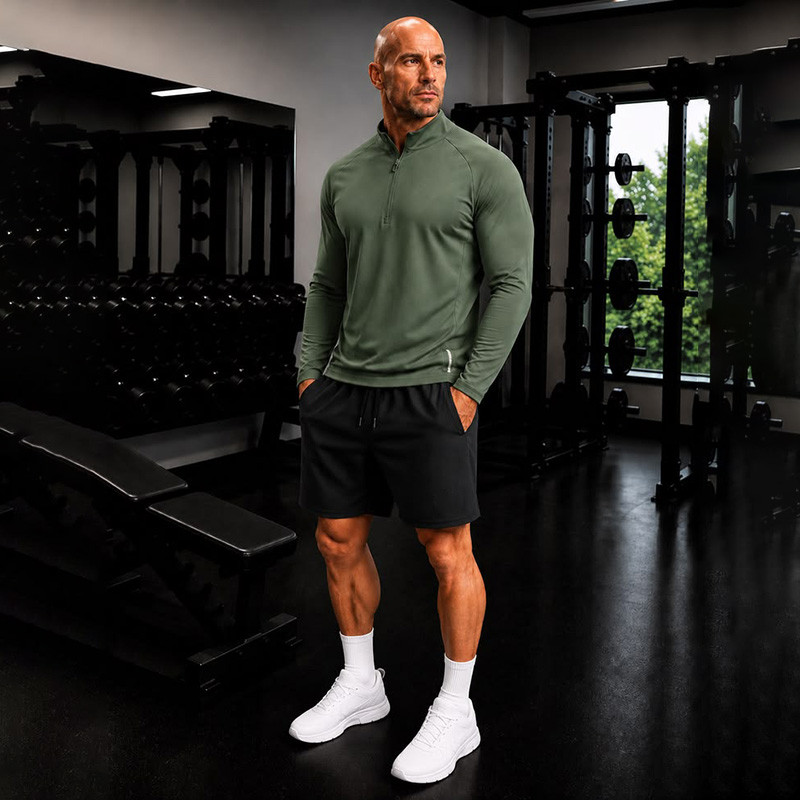
A quarter-zip pullover is one of the few garments that sells in every season and to almost every buyer type at once: the athlete who layers it over a tee, the office worker who wears it smart-casual, and the golf or team program that embroiders it with a logo. That rare cross-demand is exactly why the 1/4 zip belongs in a streetwear, CrossFit or teamwear lineup, and why getting the manufacturing right pays back across the whole year. This guide walks brands through the year-round case for the quarter-zip, the performance-versus-fleece fabric systems, the neckline and YKK zip construction that separates a premium piece from a cheap one, zip-pull branding, and a low-MOQ launch playbook you can run from a single tech pack.
Why the 1/4 Zip Is a Year-Round Seller
The numbers behind the silhouette explain the appeal. The global performance apparel market passed 200 billion dollars in 2025, and search interest for "quarter zip performance tops," "athletic pullovers" and "lightweight training zips" has grown more than 60 percent over the past two years. More important for a brand is the cross-segment pull: the same 1/4-zip shape sells to athleisure buyers, smart-casual office wearers and golf or team programs simultaneously, so one product line reaches three audiences instead of one. The fleece pullover segment alone is projected to grow from 2.1 billion dollars in 2024 to 3.5 billion by 2033 at a 6.0 percent compound rate. Corporate and group buyers treat embroidered quarter-zips as the default gift and team-apparel purchase, and demand arrives in three annual peaks rather than a single Q4 rush, which smooths cash flow for small brands. For a label building a year-round core, the quarter-zip is the layering piece that keeps selling when T-shirts slow down.
Fabric Systems: Performance vs Fleece
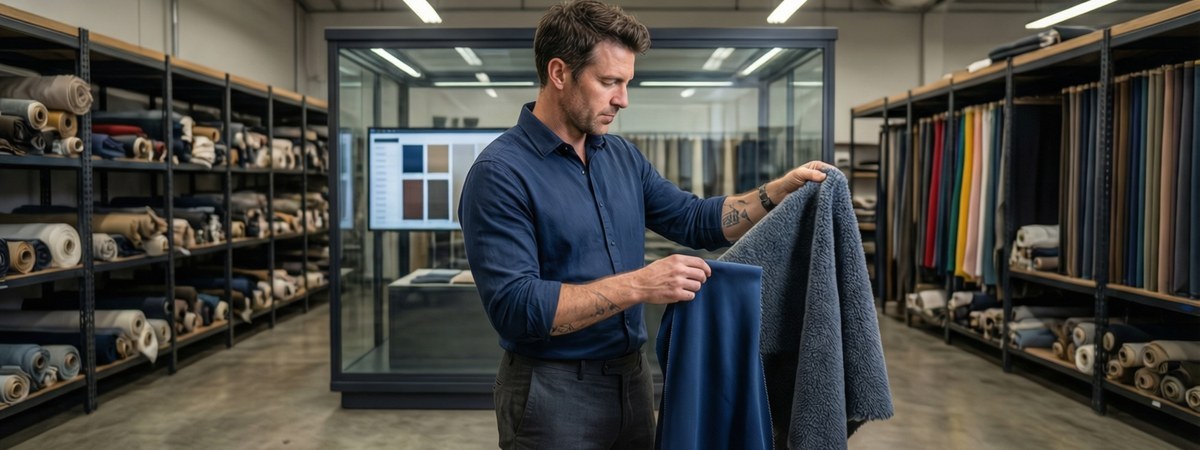
The first manufacturing decision is the fabric system, and the weight tells the story. A lightweight performance base layer starts around 150 GSM, while a thick warm fleece runs 300 GSM and above; most quarter-zips land in the 200 to 280 GSM mid-weight band that traps heat without restricting movement. Polyester-dominant blends dry fast and resist sweat absorption, so they beat cotton for active use, while a brushed-back knit adds mild interior warmth without tipping into full fleece. For a cleaner, more structured look, polyester interlock or double-knit fleece (roughly 280 to 330 GSM) holds shape and reads premium, and 5 to 10 percent spandex gives the four-way stretch needed for a full shoulder turn. A 60 percent cotton / 40 percent polyester body suits a 35-dollar athleisure tier; an 80 percent merino wool / 20 percent nylon version targets the 45 to 55-dollar smart-casual tier. Pick the system by the role: training layer wants stretch and breathability, club teamwear wants a stable logo-friendly surface, and a premium travel piece wants body and recovery.
Neckline and Zip Construction Details
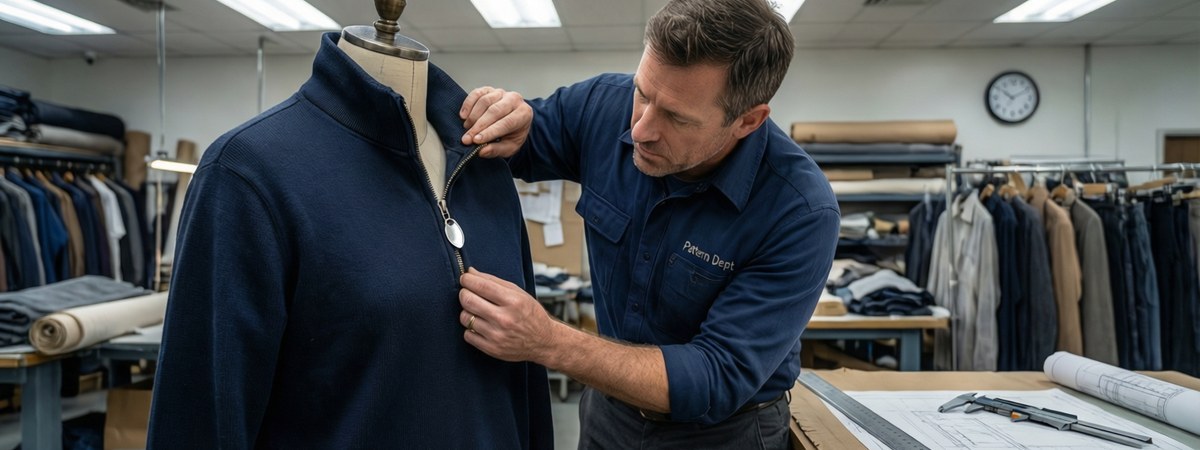
Construction is where a quarter-zip earns its price, and the spec is precise. The zip should run about 12 to 20 centimeters, roughly a quarter of the garment length, with a stand collar 7 to 10 centimeters high when zipped; anything past 12 centimeters starts reading as a turtleneck, and under 7 centimeters looks half-finished in photos. The placket should extend 2 to 3 centimeters below the zip bottom for reinforcement, finished with ribbed placket binding and double-needle stitching at the cuffs and hem for durability. The zipper itself should be a YKK #3 or #5 metal zip with a weighted pull, not a lightweight coil zip from a windbreaker; a zipper garage or chin guard at the top prevents the metal from chafing the neck. This is also the rare place in knitwear where spending pays back disproportionately: upgrading from a nylon to a metal zipper adds about 40 cents to cost yet lifts the piece a full perceived retail tier, because buyers register the weighted pull and clean binding as "more expensive than the price."
Branding and Zip-Pull Customization
The zip pull is the most-touched piece of hardware on the garment, which makes it the highest-leverage branding surface most brands ignore. Custom pulls come in zinc alloy, silicone, TPU, leather or woven formats, with the logo applied by die-casting, embossing, laser engraving or molded 3D relief, and matched to brand Pantone colors for consistency across a range. A branded metal pull does two jobs at once: it builds tactile recognition every time the wearer zips up, and it acts as a low-cost anti-counterfeit marker that is expensive for knock-off factories to replicate. Custom pull production is fast and accessible, with samples in about 5 to 7 days and bulk in 10 to 15 days, and minimums as low as 100 pieces per design. Pair the pull with a small left-chest embroidery and a woven neck label, and the quarter-zip reads as a considered, ownable product rather than a blank commodity.
Low MOQ Launch Playbook
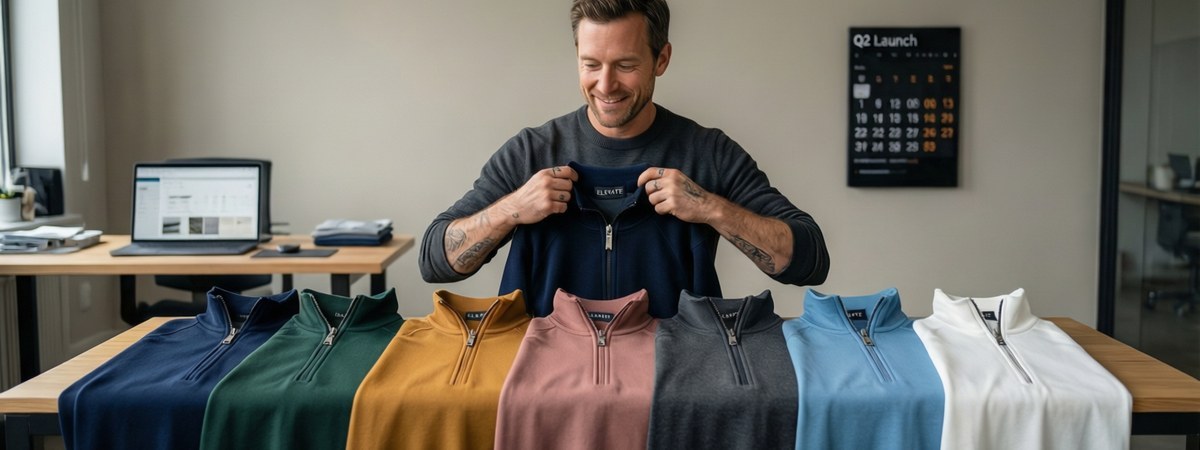
A quarter-zip line is one of the easier products to launch small. Start with a tight color story, two or three sizes as a test run, and a single fabric system so the first batch stays simple and consistent. Request a stitched pre-production sample before committing bulk, checking collar height, zip action, placket binding and logo placement at the zip's open and closed positions. Sampling typically runs 7 to 10 days with bulk in roughly 25 to 35 working days, and many suppliers support low or no minimums for startups, so 50 to 100 pieces is a realistic first order. Lock the artwork, Pantone codes and pull design on file so reorders are a top-up rather than a redesign, and use the same file set for a team or corporate version by swapping the embroidery. The playbook is less about volume and more about proving the product sells before scaling the run.
Sizing and Fit: Layer-Over, Not Base-Layer
Fit matters because a quarter-zip is worn over a shirt, not against the skin. Confirm true sizing before a full run, since the garment layers over tees and collared shirts and should skim the torso without excess fabric that bunches under a jacket. Raglan or set-in sleeves with a generous armhole keep the shoulder free for golf swings or training, and a mock neck that sits about 1.5 inches high seals warmth without choking. Youth, men's and women's blocks differ between vendors, so request the actual chest and length measurements per size rather than trusting the label, and order fit samples across your size range before bulk. A quarter-zip that fits right becomes a repeat-purchase layer; one that is boxy or tight gets returned.
Decoration: Embroidery, Sublimation and the Left Chest
Because the front is a solid panel with no full opening, the quarter-zip gives a clean, centralized decoration area that suits embroidery best. A small left-chest logo in 8 to 10 centimeters reads at any zip position and survives washing far better than a large print on fleece, while sleeve embroidery adds a second branded touch for team and corporate programs. Sublimation works on polyester performance bodies for all-over art but is less common on brushed fleece, where embroidery gives the durable premium finish buyers expect. Whatever the method, keep the logo small and the placement consistent, and confirm density and thread color on the pre-production sample so the decoration matches the rest of the brand system.
How MontForge Builds Quarter-Zip Programs
MontForge manufactures custom quarter-zip pullovers for streetwear labels, CrossFit boxes and teamwear programs under one roof, so a retail line and a team version can share the same tech pack and Pantone codes. We run polyester performance knits, brushed-back fleece and double-knit bodies in the 200 to 330 GSM band, with YKK #3 or #5 metal zippers, weighted pulls and ribbed placket binding as standard; collar height and zip length are set to the 7 to 10 centimeter and 12 to 20 centimeter spec before cutting. Branding covers left-chest embroidery, custom molded zip pulls, woven labels and retail packaging, and low-MOQ launches start from a 7 to 10 day sample with bulk in 25 to 35 working days. Sampling proves fit, opacity and zip action on the production line, tolerances go into the tech pack, and bulk starts only after the PP sample is signed, so the layer you approve is the layer you receive. Bring a finished tech pack or just a color and a fabric idea, and the build starts at the product page or a short brief.
Frequently Asked Questions
Why should a brand add a quarter-zip instead of more T-shirts?
A quarter-zip sells across seasons and buyer types at once: athletes layer it, office wearers style it smart-casual, and golf or team programs embroider it. Search interest for quarter-zip performance tops has grown over 60 percent in two years, demand comes in three annual peaks rather than one Q4, and the fleece segment is growing at a 6.0 percent compound rate, so it keeps revenue moving when T-shirt demand dips.
Which fabric system is right for a quarter-zip?
It depends on the role. A 200 to 280 GSM polyester performance knit or brushed-back knit suits training and travel; a 280 to 330 GSM polyester interlock or double-knit reads premium for club and corporate teamwear; 5 to 10 percent spandex gives four-way stretch. A 60/40 cotton-poly body fits a value tier, while 80/20 merino-nylon targets a smart-casual tier. Match the fabric behavior to the use case, not just the handfeel.
What zip and collar spec signals a premium quarter-zip?
Use a YKK #3 or #5 metal zipper with a weighted pull, a stand collar 7 to 10 centimeters high when zipped, a placket extending 2 to 3 centimeters below the zip bottom, ribbed placket binding and double-needle stitching. A zipper garage or chin guard prevents neck chafe. Upgrading from nylon to metal hardware adds about 40 cents yet lifts the piece a full perceived retail tier.
Can the zip pull be custom branded, and what does it cost?
Yes. Custom pulls come in zinc alloy, silicone, TPU, leather or woven forms with the logo die-cast, embossed, laser-engraved or molded in 3D, matched to brand Pantone colors. Samples take 5 to 7 days and bulk 10 to 15 days, with minimums as low as 100 pieces. Because the pull is the most-touched hardware, it builds tactile brand recognition and acts as a low-cost anti-counterfeit marker.
What is a realistic low-MOQ launch for quarter-zips?
Start with two or three sizes, one fabric system and a tight color story. Sampling runs 7 to 10 days with bulk in roughly 25 to 35 working days, and many suppliers support low or no minimums, so 50 to 100 pieces is a sensible first order. Lock the artwork, Pantone codes and pull design on file so reorders are a top-up, and approve a stitched pre-production sample before bulk.
Ready to add a quarter-zip to your lineup? Send a color story, your Pantone codes and a logo, and we will spec the fabric, YKK zip and custom pull, sample in 7 to 10 days, and set up a low-MOQ launch or team program from the same tech pack.