Team Tank Top Uniforms for Basketball and Boxing Programs
- Share
- publisher
- MontForge Sourcing Team
- Issue Time
- Aug 24,2026
Summary
Team tank top uniforms for basketball and boxing: custom names and numbers at scale, squad color matching with Pantone, mid-season reorders and roster changes, event turnaround, and private-label gym retail.
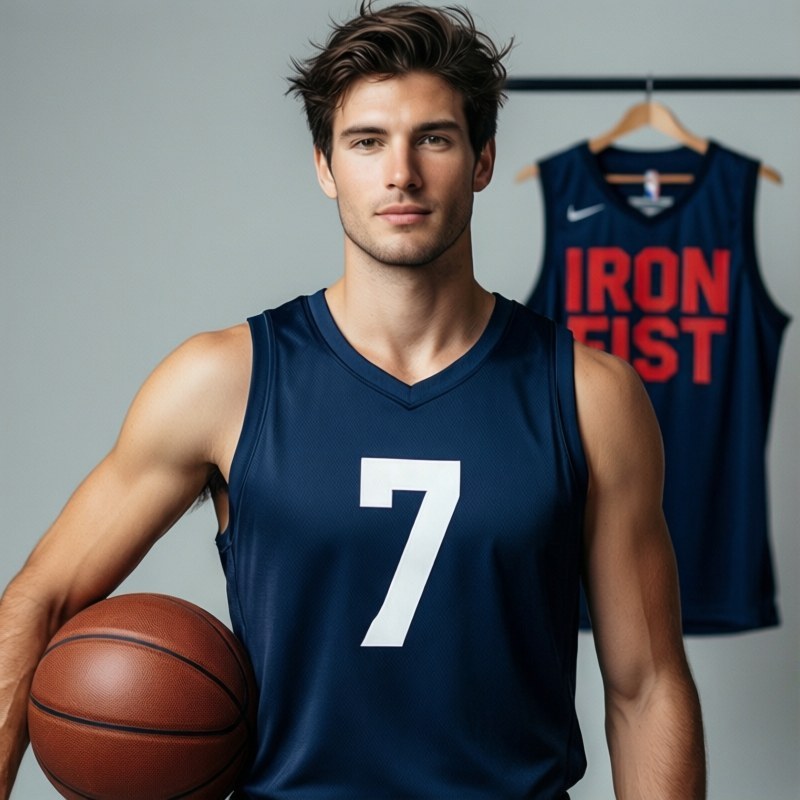
Outfitting a basketball program or a boxing gym with custom tank tops is less about printing a logo and more about running a small uniform program: every player needs the right name and number, the squad color has to match jersey to jersey, and new athletes joining mid-season must still receive kit that looks identical to the original set. The good news is that the trade-offs are well understood. Use dye-sublimation for high-volume, full-color team tanks; reserve stitched tackle twill for premium numbered sets; lock color with Pantone codes rather than a name like "team red"; and keep your artwork on file so reorders are a few weeks, not a fresh design. This guide walks basketball and boxing programs through naming, color, reorders, event timing and private-label retail so your manufacturer can deliver a complete, consistent kit.
How Custom Names and Numbers Scale Across a Squad
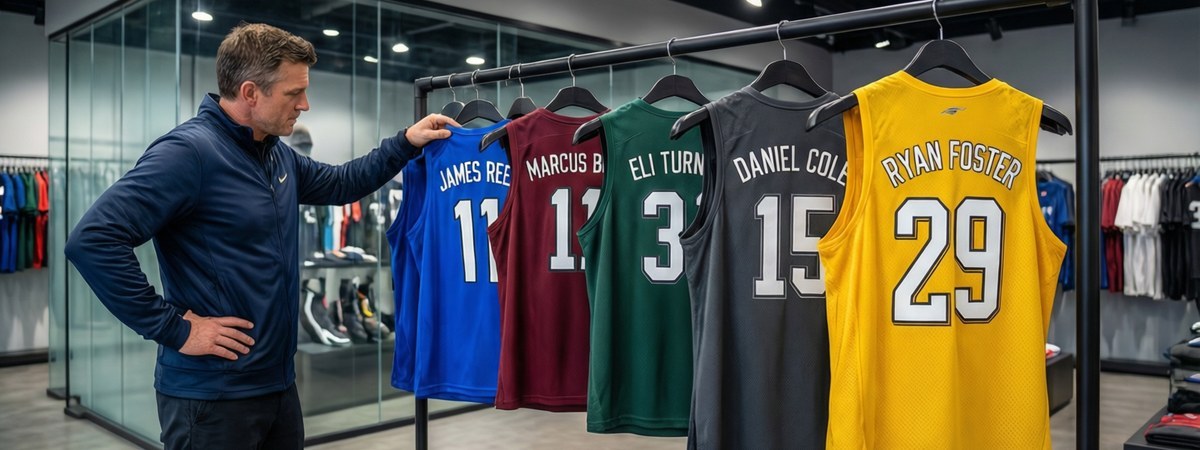
A real team order means dozens of unique name-and-number combinations, not one design repeated. The two dominant decoration methods set the ceiling on how cleanly that scales. Full-dye sublimation fuses the artwork directly into the polyester fiber with heat, so names, numbers, gradients and mascots become part of the fabric; there is nothing raised to peel or crack, and the method handles unlimited colors and complex art. Tackle twill, by contrast, layers cut fabric letters and numbers and stitches them onto the jersey body; it is the construction MLB and heritage college programs use, with a premium, tactile, multi-decade lifespan, but it is slower to produce because each character is cut and zig-zag sewn by hand. For most basketball and boxing squads the practical answer is hybrid: a fully sublimated body carrying the panels and art, with stitched tackle-twill names and numbers on top for that authentic game-worn feel. Whatever you choose, specify the exact number font and stroke weight up front, because "standard font" is not a specification.
Sublimation vs Tackle Twill: Which Holds Up on Game Day
The decision is really about weight, breathability and budget. Sublimation adds zero weight to the garment and leaves the mesh holes fully open, which is why it is the cooler choice in hot gyms and the standard for practice kit; printed jerseys typically run about 55 to 95 dollars each and turn around in roughly 2 to 3 weeks. Tackle twill adds layers of fabric and therefore some warmth and weight, suits elite or heritage sets best, and runs about 65 to 110 dollars on a stock blank or 85 to 140 for a sublimated body plus twill numbers, with a longer 3 to 4 week lead time. Durability favors both, but differently: sublimation color does not crack or fade because it is inside the fiber, while twill survives decades if the border stitching is double-needle rather than single. For boxing programs that train hard and wash often, sublimation's no-crack finish is the safer daily choice; for a championship basketball set, the stitched twill number is the detail players notice. The wrong move is deciding by price alone without checking the GSM rating and colorfastness.
Locking Squad Color With Pantone, Not "Team Red"
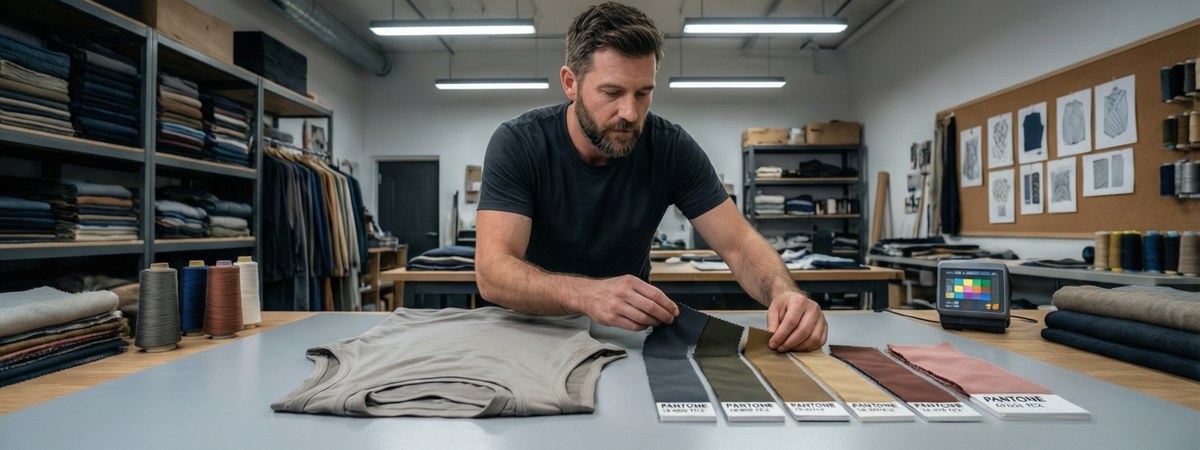
The single most common teamwear failure is a shade that matches on the proof but drifts on delivery, so the shorts are a slightly different blue than the tank. The fix is to specify color by Pantone Matching System (PMS) code, not by name. Red is not one color; there are hundreds of reds, and a different printer, fabric or ink system will each land in a different place unless a PMS number pins it down. A single Pantone code keeps the same exact hue across jerseys, shorts, warm-ups and banners, even when different vendors and print methods are involved, because the code describes the color itself rather than how any one machine mixes it. Teams that adopt Pantone codes and keep them in a style guide report markedly stronger brand recognition, and vendors that store your PMS numbers can match future orders without resampling. State two to four brand colors as PMS codes in the tech pack and share them with every supplier, every time.
Why Vector Logos and a Style Guide Keep Kits Matching
Color is only half the identity; the logo and layout are the other half, and both depend on file quality. Always supply a vector logo (.ai, .eps or .svg) rather than a photo or screenshot, because vector art is built from math and resizes to a tiny sleeve patch or a giant back number without going blurry, which is essential for dye-sublimation and embroidery digitizing alike. Pair that with a short style guide that records the approved colors, logo placement, fonts and number style, then hand the same file set to every vendor. The 60-30-10 rule helps keep designs balanced: a dominant base color, a secondary accent, and a small pop of detail, with high contrast like black-and-white or navy-and-yellow so numbers stay readable from the stands. A style guide is also what makes a reorder trivial, because the next coordinator does not have to re-derive the look from a jacket photo.
Reorders and Roster Changes: Staying Complete Mid-Season
Rosters shift, juniors outgrow sizes, and kit gets lost or damaged, so a mid-season reorder is a predictable event rather than an emergency. The teams that handle it well keep their artwork and specs on file so a new player simply receives kit that matches the existing set, with no full redesign. Sublimation reorders match the original most reliably because the color is infused into the fiber rather than layered on top, while screen print and vinyl can drift between batches; sticking with one supplier protects the match as well. Build a single master sheet as your source of truth: exact colors and Pantone codes, supplier and style code, the roster of name, number and confirmed size, and order history with buffer stock left. Ordering a few common sizes as buffer upfront prevents most reorder scrambles, and keeping design files on record turns a stressful rebuild into a five-minute top-up.
Event Turnaround: Reverse-Planning Your Order Deadline
Custom does not mean quick, and production runs through distinct stages: fabric sourcing, printing, panel cutting, sewing, embellishment and quality control. For standard custom teamwear, plan on roughly six weeks of production, stretching to eight to ten weeks if crystals or heavy embellishment are involved. The reliable way to set your deadline is to reverse-engineer from the event: take the competition date, add one week of shipping buffer, add the six to ten weeks of production, then add about two weeks for parent payment and size confirmation, and that sum is your true order cutoff. Set the internal parent deadline two weeks before the real one to absorb late confirmations. Peak season (roughly March through June) queues longer, so off-peak orders move faster and rush priority slots cost a premium. Never set a deadline that lands on game day itself; the buffer is what prevents the last-minute panic.
Private-Label Tanks for Gym Retail and Fight Teams
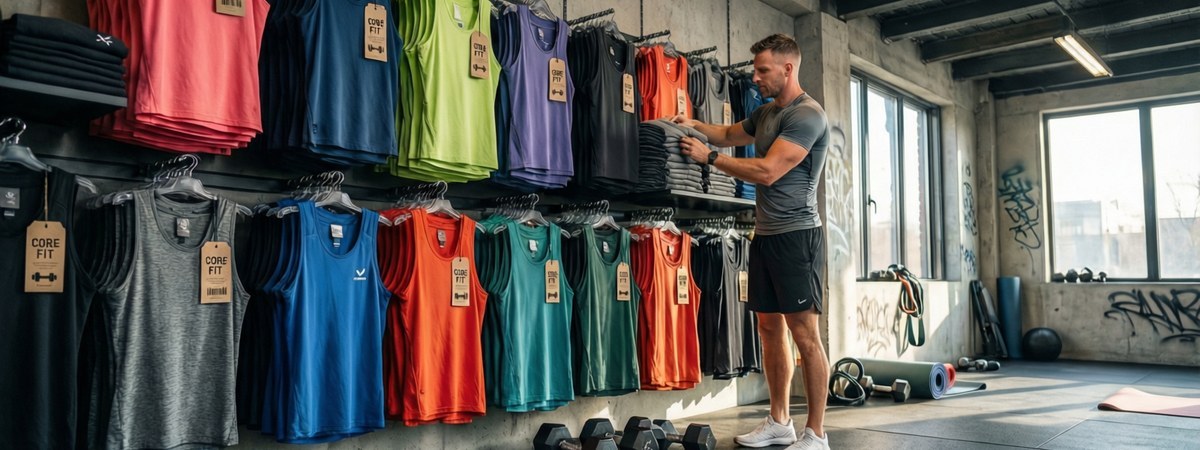
Beyond the squad, a boxing gym or basketball program can turn its identity into retail revenue with private-label tanks. Private labeling means your logo, tags and packaging on tanks made by a manufacturer, so the gym sells branded merch without running a factory; typical bulk minimums start around 50 to 100 pieces with sampling in about 7 to 10 days and bulk in roughly 25 to 35 working days, though some suppliers support lower or no minimums for startups. Boxing gyms and MMA programs use the same pipeline to outfit fight teams and sell walkout-style tanks at the counter, while basketball programs add summer-league sets and parent merch. The retail finish matters: woven or printed neck labels, branded hangtags, barcoded polybags and custom boxes make the product shelf-ready, and Pantone-matched colors keep the gym's retail line visually tied to the competition kit. Treat private label as an extension of the team program, not a separate job, and the design files you already keep on file do most of the work.
Sizing and Fit: Basketball Loose vs Boxing Stringer
The right silhouette depends on the sport. Basketball tanks run loose and breathable, often a relaxed or athletic fit with a deeper armhole for shooting mechanics and a longer hem that stays tucked; moisture-wicking polyester mesh keeps players cool deep into the fourth quarter. Boxing tanks lean toward the stringer or muscle cut: a deep U or drop-armhole that shows the shoulder and stays anchored through punches and inversions, usually in a four-way stretch jersey so the body moves without the fabric riding up. Youth, men's and women's sizing all differ between vendors, so request the actual chest and length measurements for each size rather than trusting the label, and order fit samples across your size range before bulk. A squad that trains in ill-fitting tanks complains about it every session; a squad in the right cut simply performs.
How MontForge Builds Team Tank Top Programs
MontForge manufactures custom tank tops for streetwear labels, CrossFit boxes, boxing gyms and basketball programs under one roof, so a team order and a private-label retail line can share the same artwork and Pantone codes. For squad kits we run moisture-wicking polyester and four-way polyester-spandex in the 140 to 220 GSM band, with sublimation for full-color bodies and optional stitched tackle-twill names and numbers for premium sets; color is locked to your PMS codes before cutting and verified on a pre-production sample. Reorders pull from your stored design file for an exact match, and private-label programs add custom woven labels, hangtags and retail packaging. Sampling proves fit and opacity on the production line, tolerances go into the tech pack, and bulk starts only after the PP sample is signed, so the kit you approve is the kit you receive. Bring a finished tech pack or just a roster and a color, and the build starts at the product page or a short brief.
Frequently Asked Questions
Should a basketball or boxing team use sublimation or tackle twill?
For daily training and high-volume squad kits, dye-sublimation is the better call: it adds no weight, keeps mesh breathable, never cracks, and turns around in about 2 to 3 weeks at roughly 55 to 95 dollars per jersey. Use stitched tackle twill for premium, heritage or championship sets where the raised number matters; it lasts decades but costs more and needs 3 to 4 weeks. Many programs choose a hybrid: sublimated body plus twill names and numbers.
How do we keep every tank the same color across the squad?
Specify color by Pantone Matching System (PMS) code, not by a name like "team red," because a single PMS number pins the exact hue across jerseys, shorts, banners and different printers or fabrics. Keep two to four brand colors as PMS codes in a style guide, supply a vector logo, and share the codes with every vendor on every order so reorders match without resampling.
How long does a custom team tank order take?
Standard custom production runs about six weeks, extending to eight to ten weeks with heavy embellishment such as crystals. Sublimation alone is faster at 2 to 3 weeks, tackle twill at 3 to 4 weeks. Reverse-plan from your event: competition date plus one week shipping plus production plus about two weeks for size collection equals your true cutoff, and always build in a buffer rather than targeting game day.
What happens when a player joins mid-season?
A mid-season reorder should match the original set exactly, not start a new design. Keep your artwork, Pantone codes and roster on file so the new player receives identical kit; sublimation reorders match best because color is infused into the fiber, and staying with one supplier protects consistency. Ordering a few buffer common sizes upfront prevents most emergencies.
Can a boxing gym or basketball program sell private-label tanks?
Yes. Private labeling puts your logo, tags and packaging on tanks made by a manufacturer, turning team identity into retail revenue without running a factory. Bulk minimums often start around 50 to 100 pieces, with sampling in 7 to 10 days and bulk in roughly 25 to 35 working days, and retail finishes like woven labels, hangtags and barcoded polybags make the product shelf-ready while staying color-matched to the competition kit.
Ready to outfit your basketball or boxing program? Send a roster, your Pantone colors and a font, and we will spec sublimation or tackle-twill team tanks, plan your event timeline, and set up private-label retail from the same artwork.