The Ultimate Guide to Manufacturing Custom Merch T-shirts for Influencers & Brands (Part 1): Strategy, Design & Printing | Montforge
- Share
- publisher
- Montforge Production Team
- Issue Time
- May 6,2026
Summary
Part 1 of our ultimate guide to influencer merch. Discover market insights, compare printing methods (Screen, DTG, Sublimation), and master design preparation for your custom T-shirt line. Expert advice from Montforge.
Introduction
A merch T-shirt needs to work as a garment as well as a graphic. For a creator or brand planning a range, the first decisions are the intended buyer, product route, fit, material and decoration. This guide covers that design handoff; Part 2 addresses manufacturing, cost and fulfilment.
This comprehensive guide, the first in a two-part series, will walk you through the essential steps of understanding the market, strategically positioning your custom merch, choosing the right printing techniques, and preparing your designs for custom merch t-shirt products for influencers and brands. By the end of this article, you will be equipped with the knowledge to confidently plan and design your merchandise line, turning your creative vision into a tangible product. For insights into manufacturing, cost, and fulfillment, see Part 2: Manufacturing, Costs & Logistics.
Understanding the Influencer Merch T-shirt Market
The custom merch market offers a significant opportunity for influencers and brands to connect with their audience and build a sustainable revenue stream.
Why Influencers and Brands Are Investing in Custom Merch
Merch can give an audience a physical connection with a creator or brand. Decide why the buyer would choose and wear the garment: design, fit, community identity or a particular use. A following creates a way to reach potential buyers, but it is not evidence of sales for a particular product.
The Economics of Custom Merch T-shirts
Understanding the cost structure and potential ROI is crucial for a successful merch line. The unit cost of a custom T-shirt is influenced by factors such as fabric quality, printing method, design complexity, and order volume. Pricing strategies should consider production costs, perceived value, target audience, and competitor pricing. A well-executed merch line can yield substantial profit margins, especially when scaled efficiently. Calculating ROI involves assessing initial investment against projected sales and brand exposure.
Who Should Start a Merch Line
Consider a merch line when you can describe the intended buyer, garment and reason to purchase. Test those assumptions against prior sales or a manageable product trial. Audience size alone does not determine an appropriate stock commitment.
Choosing the Right Printing Method
For influencers and brands, choosing the right printing method for your merch is a strategic decision that impacts quality, cost, and overall brand perception.
Selecting the optimal printing method is critical for achieving desired quality, durability, and cost-effectiveness for your custom merch T-shirts.
Screen Printing – The Industry Standard
Screen printing uses a stencil and ink application to reproduce a design. It can suit repeat graphics, but setup, colour separations, print area and fabric affect cost. Compare a trial on the intended garment and ask how underbases, gradients or added colours change the proposal. There is no universal colour limit, minimum or unit price.
Direct-to-Garment (DTG) Printing – Freedom of Detail
DTG applies ink directly to the garment and can reproduce detailed artwork. Check the fabric, pretreatment, underbase, colour and care result with the proposed supplier. Small-run availability does not establish a universal zero minimum, and the print area and garment affect cost.
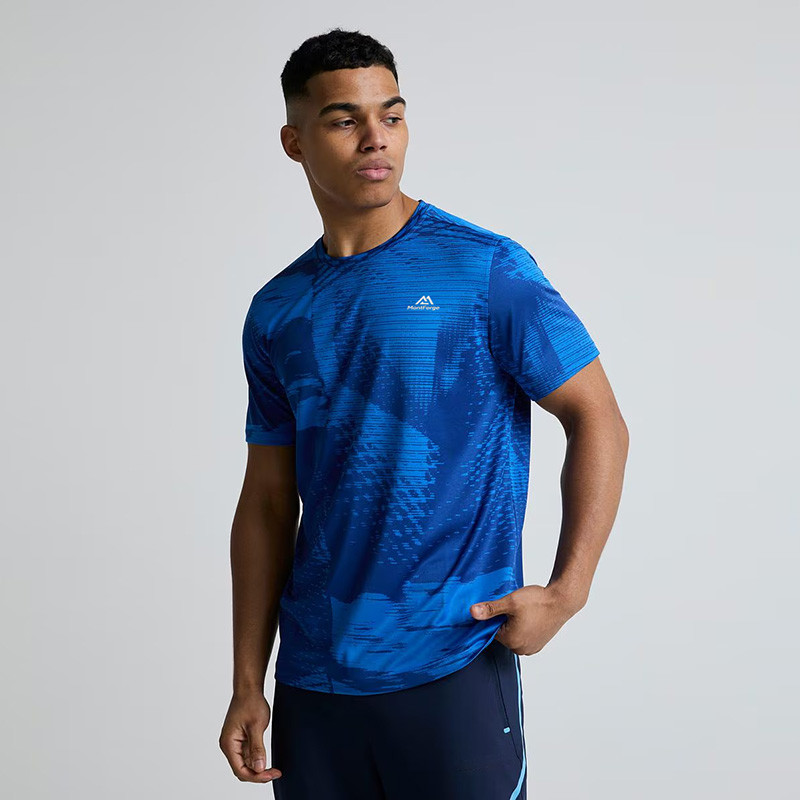
Sublimation Printing – All-Over Freedom
Sublimation can suit appropriate polyester-rich fabrics and all-over designs. Review fabric colour, artwork placement, panel joins and the actual production route. The dye effect does not remove the need for colourfastness and care evaluation; no permanent no-fade guarantee is assumed.
Heat Transfer & Embroidery – Special Effects
Heat-transfer films and embroidery offer different surface effects. A transfer needs compatible film, substrate and application conditions. Embroidery needs artwork translated into stitches, suitable backing and a review of puckering, detail and comfort. Quote the actual design rather than assigning either process a fixed price or minimum.
How to Choose the Right Printing Method for Your Merch
Use the comparison below to decide what to trial. The garment, artwork, order mix and application interact; no process is the best option for every design.
Printing Method | Best For | Pros | Cons | Quote dependencies | Trial to request |
|---|---|---|---|---|---|
Screen Printing | Large orders, simple designs | Repeatable solid areas with suitable ink and curing | Setup, colour separations and substrate need review | Screens, colours, underbase and print area | Printed trial on the intended fabric |
Direct-to-Garment (DTG) | Small orders, complex designs, photo-realistic | Detailed raster artwork with suitable preparation | Garment colour, pretreatment and fabric matter | Print area, pretreatment and garment reference | Detail, hand-feel and care trial |
Sublimation Printing | All-over prints, athletic wear | Coverage and colour effect on a suitable substrate | Fabric composition, colour and panel planning matter | Fabric, artwork coverage and assembly route | Panel registration and care evaluation |
Heat Transfer | Versatile, special effects | A selected graphic or surface effect | Durability varies | Film, dimensions and application | Stretch, adhesion and care trial |
Embroidery | Premium look, durability | Stitched texture and defined detail | Higher cost, design limitations | Digitising, stitch count and backing | Stitch-out on the nominated garment area |
From Artwork to an Approved Garment
The useful design question is what must remain recognisable when the artwork becomes part of the actual garment. Fine lines, small lettering, large solid areas and gradients place different demands on different decoration methods. A visually strong screen mockup is the starting point, not a physical sample approval.
Keep three decisions separate: the garment, the application method and the artwork preparation. Changing one may require a new trial of the others.
Fit control and graphics control are different buying decisions
A brand that needs an existing fit with a new graphic may have a different production route from one that needs a new silhouette or fabric construction. Record which features are essential before requesting a quote.
| Creative requirement | What to confirm |
|---|---|
| A distinctive silhouette | Whether the pattern is custom, modified or an existing blank |
| A specific fabric feel | The material reference and how it affects decoration |
| Fine artwork detail | The supplier's trial at the intended physical size |
| Raised or stitched texture | The physical result and its effect on garment movement |
| Consistent branding | Artwork, placement and colour references by garment area |
Do not apply one file rule to every process
The correct preparation depends on the selected application and product. Confirm the supplier's required file types, dimensions, colour references and proofing method. A resolution figure alone does not establish whether a design will stitch or print correctly.
Use the selected supplier's process and product guidance, including its current embroidery instructions where relevant. Confirm the stitch-out or printed trial at the intended size before approving the garment.
Use Demand Evidence to Plan the First Order
Audience size is not the same as expected sales. Use the intended product, pricing, prior response and the brand's inventory plan to decide the test. Avoid treating a follower threshold as proof of a required production quantity.
A focused first brief can still be detailed: identify the audience, garment route, artwork version, physical placement, colour references and questions the sample must resolve. Review the design on the intended garment size and fabric, then assess the agreed care trial.
The commercial result is a clearer handoff. The supplier can quote an identified product, and the brand can judge the physical interpretation against its creative intent. Part 2 then addresses the costs, production approvals and delivery responsibilities.
Design and File Preparation Guide
Precise design and file preparation are essential to ensure your custom merch T-shirts are produced exactly as envisioned.
Understanding Design File Requirements
Confirm the supplier's template, physical artwork dimensions, colour references and proofing route. Keep an editable master and an approved production file under a clear revision. Check lettering, seams and placement on the real garment.
Preparing Files for the Selected Process
Confirm artwork size, placement, fonts, colour references and the supplier's proofing requirements. Review fine lines and lettering at their physical size. An all-over design also needs a panel and seam review; a screen mockup does not establish continuity across an assembled garment.
Working with Designers or Design Services
If using an external designer, agree deliverables, editable files, rights to use the artwork and the handoff to the production supplier. Confirm who converts artwork into separations, embroidery files or panel layouts. The software brand alone does not make a file production-ready.
RFQ Focus: Creative, Design & Printing Strategy
When initiating an RFQ (Request for Quotation) for the creative and design phase of your merch line, please provide the following information to ensure the most accurate consultation:
•Target Audience & Brand Vision: Describe your audience demographics and the core message of your brand.
•Design Files & Technical Specs: Attach your final artwork (AI, EPS, PSD, or high-res PDF) and specify color codes (Pantone), print size, and placement.
•Preferred Printing Method: Indicate if you have a preference (e.g., Screen Printing, DTG, Sublimation) or need our recommendation based on your design.
•Garment & Material Choice: Specify the T-shirt type (e.g., 100% cotton, polyester blend), desired weight, and color.
•Initial Sampling Needs: Outline your requirements for pre-production samples and physical prototypes for approval.